

Choosing between an aluminum vs steel trailer comes down to what you value more: lower price and easy repairs, or lower weight and far less rust. Steel trailers cost less to buy and can be welded almost anywhere. Aluminum trailers weigh less, won’t rust the way steel does and usually hold their value better, but they cost more up front. There’s also a third option many buyers forget: galvanized steel, which keeps steel’s strength and price closer to steel while resisting rust much better than paint.
That’s the short answer. This guide goes through the aluminum vs steel trailer question properly: weight, towing, rust, strength, repairs, price, resale and which material suits which kind of work. We sell aluminum, painted steel and galvanized trailers, so we’re not pushing one material. Where a fact comes from a published source we link to it, and where something is our opinion or an estimate we say so.

Aluminum vs steel trailer: the quick comparison
If you only read one part of this guide, read this table. It compares the three materials you’ll actually find on trailers for sale today.
| Aluminum | Painted steel | Galvanized steel | |
|---|---|---|---|
| Purchase price | Highest | Lowest | In between |
| Weight | Lightest | Heaviest | Heavy (similar to steel) |
| Rust | Doesn’t rust like steel; steel parts still can | Rusts where paint chips | Strong rust resistance |
| Stiffness and heavy loads | Good, with bigger sections | Excellent | Excellent |
| Repairs and welding | Needs specialist welding | Easy almost anywhere | Easy, coating needs touch-up |
| Upkeep | Low | Highest | Low |
| Resale value | Usually strongest | Lower, depends on rust | Good |
| Best for | Light to medium loads, salt, long ownership | Budgets, heavy work, easy repair | Heavy work outdoors, salted roads |
The “resale value” and “best for” rows are our view from selling trailers, not measured data. The rest is explained, with sources, below.
Aluminum vs steel trailer: what the two metals actually are
Most trailer steel is ordinary structural carbon steel, either painted or powder coated, or hot-dip galvanized in a bath of molten zinc. Trailer aluminum is an aluminum alloy, extruded into beams, tubes and deck planks. Both are strong, proven trailer materials. The differences come from how they behave, not from one being “good” and the other “bad”.
When people search “aluminum vs steel trailer”, they’re usually really asking three things: how much lighter is aluminum, will steel rust out, and is the extra money worth it. Let’s take those one at a time, because each part of the aluminum vs steel trailer choice depends on how you’ll use it.
Weight: the biggest difference in the aluminum vs steel trailer debate
Aluminum is a much lighter metal. According to ASM International’s reference on aluminum and aluminum alloys, aluminum has a density of about 2.7 g/cm³, roughly one-third that of steel at about 7.83 g/cm³. That’s a big difference.
But a finished aluminum trailer isn’t one-third the weight of a steel one. Aluminum is less stiff than steel (more on that below), so designers use deeper beams, thicker walls and different shapes to get the strength and rigidity they need. The result is that an aluminum trailer is usually noticeably lighter than a steel trailer of the same size and rating, but the exact saving varies a lot from model to model. If weight matters to you, ask for the empty weight of the specific trailers you’re comparing. We’re happy to give it for any trailer we sell.
Why trailer weight matters: payload
Every trailer has a GVWR, the most it can weigh with the load on board. Take away the trailer’s own empty weight and what’s left is your payload, the amount you can actually carry. So a lighter trailer with the same GVWR carries more.
Here’s a simple illustration with made-up round numbers, not specs of any particular model: two 7×14 trailers both rated at 7,000 lb. If the steel one weighs 1,800 lb empty and the aluminum one 1,200 lb, the steel trailer can carry 5,200 lb and the aluminum one 5,800 lb. That extra 600 lb could be the difference between carrying your mower and your tools in one trip, or making two.
Why trailer weight matters: towing
A lighter trailer is easier on your tow vehicle: less strain on the engine, brakes and suspension, and an easier time on hills. It may also let a smaller vehicle tow a given load legally, because what counts is the loaded weight of the trailer against your vehicle’s towing limit.
Fuel is part of it too. The US Department of Energy’s fuel economy tips say an extra 100 pounds can lower gas mileage by about 1%. That figure is about weight carried in a vehicle, not towed behind it, so treat it as a rough indication rather than an exact number for trailers. Still, every bit of weight you don’t drag around saves something over years of towing.
Why trailer weight matters: handling by hand
This is the one people forget. A light aluminum trailer like our 5×8 aluminum trailer or lightweight utility trailer can often be pushed around a yard or garage by one person. A steel trailer of the same size usually can’t, at least not easily. If you’ll store the trailer in a tight space and move it by hand, weight matters a lot.
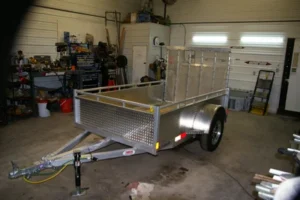
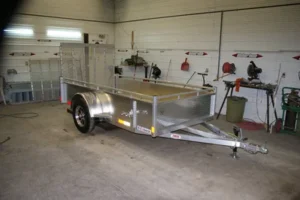
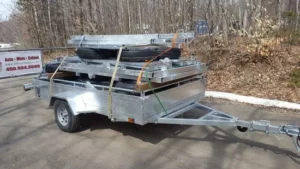
Choosing an open trailer? Our flatbed trailer guide shows how aluminum, painted steel and galvanized frames compare across our flatbed range.
Rust and corrosion: where an aluminum vs steel trailer really differs
For many buyers, rust is what settles the aluminum vs steel trailer question. Here’s how each material behaves.
Aluminum
Aluminum protects itself. The same ASM reference explains that its surface combines with oxygen to form an inert aluminum oxide film only a few ten-millionths of an inch thick, which blocks further oxidation and reseals itself if scratched. That’s why aluminum trailers don’t rust the way steel trailers do, and why they stay looking decent after years outside.
Two honest caveats. First, “doesn’t rust” isn’t “needs no care”. Most aluminum trailers still have steel axles, springs, hubs and fasteners, and those can rust. Second, aluminum can corrode in its own way, especially where it’s left in contact with wet, salty muck or with other metals in a damp environment. Rinsing off salt and keeping the trailer clean takes care of most of it.
Painted steel
Painted or powder-coated steel is protected only as long as the coating is intact. Once a stone chips the paint or a chain scratches it, moisture reaches the steel and rust starts, often spreading under the paint where you can’t see it. Painted steel trailers can last a very long time, but they need the most upkeep: washing, touching up chips and keeping an eye on hidden spots like inside crossmembers and around the tongue.
Galvanized steel
Galvanizing is steel’s answer to rust. The steel is dipped in molten zinc, which coats it inside and out. The American Galvanizers Association says a galvanized coating generally corrodes at about one-thirtieth the rate of bare steel in the same environment. That’s why galvanized trailers are popular for boat ramps, coastal areas, farms and salted winter roads. You keep steel’s strength and repairability while getting far better rust resistance than paint.
What about galvanized steel and aluminum together, for example aluminum fenders on a galvanized frame? The AGA notes there is only a slight chance of a reaction between zinc and aluminum, though a conductive medium like sea water or condensation can cause one, and it recommends an insulating barrier between dissimilar metals where possible (AGA: galvanized steel with aluminum parts).
Which wins on rust?
Aluminum and galvanized steel both beat painted steel comfortably. Between the two, aluminum has the edge on weight and appearance, galvanized has the edge on price and heavy-duty strength. If your trailer will live outside near the sea or on salted roads, we’d steer you to one of those two rather than painted steel. Our galvanized equipment trailer, 16 ft dump trailer and galvanized tilt trailer are good galvanized examples; the aluminum utility trailer and aluminum snowmobile trailer show the aluminum side.
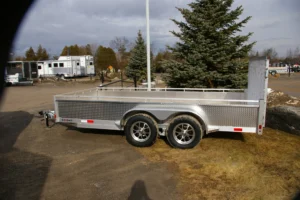
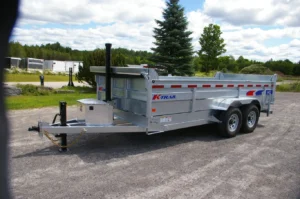
Aluminum vs steel trailer strength: is aluminum strong enough?
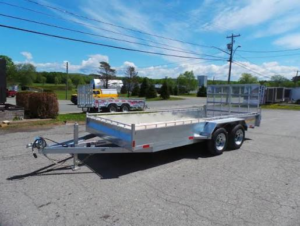
This is the most common worry we hear in the aluminum vs steel trailer discussion, and the answer is yes, for the right job. Modern aluminum alloys are strong. But aluminum is less stiff than steel, and stiffness matters on a trailer.
Engineering reference tables show it clearly. A University of California, Davis course table of average mechanical properties of typical engineering materials lists a modulus of elasticity of about 68.9 GPa for 6061-T6 aluminum and 200 GPa for A36 structural steel. In plain terms, aluminum bends about three times as much as steel of the same shape under the same load.
Trailer makers handle that by using taller beams, thicker walls and different profiles, which is why aluminum trailer frames often look chunkier than steel ones. Built properly, an aluminum trailer is rated for its GVWR just like a steel one. The rating is what matters, not the metal.
Where steel still tends to win is heavy, concentrated, impact-heavy work: tracked machines, dump bodies, demolition waste, steel beams, and anything that gets dropped onto the deck. That’s why, if you look across our range, our heavy equipment, dump and tilt trailers are steel or galvanized, while aluminum dominates utility, snowmobile, small cargo and horse trailers. It’s a pattern you’ll see across the industry.
Aluminum vs steel trailer repairs and welding
Steel is easy to repair. Almost any welding shop, farm workshop or roadside welder can fix a cracked steel crossmember or add a bracket. Aluminum is a different story. The welding equipment supplier ESAB explains in its guide to aluminium welding that aluminium oxide has a much higher melting point than the aluminium beneath it and must be removed before welding, that aluminium conducts heat away from the weld rapidly, and that the TIG process often used for it requires a higher level of skill.
What that means for you as a buyer: aluminum trailers rarely need structural repairs if they’re used within their rating, but when they do, you’ll want a welder who regularly works with aluminum. If you work somewhere remote, or you like to modify your trailer yourself with a basic welder, steel may suit you better. Galvanized steel can be welded too, but the coating burns off around the weld and should be restored with zinc-rich paint afterwards.
Aluminum vs steel trailer price: how much more does aluminum cost?
Aluminum trailers cost more, and the gap isn’t small. To give you real numbers rather than vague claims, we compared trailers of the same size from our own current listings. This is our own analysis of our own prices, which change over time, so treat the percentages as a guide, not a quote.
| Size | Steel model | Aluminum model | Aluminum costs about |
|---|---|---|---|
| 5×8, single axle | 5×8 utility trailer | 5×8 aluminum trailer | 71% more |
| 5×10, single axle | 5×10 utility trailer | 5×10 aluminum trailer | 62% more |
| 7×14, tandem axle | 7×14 utility trailer | aluminum utility trailer | 86% more |
So in our range, an aluminum utility trailer typically costs somewhere between about 60% and 90% more than a steel trailer of the same deck size. Two things to keep in mind when you read that. The steel 5×10 in this comparison has a higher GVWR (3,500 lb) than the aluminum 5×10 (2,996 lb), so they aren’t identical in every way. And the comparison is only for open utility trailers; the gap can be different for enclosed, horse and snowmobile trailers.
Galvanized steel usually sits between the two on price, though we don’t have exact same-size pairs in our current stock to put a number on it.
Cost of ownership: the price tag isn’t the whole story
The fair way to compare an aluminum vs steel trailer is over the years you’ll own it, not on the day you buy. Here’s how the costs usually play out. This is our experience and reasoning, not a published study:
- Upkeep: painted steel needs the most: regular washing, touch-up paint, and sometimes sandblasting and repainting after several years. Aluminum and galvanized need much less.
- Towing costs: a lighter aluminum trailer puts slightly less strain on your vehicle and uses a little less fuel over many trips.
- Repairs: steel is cheaper and easier to repair; aluminum repairs cost more when they’re needed, but they’re needed less often for rust.
- Resale: aluminum and galvanized trailers usually sell for a larger share of their original price, because buyers can see the frame isn’t rusting.
If you’ll keep the trailer for many years, live near the sea or on salted roads, or plan to sell it later, the aluminum or galvanized premium often comes back. If you need the lowest possible price today, use the trailer lightly, and can store it under cover, painted steel is hard to beat.
Aluminum vs steel trailer resale value and lifespan
Used trailer buyers look at the frame first. A clean, rust-free frame sells a trailer; a rusty one knocks the price down or puts buyers off completely. That’s the main reason aluminum and galvanized trailers tend to hold their value. Within the aluminum vs steel trailer comparison, this is where aluminum’s higher price is partly paid back.
There’s also an end-of-life angle. The Aluminum Association says aluminum can be recycled infinitely, that recycled aluminum is around 95% less energy-intensive to produce than new aluminum, and that 75% of all aluminum ever produced is still in use today. For buyers who care about environmental impact, that’s worth knowing. Steel is also widely recycled, so neither material goes to waste at the end of a trailer’s life.
Aluminum vs steel trailer maintenance in practice
Every trailer needs tyres, bearings, brakes and lights looked after, whatever it’s made of. Our full trailer maintenance checklist covers those. The aluminum vs steel trailer differences here are mostly about the frame and deck:
| Task | Aluminum | Painted steel | Galvanized steel |
|---|---|---|---|
| Washing off salt and mud | Recommended | Essential | Recommended |
| Touch-up of chips and scratches | Rarely needed | Regularly | Occasionally, with zinc-rich paint |
| Checking for corrosion | Steel parts and fixings | Whole frame, especially hidden spots | Deep scratches and welds |
| Weld inspection | Look for cracks, use specialist welder | Any welder can repair | Repair then re-coat |
Popular trailers in each material:
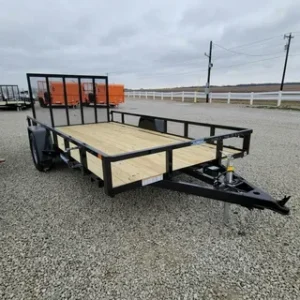
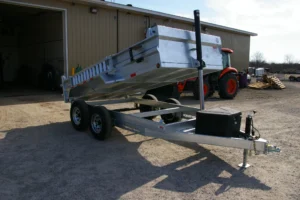
Aluminum vs steel trailer: which one for your kind of work?
The right answer depends far more on how you’ll use the trailer than on the metal itself. Here’s how we’d guide a customer in each situation.
Aluminum vs steel trailer for homeowners and garden jobs
For tip runs, garden waste, a push mower and the occasional piece of furniture, both work. Steel wins on price: the 5×8 utility trailer and 5×10 utility trailer are our most affordable trailers. Aluminum wins if you’ll move the trailer by hand, store it outside, or tow with a small car where every kilo counts; see the 5×8 aluminum trailer or 5×10 aluminum trailer. If you can keep a steel trailer under cover, steel is usually the better value here.
Aluminum vs steel trailer for landscapers
Landscapers load and unload every day, often in the wet, and park trailers outside overnight. Aluminum’s lighter weight and lack of rust make it popular, and a lighter trailer leaves more payload for mowers and materials. Look at the 7×16 aluminum trailer or 7×20 aluminum trailer. If you carry heavy stone, soil or a compact tractor, a steel tandem like the 7×18 utility trailer gives you a higher rating for less money.
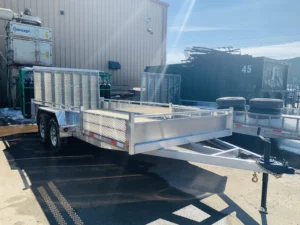
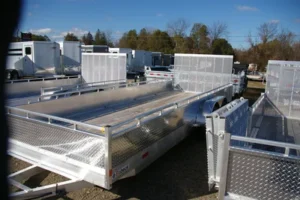
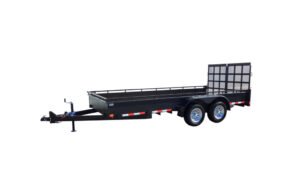
Aluminum vs steel trailer for contractors and heavy equipment
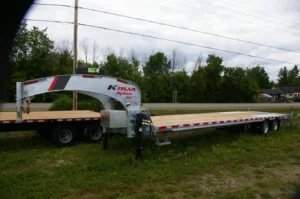
For skid steers, mini excavators and tracked machines, steel or galvanized steel is the usual choice, and it’s what we stock. Steel copes better with concentrated weight, impact and the occasional bucket dropped on the deck, and it’s easy to repair on site. Painted steel such as the heavy duty equipment trailer or 7×20 tilt trailer gives the most capacity for the money. If the trailer lives outside or you work near salt, galvanized options like the galvanized equipment trailer or 30 ft deckover trailer are worth the extra.
Aluminum vs steel trailer for dump work
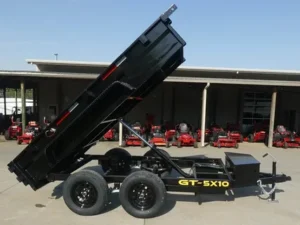
Dump trailers carry heavy, abrasive material that scrapes and dents the box, so steel and galvanized steel dominate. Our 5×10 dump trailer and 83×14 dump trailer are steel; the galvanized dump trailer and 16 ft dump trailer are galvanized for longer life outdoors.
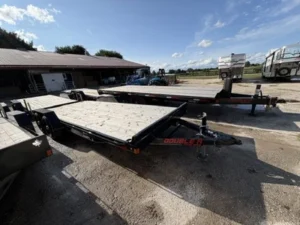
Aluminum vs steel trailer for enclosed cargo
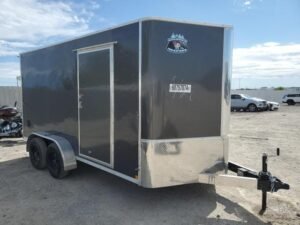
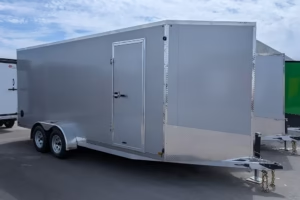
Most enclosed cargo trailers have a steel frame, with aluminum or steel skins. Fully aluminum enclosed trailers are lighter and resist rust, which matters for race teams, long-distance towing and coastal areas. Steel-framed boxes cost less and are very tough. Compare the aluminum cargo trailer with steel models like the 6×12 enclosed cargo trailer, 7×14 enclosed trailer or 20 ft enclosed trailer.
Aluminum vs steel trailer for snowmobiles
Snowmobile trailers live in salt and slush all winter, so aluminum is the clear favourite, and every sled trailer we stock is aluminum: the aluminum snowmobile trailer, 7×25 snowmobile trailer and used snowmobile trailer. Rinse the steel running gear after salty trips, though, because axles and hubs are still steel.
Aluminum vs steel trailer for horses
Horse trailers are where aluminum has taken over most of the market, because lighter trailers are easier to tow with horses aboard and aluminum resists the corrosion that urine and wet bedding cause in steel floors and frames. Most horse trailers in our current range are aluminum, including the 2 horse trailer and 3 horse trailer to the 6 horse trailer with living quarters. Floors still need care on any horse trailer; lift the mats and let the floor dry after use.

Aluminum vs steel trailer for coastal and winter-road owners
If you live near the sea, launch boats, or drive on salted roads for months each year, painted steel is the hardest material to keep looking good. Choose aluminum or galvanized steel. Which one depends on the load: aluminum for light to medium loads and the lowest weight, galvanized for heavy equipment and the best value per kilo of capacity.
Aluminum vs steel trailer on a tight budget
If the lowest price matters most, painted steel is the answer. Look after it, keep it under cover if you can, touch up chips quickly, and it will serve you for many years. A used aluminum or galvanized trailer is another way to get rust resistance for less money; browse our used trailers.
An aluminum vs steel trailer scorecard
Give each statement a tick if it’s true for you:
- I’ll store the trailer outside.
- I drive on salted roads or live near the sea.
- I need to move the trailer by hand.
- My tow vehicle is close to its towing limit.
- I’ll keep the trailer for many years or want strong resale value.
- My loads are light to medium, not heavy machinery.
Four or more ticks: aluminum is probably worth the extra. Two or three: look at galvanized steel as a middle ground. Zero or one: painted steel will likely give you the best value. This is a rule of thumb from us, not a formula, so call us if you’re on the fence.
Aluminum vs steel trailer decks and floors
The frame gets most of the attention, but the deck is what you load onto every day. Steel trailers usually have treated wood decks, which are kind to tyres and tracks, cheap to repair a board at a time, and give good grip. Some heavy trailers use steel plate or diamond plate, which lasts but gets slippery when wet. Aluminum trailers often have extruded aluminum plank floors, which don’t rot and stay light, or a wood deck on an aluminum frame.
In the aluminum vs steel trailer comparison, the floor choice often matters as much as the frame. Wood needs sealing and occasional replacement but grips well. Aluminum planks need almost no care but can be slippery in rain or ice and noisy under hard tyres. Ask what deck any trailer has before you buy.
Aluminum vs steel trailer axles, suspension and running gear
Here’s something many buyers miss: on most trailers, aluminum or steel, the axles, springs, hubs and brakes are steel. So an aluminum vs steel trailer comparison is really about the frame, deck and body. Some makers offer galvanized or painted axles and stainless fasteners, which helps a lot in salty conditions. If rust is your main worry, ask what the running gear is made of, not just the frame, and rinse it after salty trips whichever trailer you choose.
Axle count matters as much as material here; see our tandem axle trailer vs single axle guide.
Aluminum vs steel trailer: how they tow
A lighter trailer is less work for your vehicle, but weight also helps stability. Very light trailers can feel more lively behind a big vehicle when empty, while heavier steel trailers can feel more planted. Either way, correct loading matters far more than material: keep the heavy part of the load slightly ahead of the axle, as covered in our guide to securing a load, and follow our trailer towing tips. Because aluminum is less stiff, some aluminum trailers flex a little more over rough ground; that’s normal and allowed for in a properly rated design.
Aluminum vs steel trailer looks and finish
Looks shouldn’t decide a trailer purchase, but they do matter to resale. Aluminum keeps a clean silver look for years with just a wash; some owners polish it. Painted and powder-coated steel looks sharp when new and comes in colours, but chips and fading show with age. Galvanized steel starts bright and dulls to a matte grey, which many people like because it shows the coating is doing its job. In an aluminum vs steel trailer comparison focused on appearance after ten years, aluminum and galvanized usually look better than painted steel unless it’s been carefully kept.
Aluminum vs steel trailer for overseas delivery
We deliver trailers worldwide, and material can affect shipping. A lighter aluminum trailer weighs less on a truck or in a container, and it arrives without salt-air rust from a sea crossing. Steel trailers are perfectly fine to ship too, especially galvanized ones. If you’re buying from abroad, ask us for the shipping weight and dimensions of the trailers you’re considering, and we’ll quote delivery for each so you can compare the full cost of an aluminum vs steel trailer side by side.
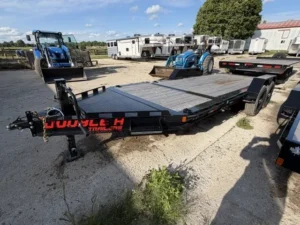
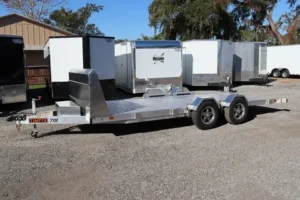
Real aluminum vs steel trailer pairs from our range
Looking at actual trailers side by side makes the aluminum vs steel trailer choice much less abstract. These pairs are taken from our current listings, using the specs on each product page:
- Small single axle: the steel 5×8 utility trailer is rated at 2,990 lb GVWR; the 5×8 aluminum trailer is rated at 2,996 lb. Practically the same rating, so the decision is about price versus weight and rust.
- 5×10 single axle: the steel 5×10 utility trailer is rated at 3,500 lb, higher than the 2,996 lb of the 5×10 aluminum trailer. Here steel gives you both a lower price and a higher rating; aluminum gives you lighter handling and no frame rust.
- 7×14 tandem: the steel 7×14 utility trailer is rated at 7,000 lb and the aluminum utility trailer at 7,010 lb. Same capacity on paper, with aluminum costing about 86% more in our listings.
- Longer decks: for 16 to 20 ft, compare the 7×16 aluminum trailer and 7×20 aluminum trailer (7,010 lb) with the steel 7×18 utility trailer rated at 9,900 lb. If you need the higher capacity, steel wins here.
That last point shows a pattern worth knowing: in our range, the highest-rated open trailers are steel. If capacity is your top priority, that tips the aluminum vs steel trailer decision towards steel or galvanized.
Who shouldn’t buy each type
Sometimes it helps to turn the question around. Based on what customers tell us, here’s who we’d gently steer away from each option:
- Probably not aluminum if you regularly carry heavy tracked machines, abrasive bulk material or steel, if your budget is tight, or if you work far from any welder who handles aluminum.
- Probably not painted steel if your trailer will live outdoors near the sea, launch boats, see months of salted roads, or if you have no time for washing and touch-ups.
- Probably not galvanized if your tow vehicle is close to its limit and every kilo counts, because galvanized weighs about as much as painted steel.
None of these are hard rules. They’re simply where we see people happiest, and unhappiest, after an aluminum vs steel trailer purchase.
Aluminum vs steel trailer myths
“Aluminum trailers are weak”
Not if they’re built and rated properly. Aluminum is less stiff than steel, so it’s designed with bigger sections, but a trailer’s GVWR is what tells you what it can carry, whatever it’s made of. Overloading is what breaks trailers, aluminum or steel.
“Steel trailers always rust out”
Neglected painted steel rusts. Looked-after painted steel lasts a long time, and galvanized steel resists rust very well. The aluminum vs steel trailer decision isn’t “rust or no rust”; it’s how much upkeep you’re willing to do.
“Aluminum trailers need no maintenance”
They need less frame care, but tyres, bearings, brakes, lights and steel running gear need exactly the same attention as on any trailer.
“Galvanized is the same as aluminum”
Galvanized trailers are silver like aluminum, which confuses people. Galvanized is steel with a zinc coating; it weighs about the same as steel. If weight is your priority, galvanized won’t give you aluminum’s saving.
“Aluminum is always the better buy”
Not always. For heavy machines, dump work, tight budgets and anyone who needs easy repairs far from a specialist welder, steel is often the smarter choice. Plenty of experienced owners run steel trailers for decades.
Buying used: aluminum vs steel trailer checks
A used trailer can be a great way into either material. What you check differs a little:
- Used steel: look hard at rust on the tongue, crossmembers, spring hangers and anywhere water sits. Push a screwdriver into suspicious spots; flaking, layered rust is structural. Surface rust is cosmetic.
- Used galvanized: look for areas where the coating has worn through to brown rust, especially at welds and where chains rub.
- Used aluminum: look for cracks near welds, especially around the tongue, axle mounts and ramp hinges, and check the steel running gear for rust. White powdery deposits around fixings point to corrosion between metals.
In all cases, check tyre age, bearings, brakes and lights. Our current used stock includes the used snowmobile trailer (aluminum), the used deckover trailer (galvanized) and the used cargo trailer. See all used trailers.
Aluminum vs steel trailer questions to ask before you buy
- What’s the empty weight, and so what’s the real payload?
- Is the frame fully aluminum, or a steel frame with aluminum parts?
- Are the axles, springs and fasteners steel, galvanized or stainless?
- For steel: painted, powder coated or galvanized?
- What’s the GVWR, and does it suit my heaviest load?
- Does it have brakes, and what type?
- Where would I get it repaired if it ever needed welding?
Ask us any of these about any trailer we sell and you’ll get a straight answer. Answering them is the quickest way to settle the aluminum vs steel trailer choice for your own situation.
Our recommendation, in one paragraph
If your loads are light to medium, your trailer lives outside or sees salt, or you want the easiest trailer to tow and the best resale value, buy aluminum. If you carry heavy machines or abrasive material, need the lowest price, or want repairs anywhere, buy steel, and choose galvanized if it’ll live outdoors or see salt. That’s the honest summary of the aluminum vs steel trailer question as we see it. It’s our opinion, based on what we sell and what customers tell us, and the right answer for you depends on your own loads and budget.
Aluminum vs steel trailer: questions people ask
Is an aluminum trailer better than a steel trailer?
Neither is better for everyone. Aluminum is lighter and resists rust but costs more. Steel is cheaper, stiffer and easier to repair. Galvanized steel offers steel’s strength with much better rust resistance than paint.
How much lighter is an aluminum trailer?
Aluminum the metal is about one-third the density of steel, but a finished aluminum trailer uses bigger sections, so the real saving varies by model. Ask for the empty weight of the trailers you’re comparing.
How much more does an aluminum trailer cost?
In our current listings, same-size aluminum utility trailers cost roughly 60% to 90% more than steel ones. Prices change, so ask us for a current quote.
Do aluminum trailers rust?
Aluminum forms a protective oxide film and doesn’t rust the way steel does. Steel parts on an aluminum trailer, such as axles and springs, can still rust.
Is a galvanized trailer as good as aluminum?
For rust resistance it’s very good: galvanized coatings generally corrode at about one-thirtieth the rate of bare steel, according to the American Galvanizers Association. It’s heavier than aluminum but usually cheaper and better for heavy work.
Can aluminum trailers carry heavy equipment?
Some are built for it, but most heavy equipment, dump and tilt trailers are steel or galvanized because steel handles concentrated weight and impact better and is easier to repair.
Aluminum vs steel trailer: which suits a small car?
For a small car with a low towing limit, aluminum is often the better fit, because a lighter trailer leaves more of the limit for your load. In any aluminum vs steel trailer comparison for small cars, check the loaded weight against the car’s towing limit first.
Which holds its value better?
In our experience, aluminum and galvanized trailers usually hold their value better than painted steel, mainly because buyers can see the frame isn’t rusting.
Shop aluminum, steel and galvanized trailers
Whichever way the aluminum vs steel trailer decision goes for you, we have trailers for sale in all three materials, and we deliver worldwide. Browse our utility trailers for both aluminum and steel models, our equipment trailers and dump trailers for steel and galvanized, and our horse trailers and snowmobile trailers for aluminum. Or see everything in the shop. If you’d like help, contact us with what you’ll carry and what you’ll tow with, and we’ll suggest one or two trailers in the material that suits you. For more buying help, read how to choose a trailer and our guide to the types of trailers.
Sources and References
- J.R. Davis (ASM International): Aluminum and Aluminum Alloys, in Alloying: Understanding the Basics (density and oxide film)
- University of California, Davis: Average Mechanical Properties of Typical Engineering Materials (modulus of elasticity)
- American Galvanizers Association: How long does hot-dip galvanizing last?
- American Galvanizers Association: Galvanized steel with aluminum parts
- US Department of Energy, FuelEconomy.gov: Driving more efficiently (weight and fuel economy)
- ESAB: A guide to aluminium welding
- The Aluminum Association: Aluminum Agenda, Recycling