
Equipment & Flatbed Trailers
Showing all 12 results
Equipment trailers carry the machines that do the heavy work: skid steers, mini excavators, compact tractors and cars. We have flatbeds, deckovers, car haulers and galvanized models for sale, from 7×16 tandems to 30 ft heavy-duty decks rated over 35,000 lb. Find yours below or ask us to match a trailer to your machine.
-
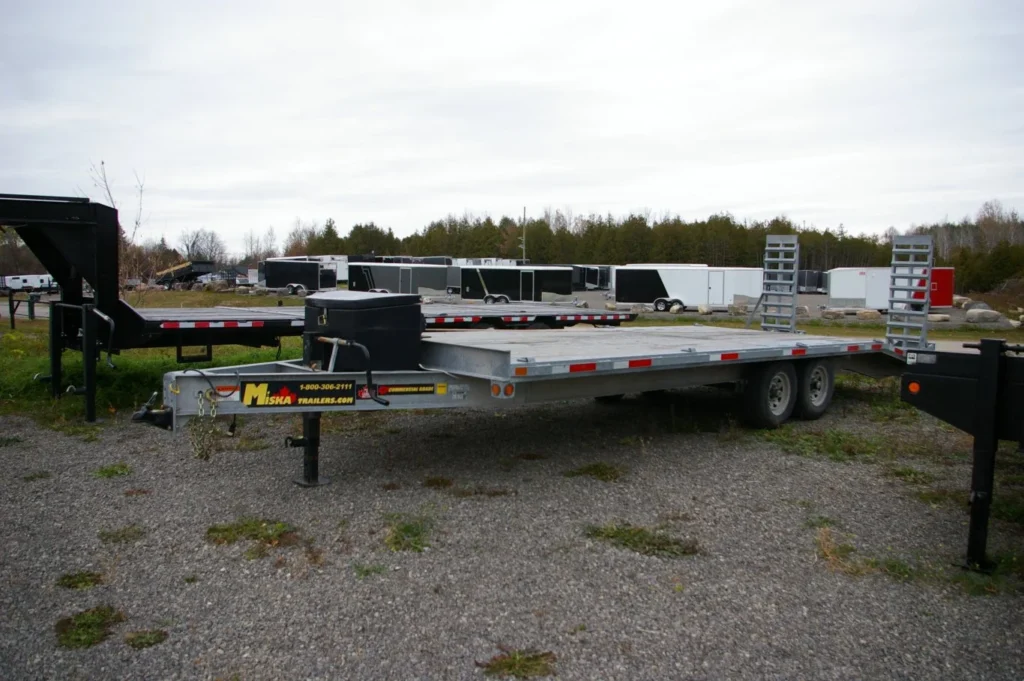
2021 USED 102X25 DECKOVER, TANDEM AXLE, GALVANIZED, 4″, 2 5/16, Deckover, Galvanized, 14000GVWR
7 900 CFA -
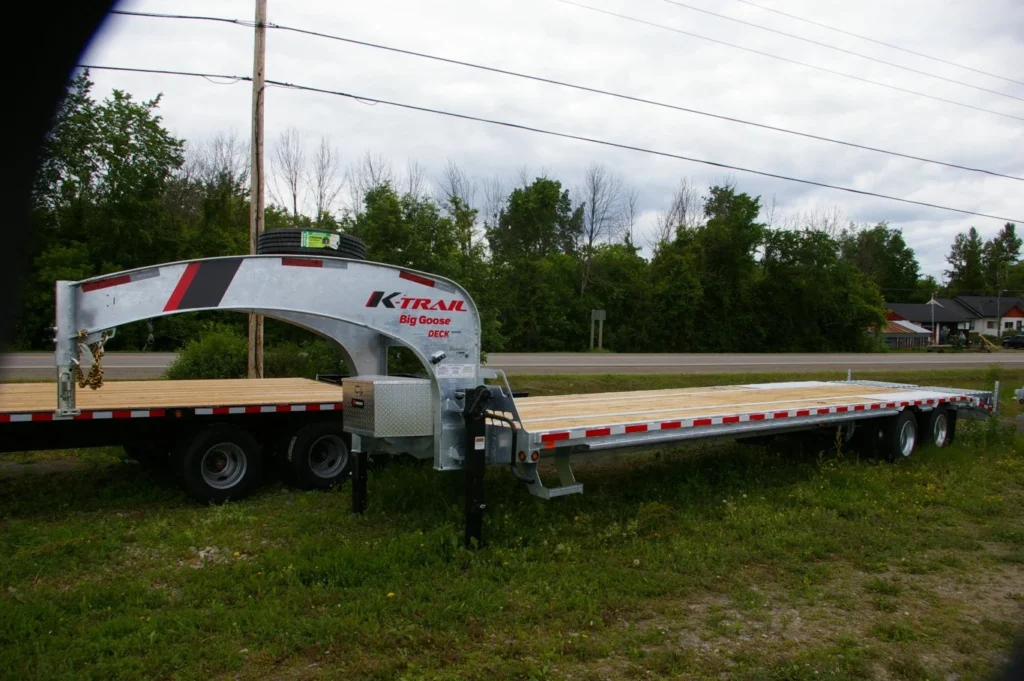
2024 102X30\5 DECKOVER TRAILER, TANDEM AXLE, GALVANIZED, SILVER, 35250GVWR
17 900 CFA -
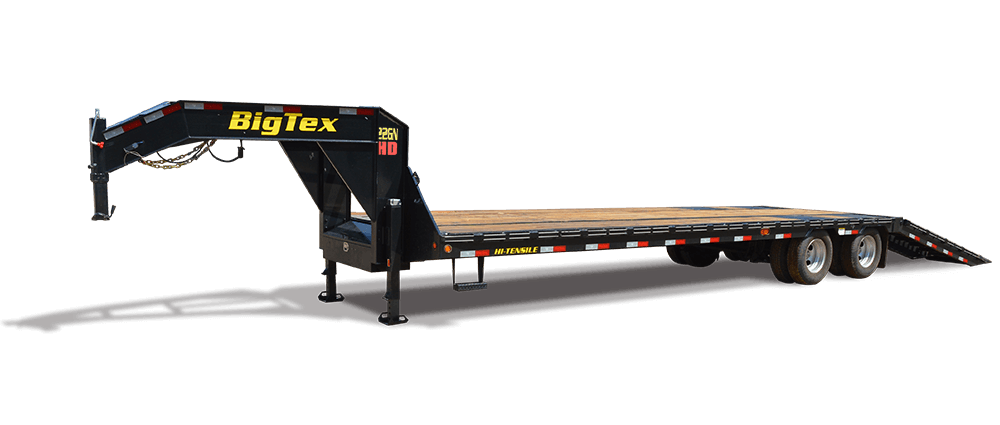
2024 USED 8.5X25 TILT & LOAD TRAILER, TANDEM AXLE, 2 5/16, Goose Neck, Black,
8 300 CFA -
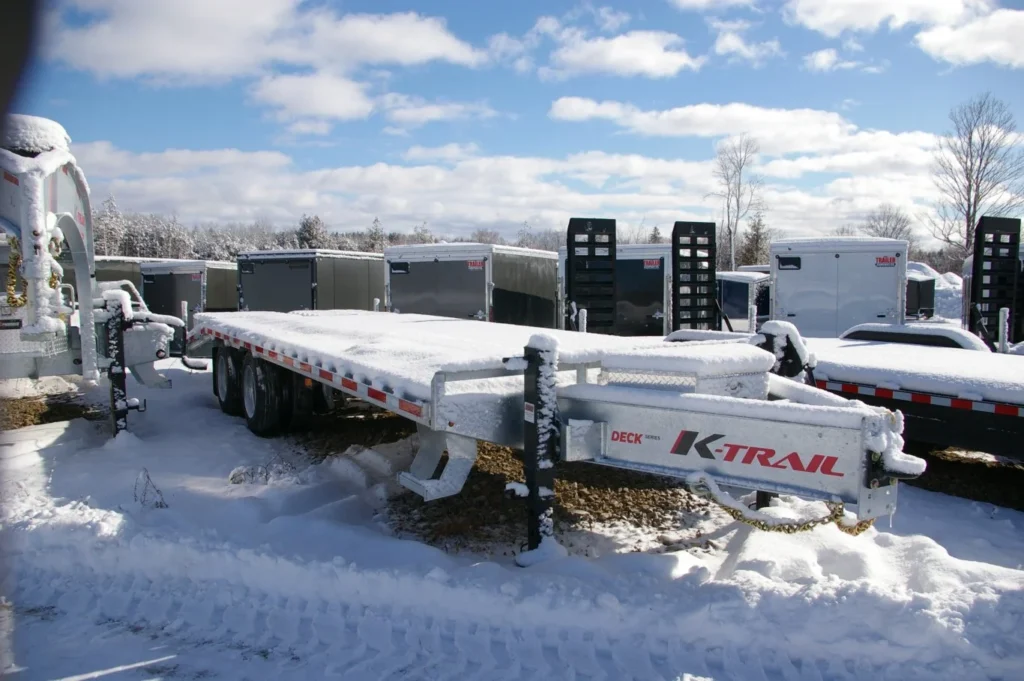
2025 102X20\5 DECKOVER TRAILER, TANDEM AXLE, 33000GVWR
11 900 CFA -
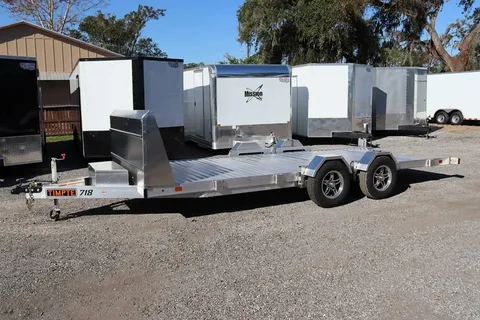
2026 18\2X14 CAR HAULER EQUIPMENT TRAILER, TANDEM AXLE, GALVANIZED, SILVER, 14000GVWR
6 400 CFA -
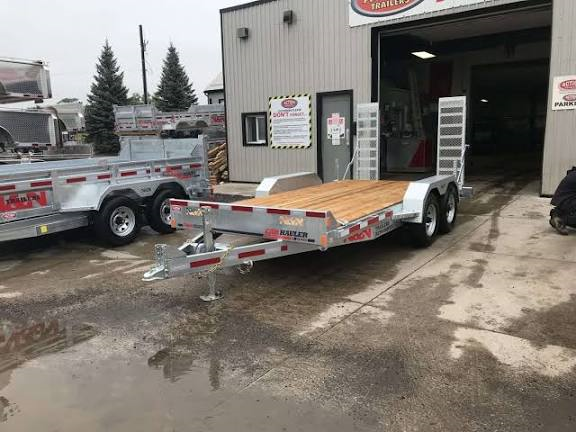
2026 18\2X20 CAR HAULER EQUIPMENT TRAILER, TANDEM AXLE, GALVANIZED, SILVER, 10000GVWR
5 100 CFA -
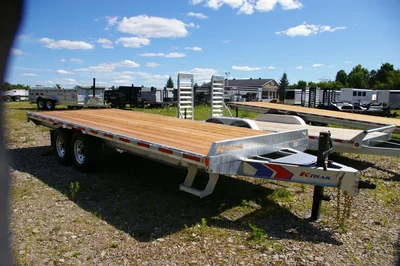
2026 20X14 DECKOVER TRAILER, TANDEM AXLE, 14000GVWR
6 200 CFA -
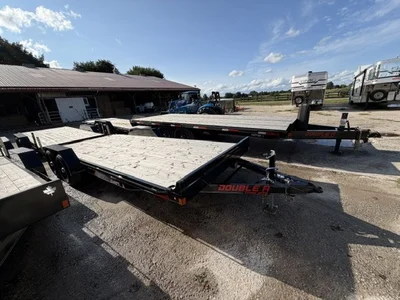
2026 7X16 EQUIPMENT TRAILER, TANDEM AXLE, STEEL, BLACK, 15400GVWR
5 100 CFA -
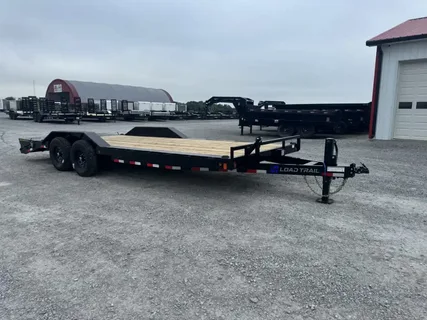
2026 7X16 EQUIPMENT TRAILER, TANDEM AXLE, STEEL, BLACK, 7700GVWR
3 900 CFA -
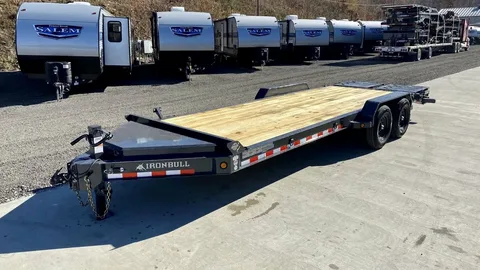
2026 7X20 EQUIPMENT TRAILER, TANDEM AXLE, STEEL, BLACK, 10000GVWR
4 200 CFA -
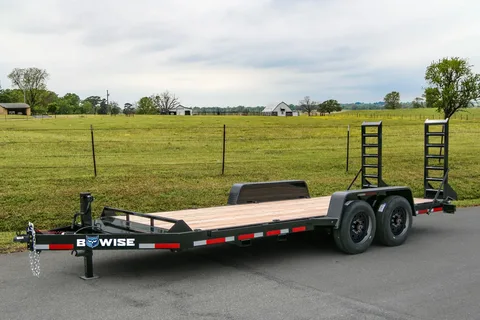
2026 8X20 DECKOVER TRAILER, TANDEM AXLE, STEEL, BLACK, 15400GVWR
4 200 CFA -
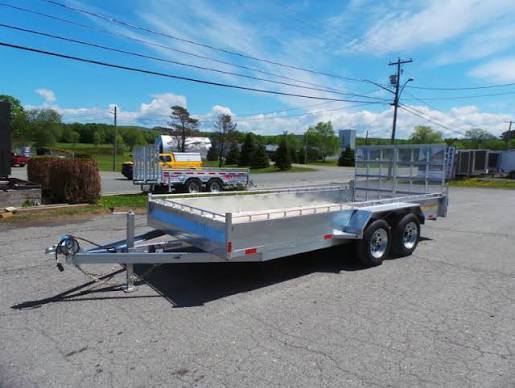
2027 7X18 EQUIPMENT TRAILER, TANDEM AXLE, GALVANIZED, GALVANIZED, SILVER, 7560GVWR
4 100 CFA

Why buy equipment trailers from us
Buying the wrong equipment trailer is an expensive mistake. Too light and you’re running over the limit every day; too big and you’re dragging extra weight and cost around for nothing. We’d rather spend ten minutes on the phone getting it right. Send us the machine’s weight with its bucket or attachment and we’ll tell you which of our equipment trailers fit, honestly.
Our range covers compact flatbeds for landscapers, deckovers for wide loads and forklift loading, car haulers, and heavy commercial decks for civil contractors and hire firms. We ship worldwide.
Equipment trailers for sale right now
A selection of the equipment trailers in stock. Click any model for full details and the current price.
| Trailer | Key details | Price |
|---|---|---|
| 7×16 equipment trailer | 7×16 flatbed, tandem | 3 900 CFA |
| Heavy duty equipment trailer | 7×16, 15,400 lb GVWR | 5 100 CFA |
| Galvanized equipment trailer | 7×18 galvanized, 7,560 lb GVWR | 4 100 CFA |
| 7×20 equipment trailer | 7×20 steel, 10,000 lb GVWR | 4 200 CFA |
| Car hauler trailer | Car hauler, galvanized, 10,000 lb | 5 100 CFA |
| Galvanized car hauler | Car hauler, galvanized, 14,000 lb | 6 400 CFA |
| 20 ft deckover trailer | 20 ft deckover, 14,000 lb | 6 200 CFA |
| 102 inch deckover trailer | 102 in deckover, 20+5 ft, 33,000 lb | 11 900 CFA |
| 30 ft deckover trailer | 30+5 ft galvanized deckover, 35,250 lb | 17 900 CFA |
| Used deckover trailer | Used 102×25 galvanized deckover | 7 900 CFA |
Types of equipment trailers
Flatbed equipment trailers
The standard choice. The deck sits between the wheels, so it’s low and easy to drive onto with ramps. Width between the fenders is usually about 7 ft (2.1 m), which suits most compact machines. Start with the 7×20 equipment trailer or the heavier-rated heavy duty equipment trailer.
Deckover trailers
Here the deck sits above the wheels, giving the full 102 in (2.59 m) width. Forklifts load from either side and wide machines don’t overhang anything. Think of it as a towable flatbed truck bed. The 20 ft deckover trailer suits builders; the 30 ft deckover trailer is for heavy commercial work.
Car haulers
Open car haulers have a dovetail to lower the loading angle and tie points for wheel straps. Ours are galvanized, so they cope with life outdoors. Compare the car hauler trailer with the galvanized car hauler.
Galvanized equipment trailers
Hot-dip galvanizing coats the steel in zinc, inside and out, so scratches from chains and stones don’t rust. It’s worth it for trailers stored outside or used on salted roads. See the galvanized equipment trailer.
Weight ratings, explained simply
Every trailer has a GVWR, the most it can weigh with the load on board. Take the trailer’s own empty weight away from that number and what’s left is your real payload. The page on gross vehicle weight rating covers the details if you want them.
Then check your tow vehicle. Its towing limit has to be higher than the loaded trailer, and the hitch, ball and drawbar all need ratings above it too. Go by the lowest number in the chain. When people ask us which of our equipment trailers will suit them, the first thing we ask is what they’re towing with and what the heaviest load will weigh.
Matching equipment trailers to machines
| Machine | Typical weight | Trailer to look at |
|---|---|---|
| Compact tractor | 1,500 to 3,500 lb | 7×16 or 7×18 flatbed |
| Skid steer | 5,000 to 9,000 lb | 7×20 or heavy duty 7×16 |
| Mini excavator (3 to 5 t) | 6,500 to 11,000 lb | Heavy duty flatbed or deckover |
| Mid-size excavator | 15,000 lb and up | 102 in or 30 ft deckover |
| Car or light truck | 3,000 to 6,000 lb | Car hauler |
These are rough guides only. Always weigh your own machine with its attachment fitted and fuel on board.
Loading equipment safely
Drive up slowly, straight and in a low gear, with someone watching the edges. Park the machine so its weight sits just ahead of the trailer axles; around 10 to 15 percent of the total should press down on the hitch. Lower buckets and blades to the deck, then chain each corner to its own anchor point with rated chain and binders. Check the chains again after the first few miles.
Popular equipment trailers right now:
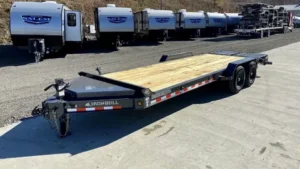
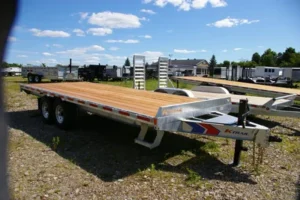
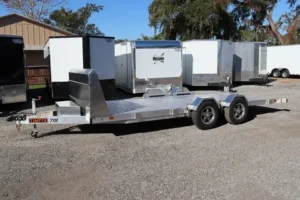
Ramps, dovetails and decks
Ramps come in a few styles. Stand-up ramps fold up against the back of the trailer and stay with it, which saves lifting them in and out. Slide-in ramps tuck under the deck. Dovetails lower the last couple of feet of the deck so the loading angle is gentler, which helps with low cars and long machines.
Decks are usually treated wood or steel. Wood grips well and is easy to replace a board at a time. Steel lasts longer but gets slippery when wet. Either way, keep the deck clean and check the fixings now and then.
Towing heavy equipment trailers
Heavy equipment trailers need a tow vehicle with real capacity, usually a 3/4-ton or 1-ton pickup, and a good brake controller set so the trailer brakes slightly before the truck. Leave double your normal following distance, take corners wide and slow, and stop after the first 50 miles (80 km) to re-check wheel nuts and chains. Some of the biggest decks use a gooseneck hitch; ask us before you order so we can check your truck matches.
It also pays to plan the route. Tight farm gates, low bridges and soft verges are much easier to avoid than to deal with once you’re there with a loaded trailer.
Keeping a trailer in good shape
Trailers don’t ask for much, but the little they ask for matters. Check tyre pressures before each trip and look at the sidewalls for cracks. Grease the wheel bearings about once a year. Test the lights every time you hitch up, and clean the plug if anything flickers. Rinse off mud and road salt, especially underneath.
Once a season, go round the frame, hinges and coupler with a spanner and a torch. Tighten anything loose and touch up chips on steel before rust starts. Looked after like that, equipment trailers easily last many years and hold their resale value well.
Related trailer categories
If you’d rather skip ramps completely, our tilt and load trailers lower the whole deck. For lighter loads, see the utility trailers, and for gravel and soil the dump trailers. Budget buyers should also check the used trailers.
Questions worth asking yourself first
Before you choose between our equipment trailers, it helps to answer a few simple questions. What’s the biggest and heaviest thing you’ll carry, and how often? What will you tow with, and what are its towing and payload limits? Where will the trailer be parked when it’s not in use? Will your needs grow over the next few years? And what’s your budget, including delivery and any extras such as a spare wheel or a coupler lock?
Send us your answers and we’ll narrow the choice down to one or two trailers that fit. It usually takes a few minutes and saves a lot of second-guessing.
Delivery worldwide
We sell to customers in many countries, not just nearby. Once you’ve picked a trailer, tell us where you are and we’ll quote delivery to your door, a depot near you, or the nearest port. For overseas orders we handle the export paperwork from our side and keep you updated until the trailer arrives.
Delivery times depend on the route and the trailer, so ask us for a date before you order. Collection is also fine if you’d rather pick up your trailer in person.
How buying from us works
- Browse our equipment trailers above and open any listing for full specs and photos.
- Send us your questions: fit, weights, options, delivery. A real person answers.
- We send a clear quote with the trailer price and delivery cost.
- Once you’re happy, place the order and we arrange delivery or collection.
- Check the trailer when it arrives and tell us straight away if anything isn’t right.
No pressure and no jargon. If a different trailer would suit you better than the one you asked about, we’ll say so.
Equipment trailers: common questions
Which of your equipment trailers will carry my skid steer?
Send us its weight with the bucket on. Most compact skid steers fit the 7×20 or the heavy duty 7×16.
Do I need a special licence for heavy equipment trailers?
At higher weights, often yes. Rules vary by country, so check locally before towing at full weight.
Flatbed or deckover?
Flatbed for a lower deck and easier ramps. Deckover for full width and side loading.
Do you ship outside your country?
Yes. Tell us your location and we’ll quote delivery.
Can I ask for more photos or a video?
Of course. Contact us and we’ll send a walk-around.
What if a trailer I like is sold?
Ask us. We can often find the same model or a close match.
Shop equipment trailers today
All of these equipment trailers are for sale now. Choose a model above, browse the shop, or contact us with your machine details. Not sure which kind suits you? Read our guide to the types of trailers.