
Description
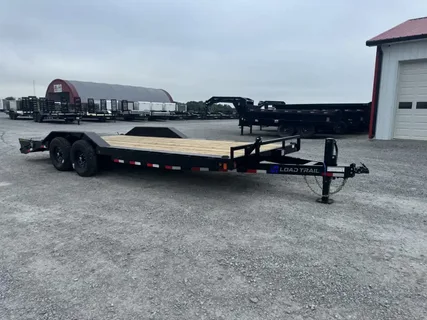
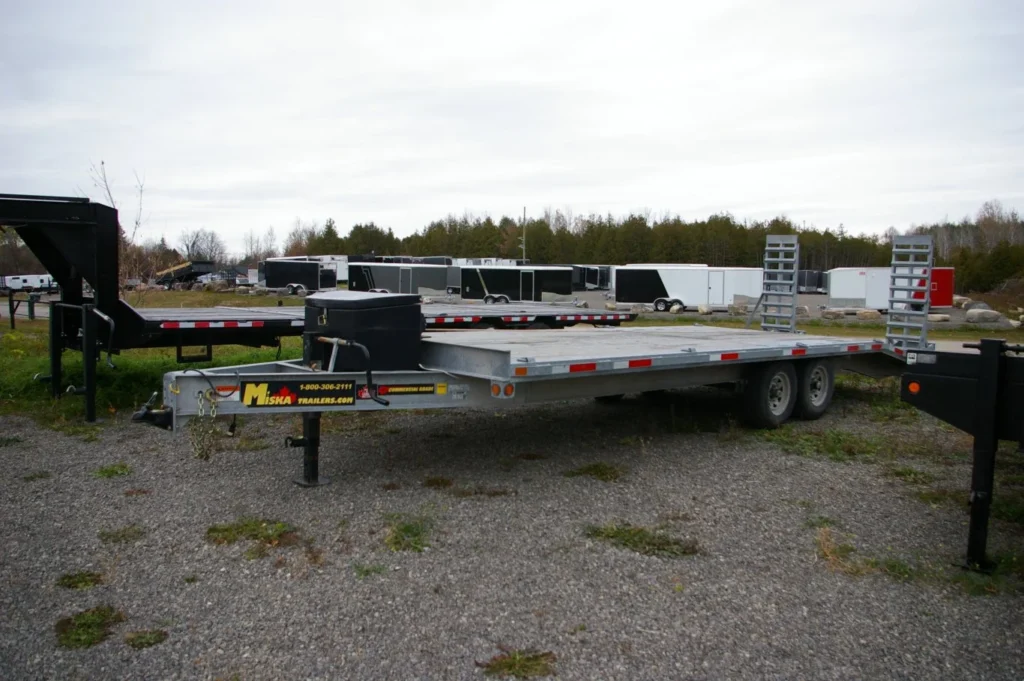
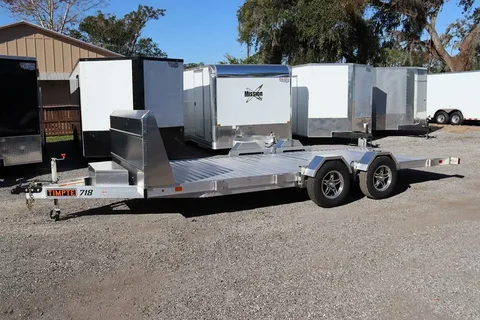
This 2026 7×16 equipment trailer is a black steel, tandem axle flatbed with a 7,700 lb GVWR. It’s made for moving compact machines like skid steers, mini excavators, tractors and mowers, and it’s sized so a regular heavy-duty pickup can pull it without fuss.
What you get with this 7×16 equipment trailer
The deck is 7 ft wide and 16 ft long, about 2.1 x 4.9 m. That fits most compact equipment with room for attachments, or two smaller machines nose to tail. The steel frame is built to take point loads from tracks and tires, and the black finish is simple to touch up if it gets scraped.
Two axles carry the weight, keep the trailer level and make it more stable at speed than a single axle trailer with the same load.
Who it suits
- Contractors with a skid steer or mini excavator
- Landscapers moving compact tractors and big mowers
- Farmers and acreage owners
- Equipment rental yards
- Anyone who needs a flatbed for vehicles or pallets
7×16 equipment trailer specifications
| Year | 2026 |
|---|---|
| Deck size | 7 ft x 16 ft (2.1 x 4.9 m) |
| Axle | Tandem |
| Frame | Steel |
| Finish | Black |
| GVWR | 7,700 lb (3,493 kg) |
For ramp type, deck material, tie-down points, brakes or empty weight on this exact unit, ask and we’ll check it for you.
Why a 7×16 equipment trailer works for so many people
Sixteen feet is long enough for a machine plus its bucket, forks or trencher, and still short enough to turn around on a job site or in a farmyard. Seven feet wide between the fenders handles most compact equipment. It’s like a flatbed truck bed you can unhitch and leave at the job.
The 7,700 lb rating puts a 7×16 equipment trailer in the sweet spot for small-to-medium machines. Heavier gear needs a higher-rated trailer, which we also stock.
Towing a 7×16 equipment trailer
The 7,700 lb GVWR (about 3,493 kg) is the combined limit for trailer and load. Subtract the trailer’s empty weight to find what you can carry. A quick read on gross vehicle weight rating is worth it if this is your first equipment trailer.
You’ll want a pickup rated for the full weight and a brake controller for the trailer brakes. Load the machine so most of its weight sits just ahead of the axles, which keeps the right amount of weight on your hitch.
Loading equipment safely
Load on level, firm ground. Line the machine up straight with the ramps and climb slowly in low gear, with the bucket low. Never stand beside the ramps while a machine is on them. Once on the deck, lower attachments, set the parking brake and turn the machine off.
Chain the machine down at four points with proper chains and binders, and chain attachments separately. Check the chains after the first few kilometres, since loads settle.
Looking after it
Grease the bearings once a year, check tire pressures before every trip and keep the brakes adjusted. Touch up chips on the frame and wash off salt and mud. If the deck is wood, replace cracked boards early. A 7×16 equipment trailer that gets basic care will carry machines for years.
Mistakes to avoid
Overloading is the first. Machine plus attachments plus fuel adds up quickly. Check the real weights against the GVWR.
Placing the machine too far back is the second. That makes the trailer sway. The third is using straps instead of chains for heavy steel equipment. The fourth is forgetting to secure the ramps before driving off.
How owners use a 7×16 equipment trailer
Contractors move a skid steer between jobs every day. Landscapers carry compact tractors with box blades. Farmers use a 7×16 equipment trailer for small tractors, quads, hay and fencing. Rental yards send one out with machines. Some owners even use it to move a car.
Compare other equipment trailers
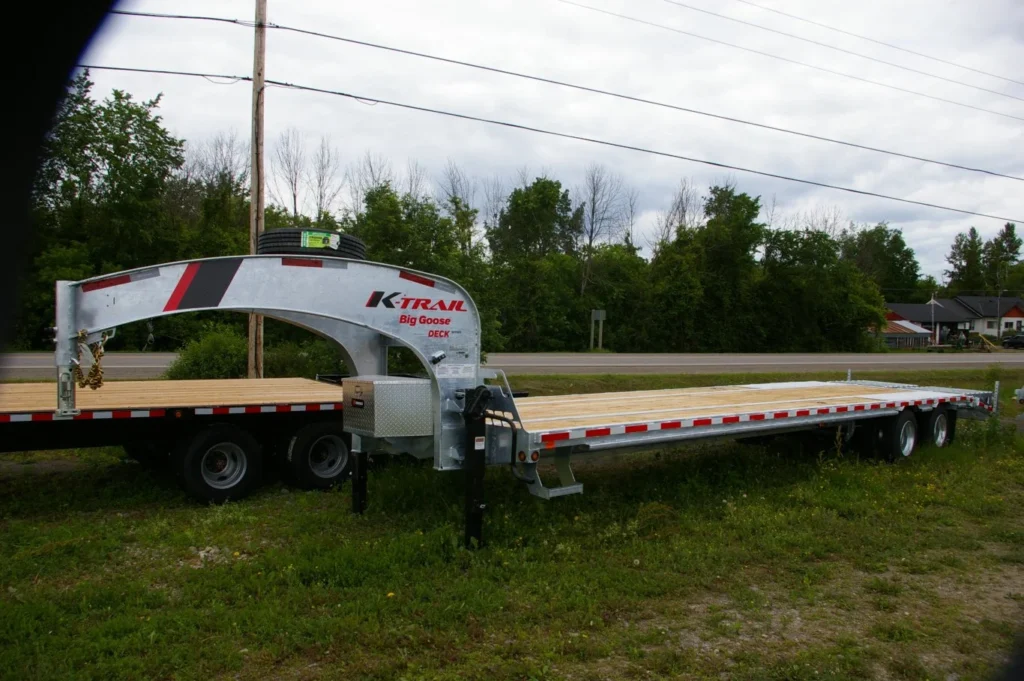
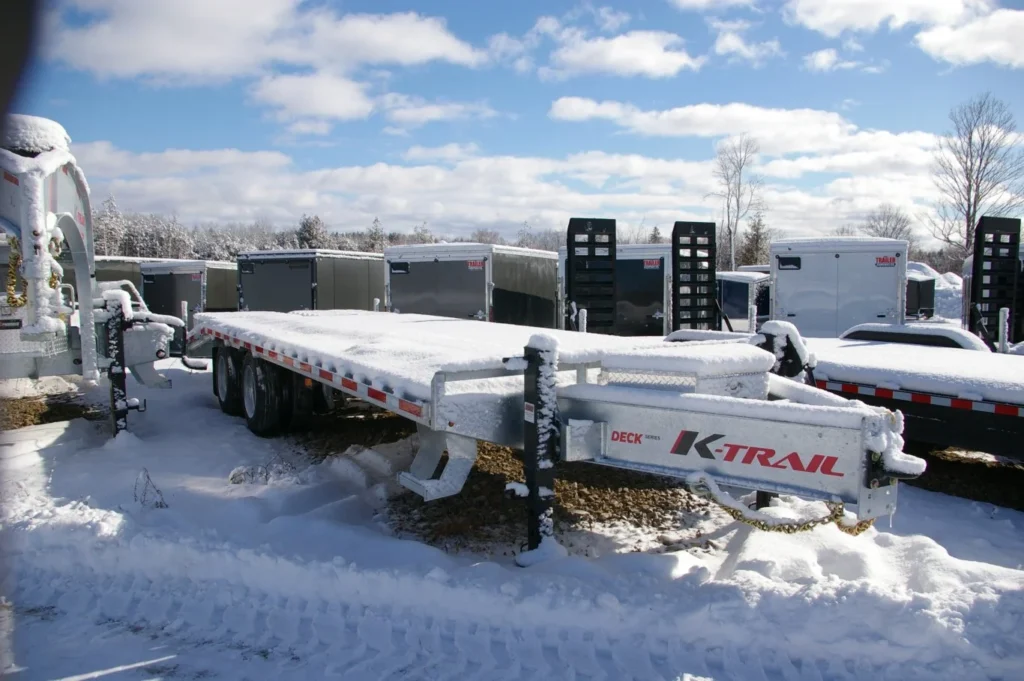
Need more capacity? The 7×16 equipment trailer rated at 15,400 lb handles heavier machines. The 7×20 equipment trailer adds four feet, and the galvanized 7×18 equipment trailer resists rust better.
 7×16 equipment trailer, 15,400 lb
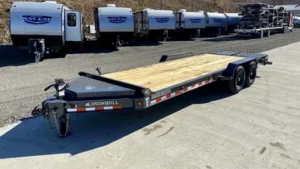 7×20 equipment trailer
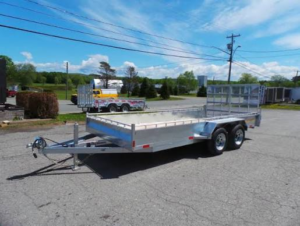 7×18 galvanized equipment trailer
For ramp-free loading, see our tilt trailers.
Accessories worth adding
A good set of chains and binders is the first thing to buy for a 7×16 equipment trailer. Straps are fine for light loads, but steel machines need chain. After that, owners usually add wheel chocks, a spare tire, a tongue-mounted toolbox for chains and gloves, and LED work lights for loading in the dark. If you carry cars or non-running machines, a front-mounted winch saves a lot of pushing.
Pre-trip checklist
- Coupler latched and pinned, chains crossed, breakaway cable attached
- Trailer brakes tested at low speed
- All lights working
- Tire pressures right, wheel nuts tight
- Machine chained at four points, attachments chained separately
- Ramps raised and secured
Walk around once before you go, then check the chains again after the first few kilometres.
Matching the trailer to your machine
Start with the machine’s operating weight, not the brochure’s bare figure. Add the bucket or attachment, a full fuel tank and any tools you carry. That total plus the trailer’s empty weight needs to stay under the 7,700 lb GVWR.
Then check width. Measure across the widest point of the tracks or tires and compare it with the space between the fenders. Finally, check length. A 7×16 equipment trailer gives you room for most compact machines plus an attachment, but long-reach equipment may need a 20 ft deck.
If you’re close to the limits on any of these, step up a size. It’s better to have spare capacity than to tow at the edge every day.
Storing a 7×16 equipment trailer
Park on firm, level ground with the jack on a block. Raise the ramps so they don’t get bent or stolen. If the trailer sits for weeks, move it occasionally so the tires don’t flat-spot, and check pressures before the next job. Touch up chips before winter and keep the deck boards sealed if they’re wood. A coupler lock is cheap insurance, since equipment trailers are a common target.
Trailer terms explained
Some useful terms when you shop for a 7×16 equipment trailer.
- GVWR: the most the trailer and its load can weigh together.
- Payload: the GVWR minus the trailer’s empty weight. This is what you can actually carry.
- Tongue weight: the downward weight on your hitch, usually around 10 to 15 percent of the loaded weight on a bumper pull trailer.
- Tandem axle: two axles, one behind the other, that share the load and make the trailer more stable.
- Dovetail: a short sloped section at the back of some decks that lowers the loading angle.
- Breakaway cable: a cable that applies the trailer brakes if it ever comes off the hitch.
- Brake controller: the unit in your vehicle that runs the trailer’s electric brakes.
Before you buy
Write down every machine you plan to carry, with its operating weight, width and length, plus the attachments that travel with it. Check your truck tow rating and payload, and confirm you have a brake controller. Ask us about the ramps, deck boards and tie-down points on this unit. With those details sorted, you can be confident the trailer suits your work today and leaves a little room for the next machine you buy.
If you are unsure about any of these points, send us the make and model of your machine and your truck, and we will tell you plainly whether this trailer is a good match.
Common questions
Will a skid steer fit on this 7×16 equipment trailer?
Many compact skid steers do. Check the machine’s operating weight and width against the GVWR and deck width.
What truck do I need?
Usually a heavy-duty half-ton or a 3/4-ton pickup with the right tow rating and a brake controller.
Can I carry a car?
Yes, if it fits between the fenders and you strap it properly.
Do I need registration?
Rules vary by country and region. Check with your local road authority.
Do I need chains or straps?
Chains and binders for steel machines. Straps are fine for lighter loads and soft items.
Can I leave the machine on the trailer overnight?
You can, but lock the trailer and the machine, and park somewhere out of sight if you can.
Can I use it for hay or pallets?
Yes. A flat deck is handy for hay bales, pallets of block or fencing supplies. Strap everything well and keep the weight centred over the axles.
What tire pressure should I run?
Use the pressure printed on the tire sidewall or the trailer label, and check it cold before every trip.
What to check when it arrives
Check lights, brakes, tire pressures, wheel nuts and the ramps. Look at the tie-down points and deck. Ask for the bearing and brake service interval.
Buy this 7×16 equipment trailer
This 7×16 equipment trailer is for sale now. Add it to your cart, or contact our team to check machine fit or arrange delivery. You can browse every equipment trailer for sale or the full shop.
Reviews
There are no reviews yet.