
Description
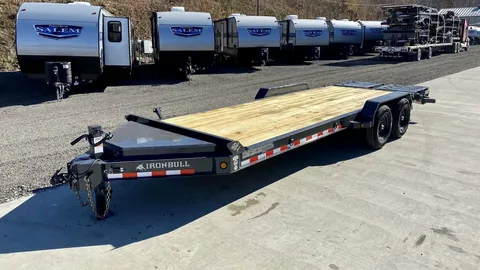
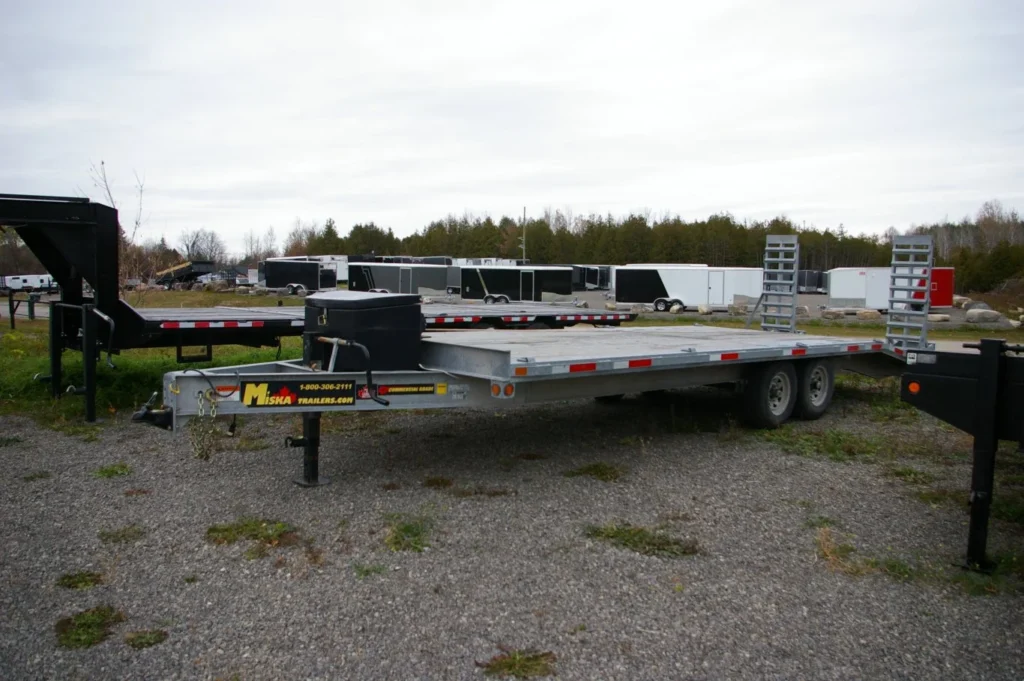
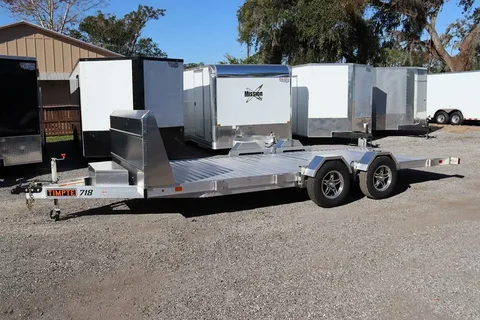
This 2026 7×20 equipment trailer is a black steel flatbed on tandem axles with a 10,000 lb GVWR. Twenty feet of deck and a strong rating make it a real workhorse for skid steers, tractors and small excavators, and it’s for sale now.
What you get with this 7×20 equipment trailer
The deck is about 7 by 20 ft, roughly 2.1 x 6.1 m. That length gives you room for a machine plus its attachments, or a long load of pipe and timber. A 10,000 lb (4,536 kg) GVWR covers many compact machines with payload to spare.
Who it suits
- Contractors with a skid steer
- Farmers moving tractors and implements
- Excavation and drainage crews
- Anyone hauling long materials
7×20 equipment trailer specifications
| Year | 2026 |
|---|---|
| Deck size | 7 ft x 20 ft (2.1 x 6.1 m) |
| Axle | Tandem |
| Frame | Steel |
| Finish | Black |
| GVWR | 10,000 lb (4,536 kg) |
Ask us for ramps, dovetail, deck material, brakes and empty weight.
Is 20 feet the right length?
Measure your machine with its bucket or attachment on. Add a couple of feet so you can position the weight properly. If you’ll carry a machine plus a second attachment or pallets, 20 ft gives you breathing room that an 18 does not. It still turns reasonably well on a farm track.
Towing a 7×20 equipment trailer
Plan on a 3/4-ton or 1-ton pickup and a brake controller for heavy loads. The gross vehicle weight rating includes the trailer itself. A flatbed like this works much like a small flatbed truck deck, just behind your pickup.
Loading machines
Drive up slow, park just forward of the axles and chain at four corners. Lower buckets and blades to the deck.
Mistakes to avoid
Parking the machine too far back to save time unloading. It takes weight off the hitch and causes sway.
Pre-trip checklist
- Coupler latched and pinned, safety chains crossed and hooked
- Breakaway cable clipped to the vehicle, not to the chains
- Trailer brakes tested at walking speed
- All lights and indicators working
- Tire pressures and wheel nuts checked
- Load chained or strapped, weight just ahead of the axles
- Jack raised and ramps or doors secured
Run through this every time you hook up your 7×20 equipment trailer. Then check the load again after the first few kilometres, because things settle.
Trailer terms explained
Useful words when you shop for a 7×20 equipment trailer:
- GVWR: the most the trailer and its load can weigh together.
- Payload: the GVWR minus the empty weight of the trailer.
- Deckover: a deck that sits above the wheels, giving full width with no fenders in the way.
- Dovetail: a short sloped section at the back of some decks that lowers the loading angle.
- Stake pockets: slots along the deck edge for posts, side boards and tie-downs.
- Brake controller: the unit in your vehicle that runs the trailer brakes.
How owners use a 7×20 equipment trailer
Contractors move a skid steer and a pallet of materials in one trip. Farmers carry a tractor to a far field. A 7×20 equipment trailer also handles long loads like fence posts or pipe.
Storing it
Park on firm, level ground with the jack on a block so it does not sink. Touch up chips before winter so rust does not get started. If the trailer sits for weeks, move it now and then so the tires do not flat-spot, and check pressures before the next trip. A coupler lock or wheel clamp is cheap insurance when your 7×20 equipment trailer is parked where people can see it.
Compare other equipment trailers
The galvanized equipment trailer is a 7×18 that resists rust. The 7×16 equipment trailer is smaller. For a wider deck, see the deckover trailer.
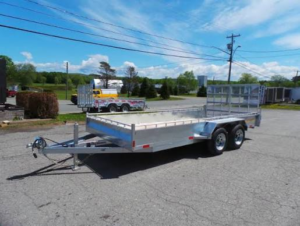 Galvanized equipment trailer
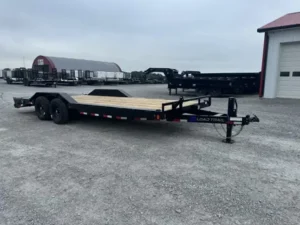 7×16 equipment trailer
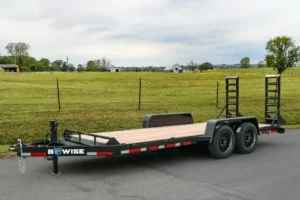 Deckover trailer
Our practical guide to choosing a trailer covers sizing.
Accessories worth adding
A good set of chains and binders comes first for heavy machines. After that, owners usually add wheel chocks, a spare tire, a tongue-mounted toolbox for chains and gloves, edge protectors for straps and LED work lights for loading in the dark. A front winch saves a lot of pushing with cars and machines that do not run. These small extras make a 7×20 equipment trailer safer and quicker to use every day.
Before you buy
List every machine you plan to carry with its operating weight, width and length, plus attachments. Check your truck tow rating and payload, and confirm you have a brake controller. Think about how you load, from the back with ramps or from the side with a forklift. Measure your parking and turning space too. If those numbers fit, this 7×20 equipment trailer suits your work. If you are unsure, send us the details and we will give you an honest answer.
Driving with heavy equipment
A machine on the deck raises the centre of gravity, so take corners slowly and brake early. Check chains after the first few kilometres and at every stop, since loads settle. Watch for low bridges and wires if the machine is tall. Leave plenty of space to the vehicle in front. A loaded 7×20 equipment trailer behaves very differently from an empty one, so drive to the load, not the speed limit.
Common questions
Can this 7×20 equipment trailer carry a skid steer?
Most compact skid steers, yes. Send us the weight with attachment.
Does it have brakes on both axles?
Ask us to confirm.
What ramps does it come with?
Ask us for the ramp setup on this unit.
Chains or straps?
Chains and binders for steel machines. Straps for lighter or soft loads, with edge protection.
Can I leave a machine on it overnight?
You can, but lock both the trailer and the machine and park out of sight if possible.
Do you offer delivery?
Ask us about delivery to your area when you order your 7×20 equipment trailer.
What to check when it arrives
Check ramps, deck, chain points, lights, brakes and tires.
Matching the hitch
Ball size has to match the coupler exactly. A 2 in ball in a 2 5/16 in coupler can pop off over a bump. Check the rating stamped on the ball, the drawbar and the receiver, and go by the lowest of the three.
Ride height matters too. Your 7×20 equipment trailer should sit level or a fraction nose down when hitched. If it tips back, get a drop or rise drawbar to fix it rather than living with it, because a nose-high trailer sways more and wears its tires unevenly.
Parking and storing between jobs
Park on firm, level ground where you can. Chock a wheel on both sides if the ground slopes even slightly, and put a board under the jack foot on soft soil or hot asphalt so it doesn’t sink. A coupler lock costs little and stops the easiest kind of theft.
Lift the tongue a touch higher than the back so rain runs off instead of pooling. If your 7×20 equipment trailer will sit for months, take some weight off the tires with stands and cover the coupler so it doesn’t fill with grit.
Registration and paperwork
Rules vary by country and region. Most places want trailers registered and plated, and many ask for brakes once the loaded weight passes a set limit. Some also need a separate safety inspection. Check what applies where you live before delivery so the paperwork is ready and you can use your 7×20 equipment trailer straight away. We supply the documents you need from our side, including the VIN and build details, and we can answer questions about weights and ratings.
Tires and wheel bearings
Trailer tires age faster than they wear. A set can look fine on tread and still be cracked in the sidewalls after five or six years, especially if the trailer sits outside in the sun. Check the date code on the sidewall when you buy spares, and keep them at the pressure printed on the tire, not the one on your tow vehicle door.
Bearings want fresh grease about once a year or every 12,000 miles (20,000 km), whichever comes first. Feel the hubs with the back of your hand at a fuel stop. Warm is normal. Too hot to touch means stop and look before going further. A spare wheel that fits your 7×20 equipment trailer is cheap insurance, so carry one.
Wiring and lights
Most electrical trouble on a trailer comes down to a bad ground. If a light flickers or the indicators blink at a strange speed, clean the ground point on the frame and the plug pins before buying new bulbs. A little dielectric grease on the plug keeps water out.
LED lights draw less power and last longer, but they still need a clean connection. Test everything on your 7×20 equipment trailer with a helper before each trip. It takes thirty seconds and saves a roadside stop.
Talk to us before you order
Every buyer tows something different and carries something different. If you want to double-check that this 7×20 equipment trailer suits your vehicle, your hitch or the load you have in mind, send us a message with the details. We will give you a plain answer, tell you what we know about this exact unit and point you to another model if it fits your needs better. No pressure, just straight advice.
Buy this 7×20 equipment trailer
This 7×20 equipment trailer is for sale now. Add it to your cart, or contact us. See every equipment trailer for sale or the shop.
Reviews
There are no reviews yet.