
Description
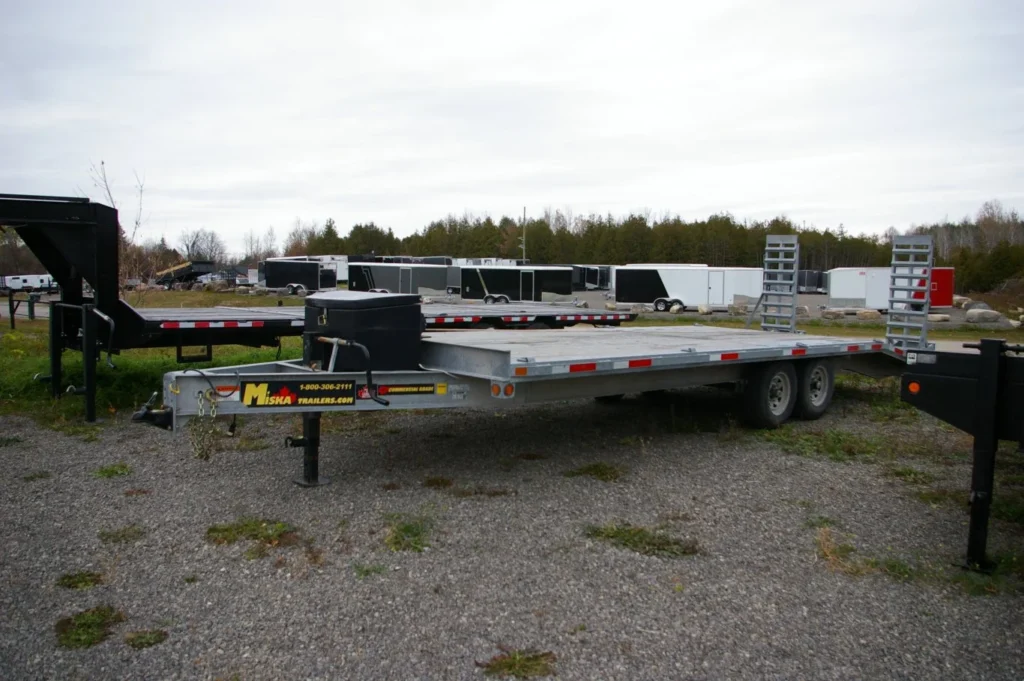
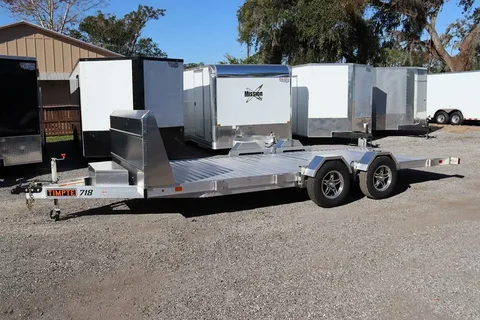
This 2026 deckover trailer is an 8×20 black steel model on two axles with a 15,400 lb GVWR. The deck sits above the wheels, so you get the full width to load on, with no fenders in the way. It’s built for heavy equipment, pallets, building materials and anything that’s too wide for a standard flatbed.
What you get with this deckover trailer
The deck is 8 ft wide and 20 ft long, about 2.4 x 6.1 m. Because it runs over the wheels, the whole width is usable. That’s the main reason people buy a deckover trailer: you can load from the sides with a forklift, and wide machines or pallets fit without fighting the fenders.
A 15,400 lb (about 6,985 kg) rating on two axles puts it in heavy-duty territory. It’s the kind of trailer contractors use for mid-size machines and full pallet loads.
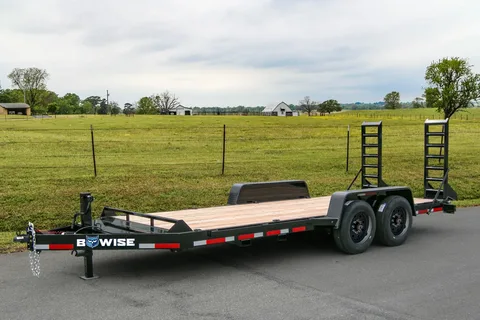
Who it suits
- Contractors moving mid-size equipment
- Builders and suppliers hauling pallets and materials
- Farmers carrying hay, machinery and fencing
- Hot-shot and delivery operators
- Anyone who loads with a forklift from the side
Deckover trailer specifications
| Year | 2026 |
|---|---|
| Deck size | 8 ft x 20 ft (2.4 x 6.1 m) |
| Axle | Tandem |
| Frame | Steel |
| Finish | Black |
| GVWR | 15,400 lb (6,985 kg) |
For ramp style, deck height, stake pockets, brakes or empty weight on this exact unit, ask and we’ll confirm.
Deckover or lowboy-style flatbed?
A standard flatbed sits lower between the wheels, which makes ramps less steep. A deckover trailer sits higher, so the loading angle is steeper, but you gain full deck width and side loading. It’s basically a flatbed truck bed on wheels with nothing in the way.
If you load from the sides, carry pallets or have wide machines, the deckover wins. If you load low cars or very tall machines from the back, a lower flatbed or a tilt deck might suit you better.
Towing a deckover trailer
The 15,400 lb GVWR includes the trailer’s own weight, so subtract that to find your payload. Read up on gross vehicle weight rating if you need a refresher. You’ll need a 3/4-ton or 1-ton truck rated for the full weight, plus a brake controller.
Keep the load centred side to side and set most of the weight just ahead of the axles. A heavy deckover trailer with too much weight at the back will sway and push your truck around.
Loading and securing
Load on level ground. For machines, use the ramps slowly in low gear with someone guiding you. For pallets, a forklift from the side is fast and easy. Use chains and binders on equipment and straps on soft or boxed loads, and protect edges where straps cross.
Check everything after the first few kilometres. Loads settle, and chains loosen.
Looking after it
Grease the bearings, check tire pressures before every trip and keep the brakes adjusted. Touch up chips and wash off salt. If the deck is wood, seal it now and then and replace cracked boards early. A deckover trailer that’s kept on top of will work hard for a long time.
Mistakes to avoid
Overloading is the first. Pallets of block, stone or steel get heavy fast. Check the weights.
Uneven loading side to side is the second, since a deckover trailer sits higher and leans more. The third is poor securing, especially with straps on steel loads. The fourth is forgetting the deck height when loading low machines up steep ramps.
How owners use a deckover trailer
Contractors carry skid steers, compact track loaders and excavators. Suppliers deliver pallets of block, pavers and timber. Farmers haul round bales and machinery. Some hot-shot drivers use a deckover trailer for paid deliveries.
Compare other deckover trailers
Need serious capacity? The 102×20 deckover trailer rated at 33,000 lb is built for big machines. The 20×14 deckover trailer is another 14,000 lb option. For ramp-free loading, the ETL822-14K deckover power tilt tilts the whole deck.
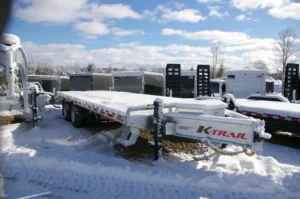 102×20 deckover trailer, 33,000 lb
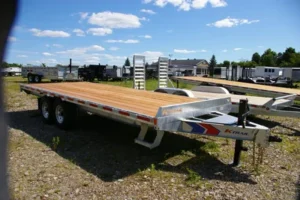 20×14 deckover trailer
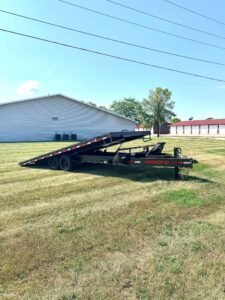 ETL822-14K deckover power tilt
See more in our equipment trailer range.
Accessories worth adding
Chains and binders come first for heavy equipment, and ratchet straps with edge protectors for pallets and boxed loads. Stake pockets let you add side boards or posts if you carry loose material. A front winch helps with cars and machines that don’t run. Many owners also fit a toolbox to the tongue, LED work lights and a spare tire mount. A tarp and bungees are handy for covering timber or bagged products.
Pre-trip checklist
- Coupler latched and pinned, safety chains crossed, breakaway cable attached
- Brakes tested at low speed
- Lights working on both sides
- Tire pressures and wheel nuts checked
- Load centred, chained or strapped, edges protected
- Ramps raised and secured
Re-check chains and straps after the first few kilometres and at every fuel stop.
Planning loads by weight
Big decks invite big loads. Before you fill a deckover trailer, add up what’s going on it. Pallets of concrete block, pavers or steel can weigh well over a tonne each. Machines weigh more with attachments and a full tank. Subtract the trailer’s empty weight from the 15,400 lb GVWR and that’s your real limit.
Spread the weight evenly. Keep most of it just ahead of the axles, with heavy pallets over the frame rails, not hanging over the sides. A balanced load tows straight and stops properly.
Side loading with a forklift
Side loading is where a deckover shines. Park on level ground, set the truck’s parking brake and chock the trailer wheels. Place pallets evenly from front to back, keeping the heaviest just ahead of the axles. Leave room between pallets so you can get straps and chains around them.
Storing it
Park on firm ground with the jack on a block and the ramps up. Move the trailer every few weeks so the tires don’t flat-spot. Seal wooden deck boards and touch up chips before winter. A coupler lock or wheel clamp is a good idea, since a deckover trailer is valuable and easy to hitch.
Trailer terms explained
Terms you will see when you compare any deckover trailer.
- GVWR: the most the trailer and its load can weigh together.
- Payload: the GVWR minus the trailer’s empty weight. This is what you can actually carry.
- Tongue weight: the downward weight on your hitch, usually around 10 to 15 percent of the loaded weight on a bumper pull trailer.
- Tandem axle: two axles, one behind the other, that share the load and make the trailer more stable.
- Stake pockets: slots along the deck edge for posts, side boards or tie-downs.
- Breakaway cable: a cable that applies the trailer brakes if it ever comes off the hitch.
- Brake controller: the unit in your vehicle that runs the trailer’s electric brakes.
Before you buy
List the heaviest loads you carry, whether machines or pallets, and add up their real weights. Check that your truck is rated for the loaded trailer and that you have a brake controller. Think about how you load: if you use a forklift from the side, a deckover is ideal. If you mainly drive low machines up from the back, ask us about the ramp angle. Finally, make sure you have space to park a 20 ft trailer and turn it around at home and on site.
If you are not sure, send us a list of what you plan to haul and the truck you drive. We will tell you honestly whether this trailer suits the job or whether a different deck would work better.
Common questions
Why choose a deckover trailer?
Full deck width, side loading with a forklift and no fenders in the way.
What truck do I need?
A 3/4-ton or 1-ton pickup rated for the full weight, with a brake controller.
Can I carry a car?
Yes, but the higher deck means steeper ramps, so low cars can scrape.
Do I need a special licence?
Rules vary by country and region, especially above certain weights. Check locally.
How high is the deck?
Deckover decks sit above the wheels, so they are higher than a standard flatbed. Ask us for the exact height on this unit.
Can I load from the side?
Yes. That is one of the main reasons to buy a deckover. A forklift can load pallets from either side.
Can I carry two machines?
Often, yes. A 20 ft deck fits two compact machines nose to tail. Add up both weights plus attachments and make sure the total stays under the GVWR.
What tire pressure should I run?
Use the figure on the tire sidewall or trailer label, checked cold before each trip.
What to check when it arrives
Check lights, brakes, tire pressures, wheel nuts, ramps and tie-down points. Ask for the service schedule for brakes and bearings.
Buy this deckover trailer
This deckover trailer is for sale now. Add it to your cart, or get in touch about load fit, setup or delivery. You can also browse every equipment trailer for sale or the full shop.
Reviews
There are no reviews yet.