
Description
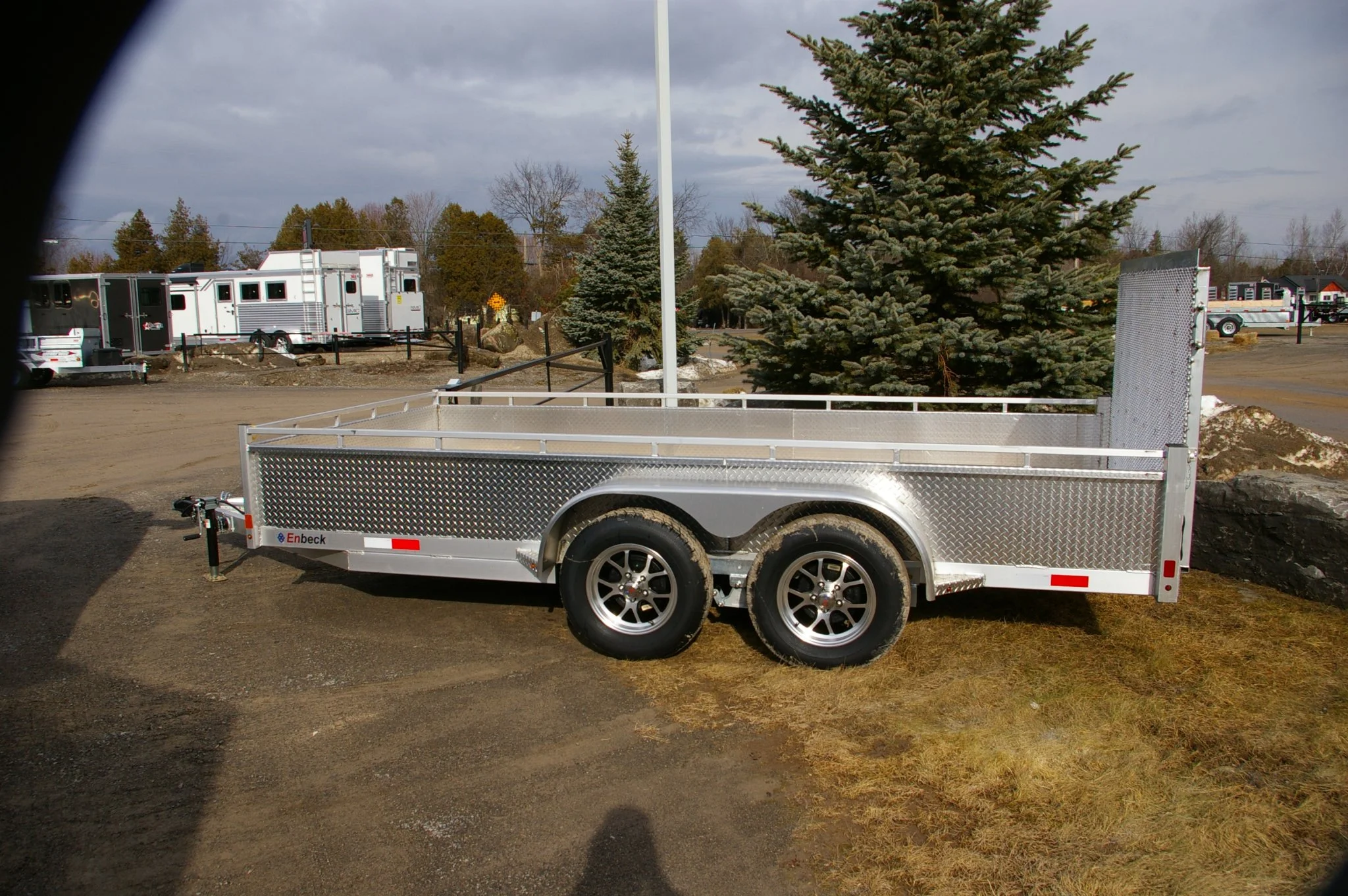
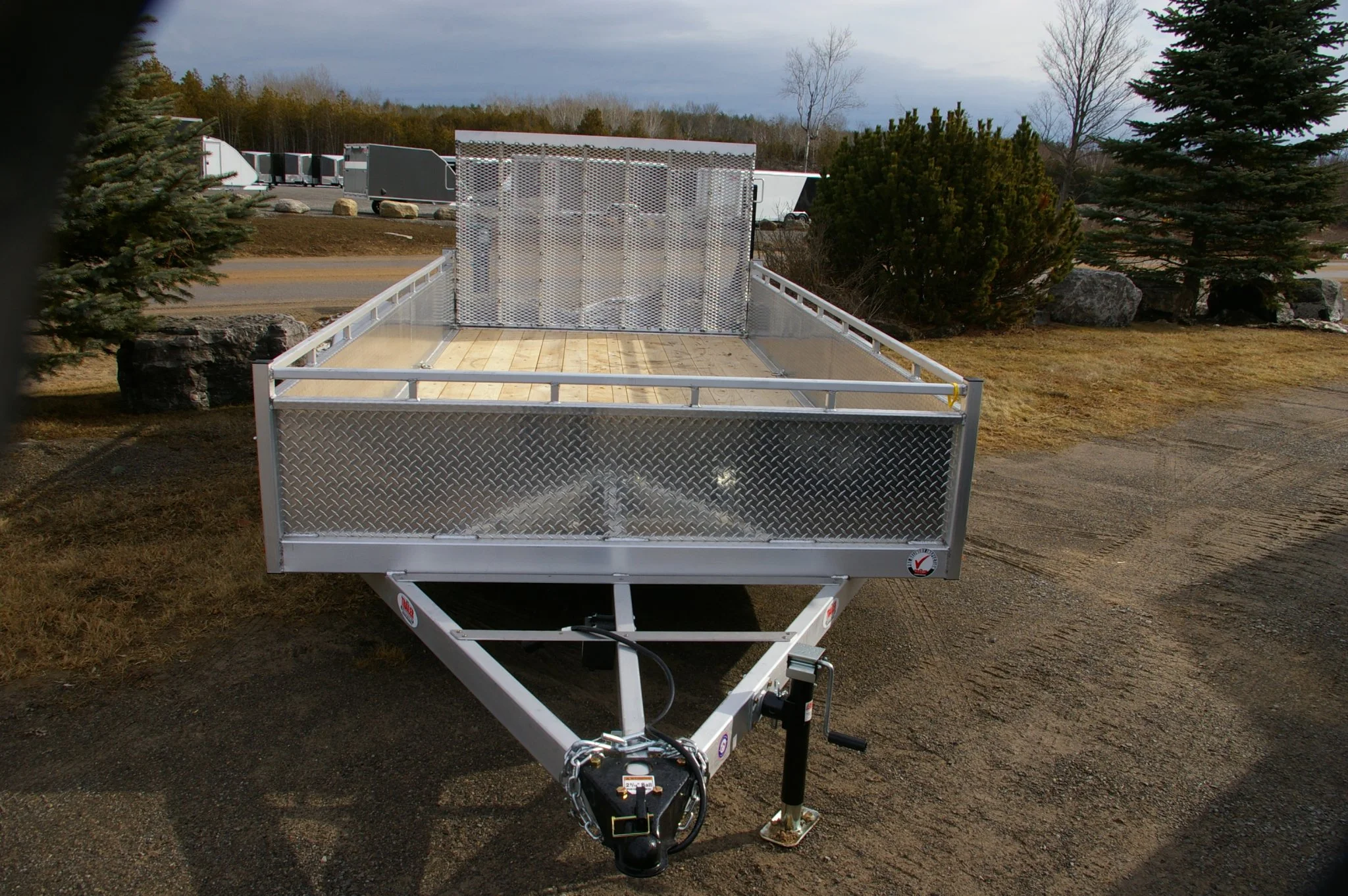
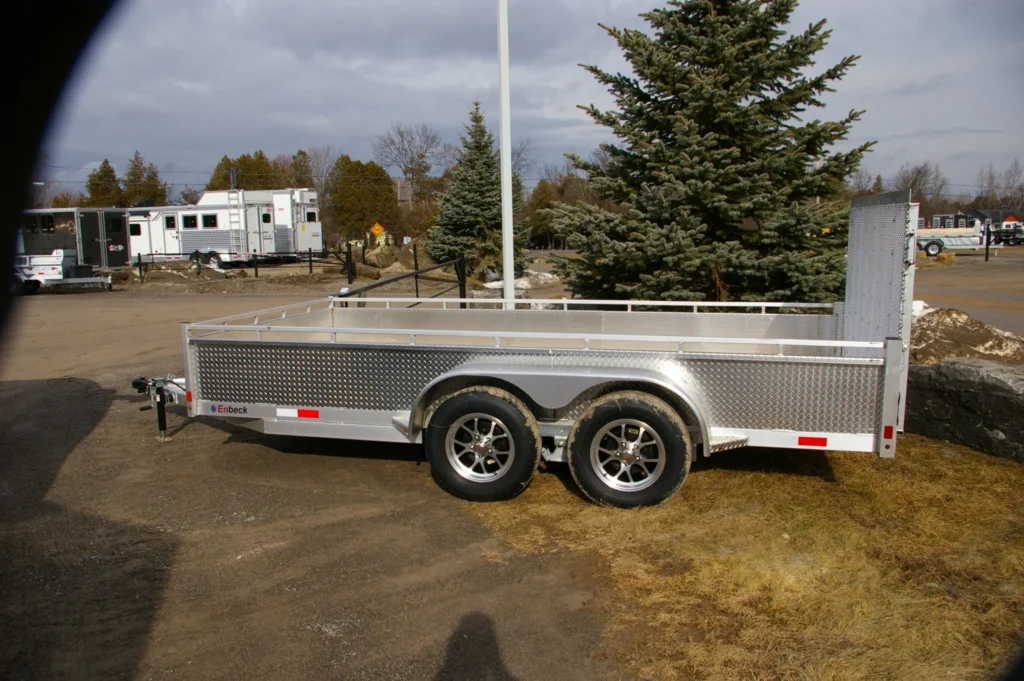
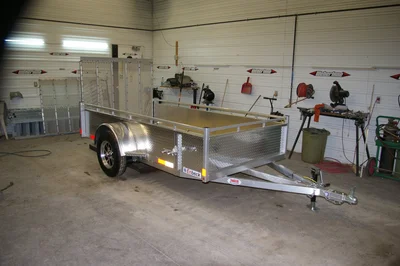
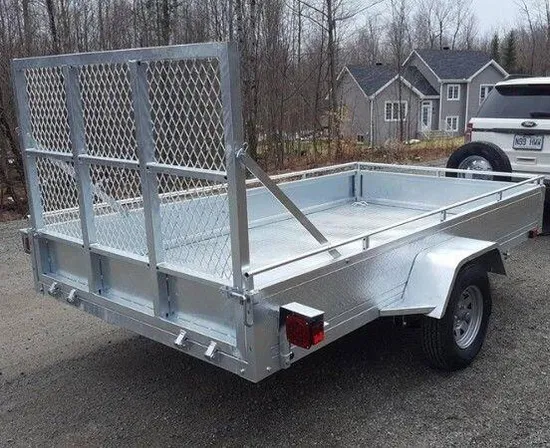
This 2027 aluminum utility trailer is a 7×14 tandem axle model in silver with a 7,010 lb GVWR. It’s for people who want a big open trailer that stays light, never needs painting and won’t turn orange after a couple of wet winters.
What you get with this aluminum utility trailer
The deck is 7 ft wide and 14 ft long, about 2.1 x 4.3 m. That’s enough room for a zero-turn mower and a push mower side by side, a compact tractor, a couple of ATVs, or a full load of building materials. Two axles spread the weight, so the trailer rides level and handles a heavy load without feeling nervous at highway speed.
The silver finish is the bare metal itself, not paint. There’s nothing to chip, flake or touch up. Scratches just look like scratches, and a pressure wash brings the shine back.
Who it suits
- Landscapers who tow every day and want to save fuel
- ATV and side-by-side owners
- Homeowners who keep the trailer outside all year
- Anyone towing with an SUV or half-ton pickup who wants more payload from the same tow rating
Aluminum utility trailer specifications
| Year | 2027 |
|---|---|
| Deck size | 7 ft x 14 ft (2.1 x 4.3 m) |
| Axle | Tandem |
| Construction | Aluminum |
| Finish | Silver |
| GVWR | 7,010 lb (3,180 kg) |
For the empty weight, tire size, gate style or coupler size on this exact unit, ask us and we’ll confirm.
Why aluminum is worth it
An aluminum utility trailer weighs less than a steel one of the same size. That lighter empty weight leaves more of the GVWR for your load, and your tow vehicle works less hard on every trip. You notice it at the fuel pump and when you move the trailer around by hand.
Aluminum also handles water and road salt far better than painted steel. Aluminium forms its own thin protective layer, which is why it shows up on boats, ladders and truck bodies. The steel parts underneath, like axles, hubs and springs, still need normal care, but the frame and deck won’t rust out.
The trade-off is price. An aluminum utility trailer costs more up front than steel. Over the years it usually holds its value better, though, because a clean aluminum trailer still looks good when it’s time to sell.
How owners use an aluminum utility trailer
Landscape crews run one between jobs all day, loaded with mowers, trimmers and blowers. ATV riders fit two machines and their gear for a weekend away. Builders move timber, roofing sheets and scaffolding. Homeowners use an aluminum utility trailer for garden waste, firewood and moving furniture, and because it’s light enough to push by hand, it gets used far more than a trailer that’s a pain to hook up.
Towing an aluminum utility trailer
The 7,010 lb GVWR (about 3,180 kg) is the most the trailer plus everything on it should weigh. If the term is new to you, read up on gross vehicle weight rating before your first big load. Check your vehicle’s towing limit too, and remember the trailer’s own weight is part of that number.
Load about 60 percent of the weight ahead of the axles. A tandem trailer is forgiving, but too much weight at the back will still make it wag behind you. At this size you’ll also want trailer brakes and a brake controller in your vehicle, so ask us how this unit is set up.
Hitching up and heading out
- Chock the wheels and raise the coupler above your ball.
- Back up slowly, lower the coupler, then close and pin the latch.
- Cross the safety chains and clip on the breakaway cable if one is fitted.
- Plug in and test the lights.
- Raise the jack fully and remove the chocks.
- Check the gate is up and pinned before you drive off.
Once you’ve done it a few times with your aluminum utility trailer, the routine takes a couple of minutes.
Loading machines safely
Load on firm, level ground. Line the machine up straight and drive on slowly in a low gear, and never stand beside a machine while it climbs. Once it’s on, set the parking brake, strap it at four points and lift and pin the gate. Check that nothing is resting against the gate before you move.
Looking after it
Wash your aluminum utility trailer now and then, especially after salted roads, and pay attention to the steel parts underneath. Grease the wheel bearings once a year, check tire pressures before long trips and test the lights every time you hook up. Look over the gate hinges and springs, since they take a beating.
Avoid leaving wet leaves or mulch on the deck for weeks. Aluminum won’t rust, but trapped damp can still stain it and damage wooden deck boards if the trailer has them.
Mistakes to avoid
The big one is assuming light means unbreakable. An aluminum utility trailer has a GVWR limit like any other trailer, and overloading it bends frames and wrecks tires just the same.
The second is loose straps. A mower or ATV can slide on a smooth deck and hit the rails. Strap every machine at four points.
The third is forgetting tire pressure. Trailers often sit for weeks, and soft tires overheat on the highway.
Compare our other aluminum utility trailer models
Need more length? The 7×20 aluminum utility trailer adds six feet. The 7×16 aluminum model sits in the middle, and the 6×12 aluminum utility trailer suits smaller loads and smaller vehicles. If you’d rather spend less up front, our 7×14 steel utility trailer is the same size in black steel.
 7×20 aluminum utility trailer
 7×16 aluminum utility trailer
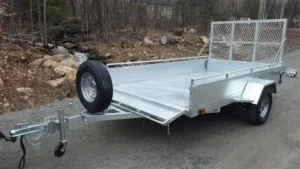 6×12 aluminum utility trailer
Still choosing? Read our guide to choosing the right trailer for every hauling need.
Accessories worth adding
A few extras make an open trailer far more useful. Ratchet straps and wheel chocks keep machines in place. A spare wheel and a jack that fits the trailer save a ruined day if you get a flat. A coupler lock stops anyone hitching up and driving off with it, and a cargo net keeps light loads like branches or cardboard from blowing out. Landscapers often add a tool rack or a lockable box on the tongue for trimmers and fuel.
Pre-trip checklist
- Coupler latched and pinned, chains crossed
- Lights and indicators working
- Tire pressures right, wheel nuts tight
- Gate up and pinned
- Load strapped at four points and covered if loose
- Jack fully raised
It takes two minutes, and it’s the habit that stops most trailer problems before they start.
Storing it between jobs
Park on firm, level ground with the jack on a block so it doesn’t sink. If it’s sitting for weeks, take some weight off the tires by raising the tongue slightly, or move the trailer a little now and then so the tires don’t flat-spot. A cover isn’t essential for an aluminum utility trailer, but keeping it out of standing water and away from piles of wet leaves helps the steel running gear and any wooden deck boards last longer. A wheel clamp or coupler lock is a good idea if it’s parked where people can see it.
Trailer terms explained
The terms below come up a lot when you shop for an aluminum utility trailer.
- GVWR: the most the trailer and its load can weigh together.
- Payload: the GVWR minus the trailer’s empty weight. This is what you can actually carry.
- Tongue weight: the downward weight on your hitch, usually around 10 to 15 percent of the loaded weight on a bumper pull trailer.
- Tandem axle: two axles, one behind the other, that share the load and make the trailer more stable.
- Breakaway cable: a cable that applies the trailer brakes if it ever comes off the hitch.
- Brake controller: the unit in your vehicle that runs the trailer’s electric brakes.
Common questions
Is aluminum strong enough for heavy loads?
Yes, within the GVWR. Aluminum trailers use thicker sections than steel ones to reach the same strength, and they’re built to carry their rated load.
Can a half-ton pickup tow this aluminum utility trailer?
Many can, loaded within the limits. Check your truck’s tow and payload ratings and the trailer’s empty weight.
Does it need painting?
No. That’s one of the main reasons people choose aluminum.
Do I need to register an aluminum utility trailer?
Rules differ by country, state and province, so check with your local road authority. We hand over all the paperwork that comes with the trailer.
What to check when it arrives
Walk around the trailer before the first trip. Check the lights work with your vehicle, the coupler fits your ball, tire pressures are right and the wheel nuts are tight. Lower and raise the gate and make sure the pins fit. Re-check the wheel nuts after the first 50 to 100 km.
Buy this aluminum utility trailer
This aluminum utility trailer is for sale now. Add it to your cart, or contact our team with questions about brakes, the gate or delivery to your area. You can also browse every utility trailer for sale or visit the full shop.
Reviews
There are no reviews yet.