
Description
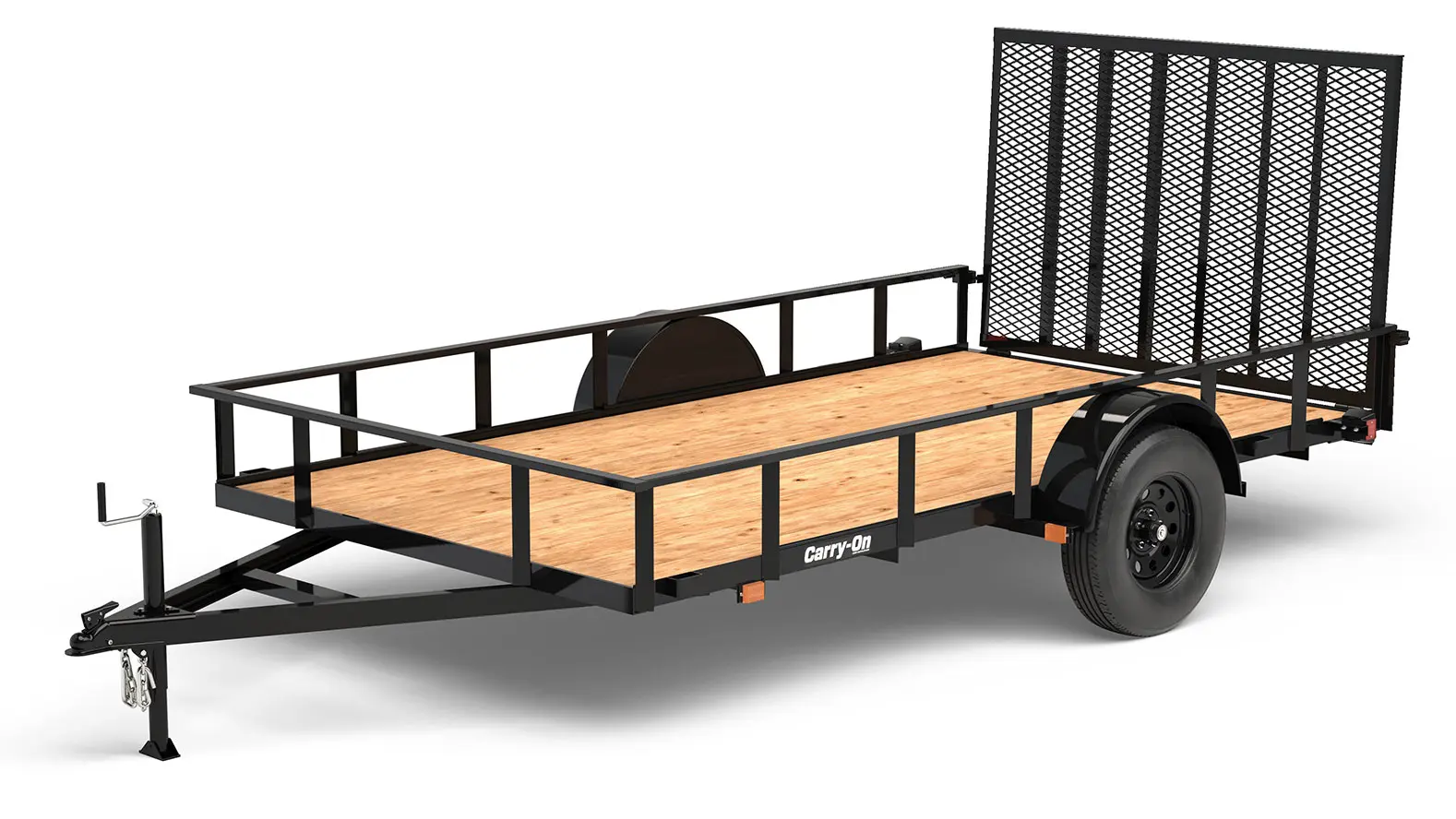
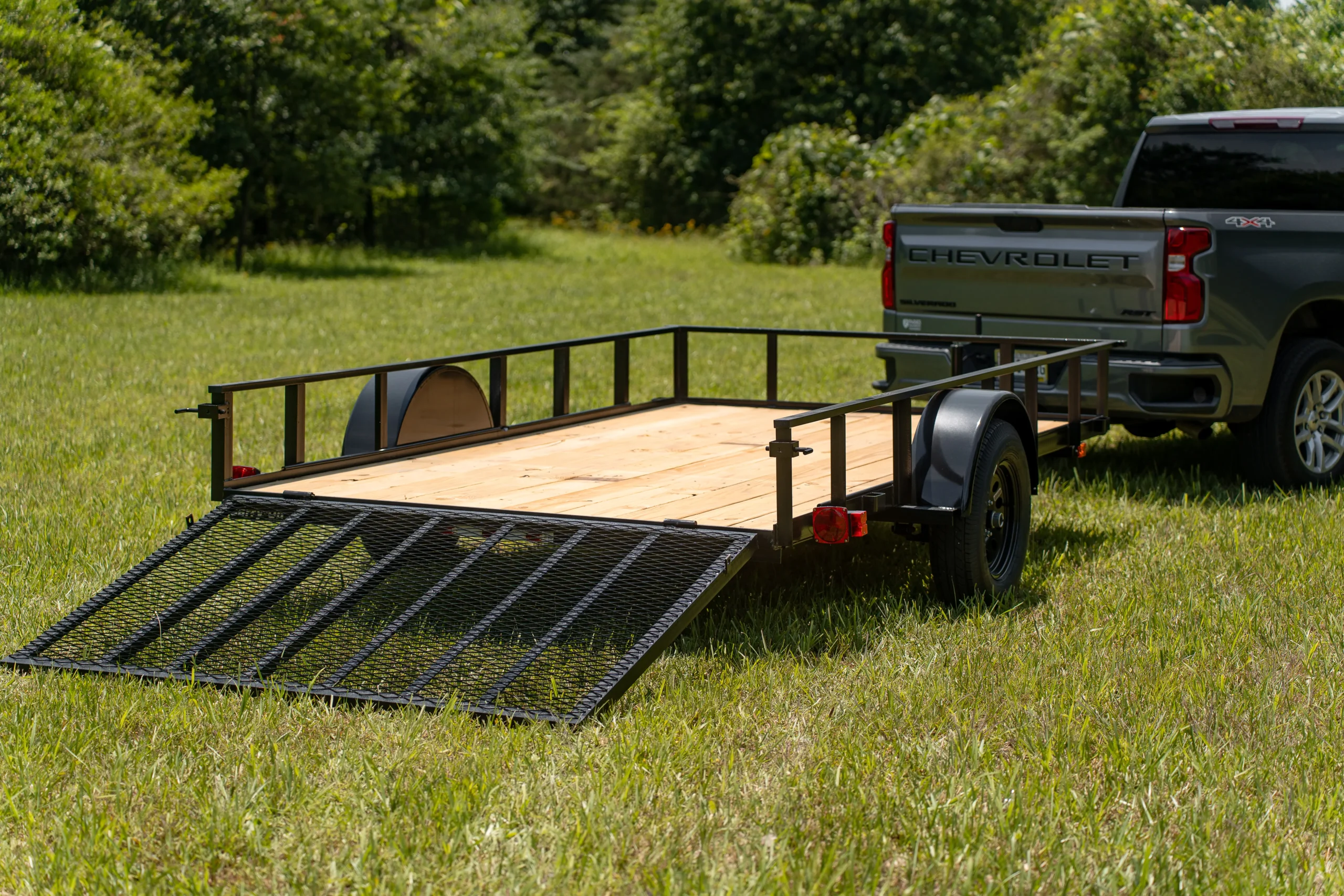
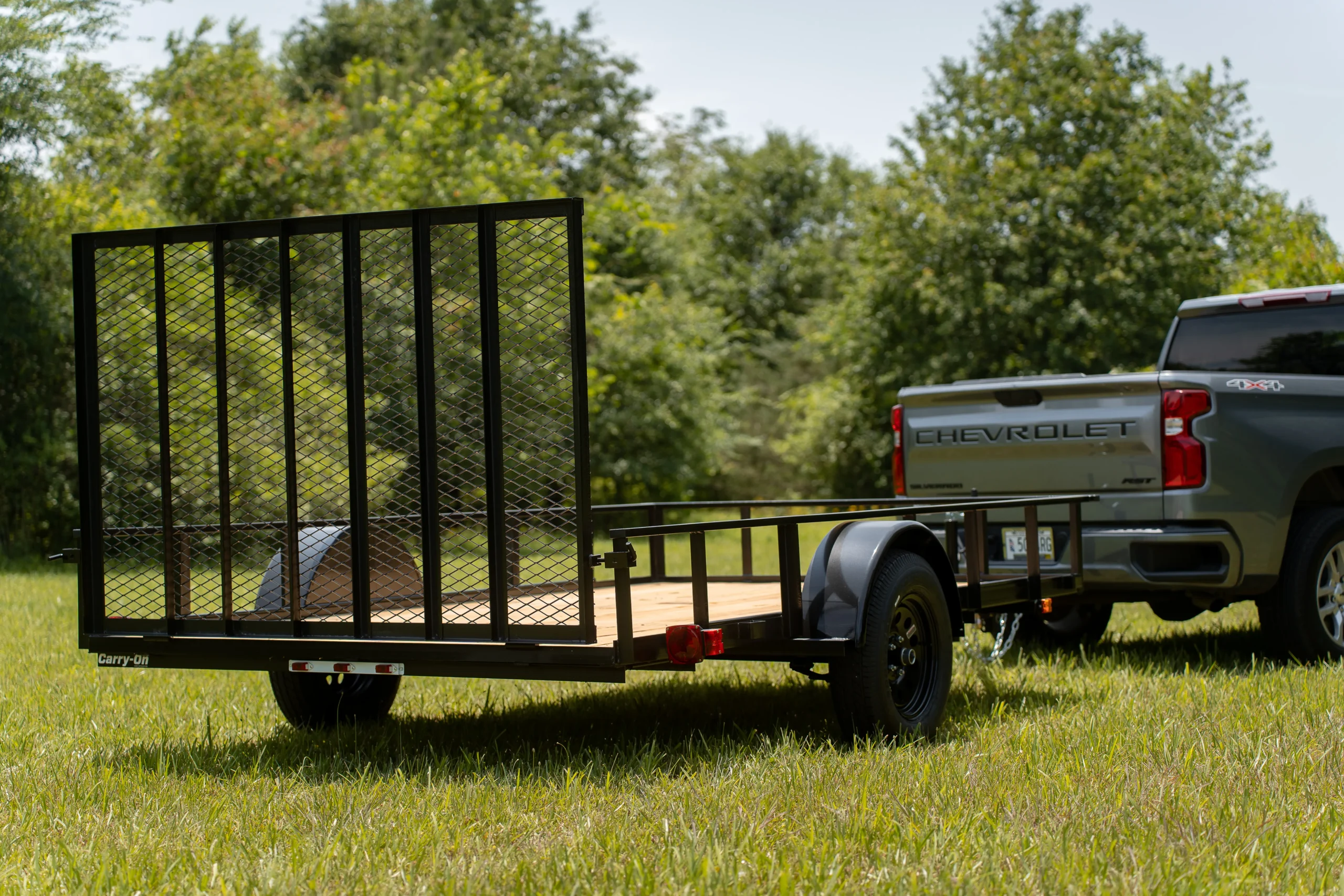
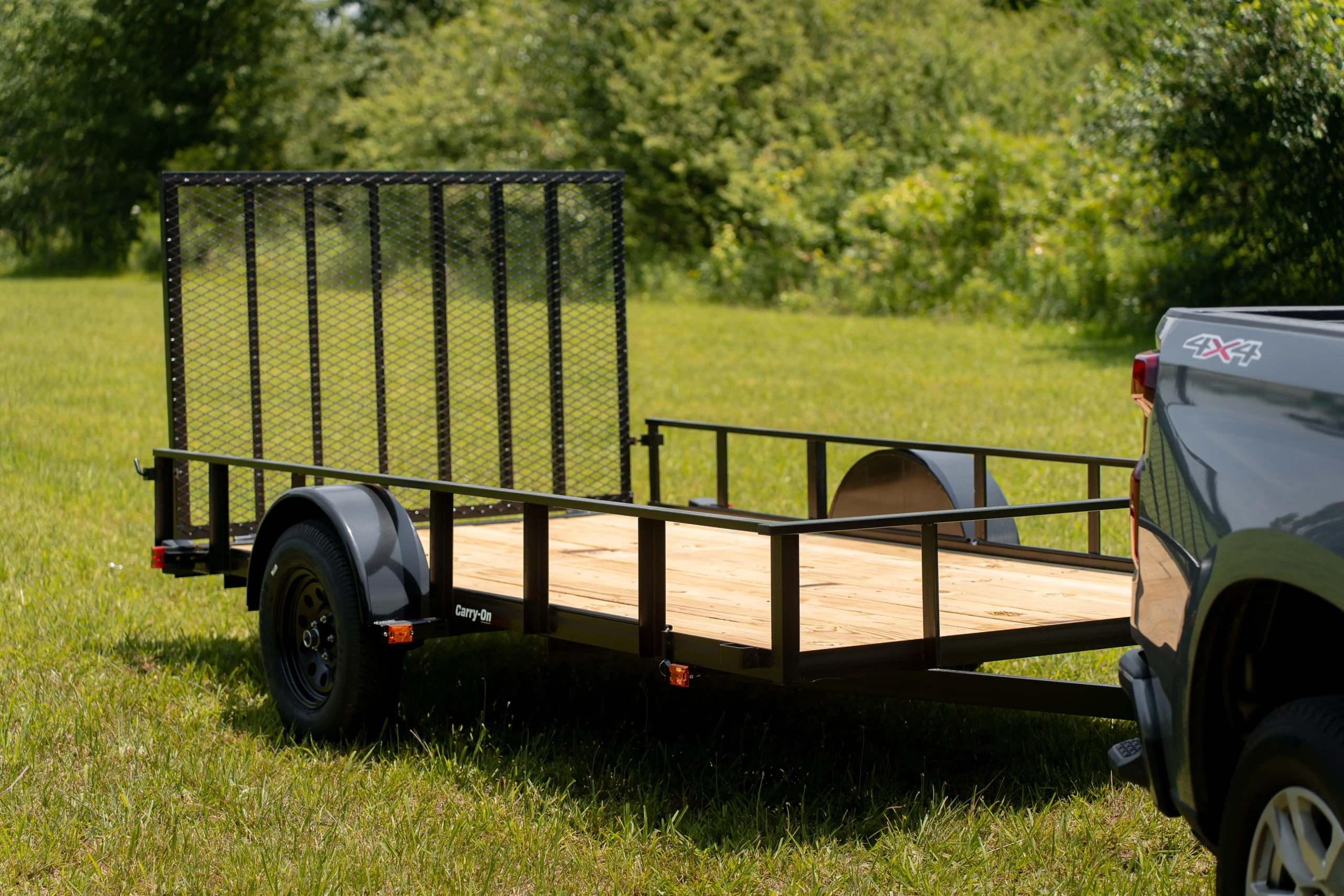
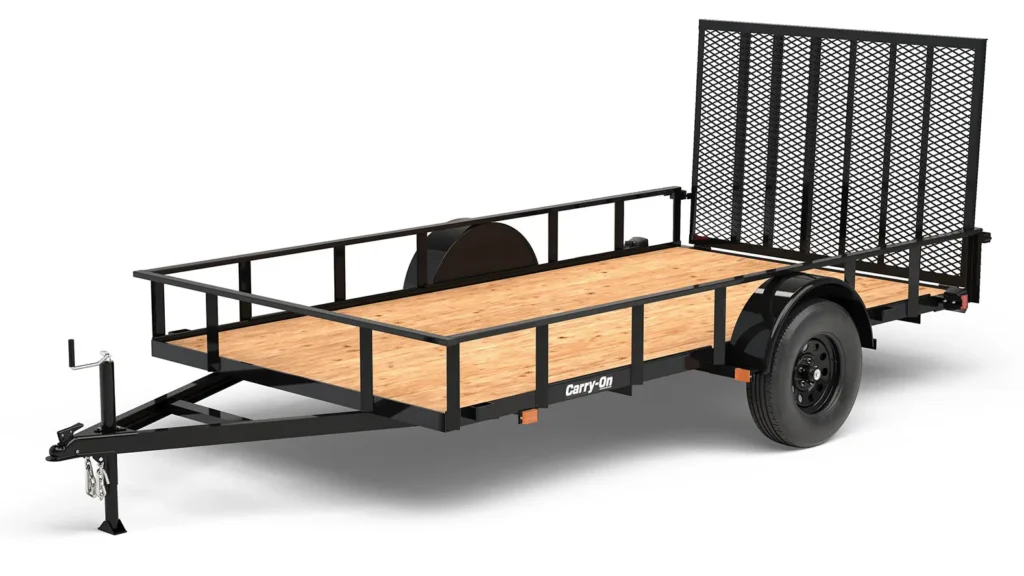
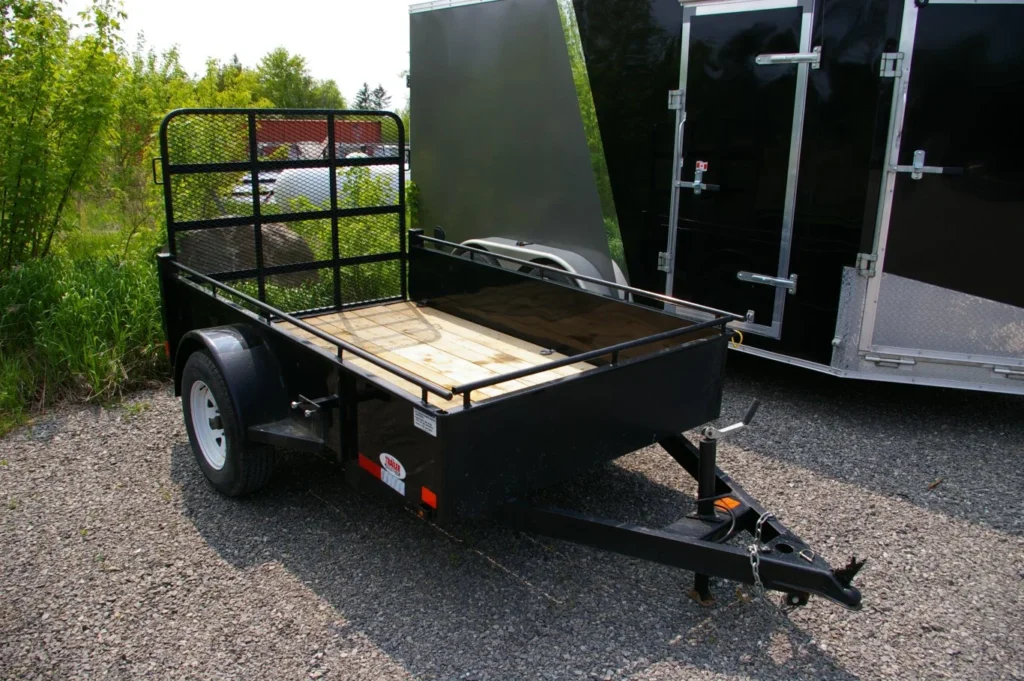
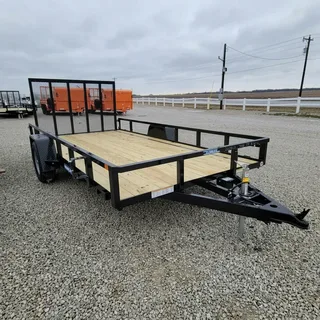
This 2026 5×10 utility trailer is a black steel, single axle trailer with a 3,500 lb GVWR. It’s a step up from the smallest trailers: two extra feet of deck and a higher weight rating, while staying easy enough to tow behind most SUVs and pickups and to park at home.
What you get with this 5×10 utility trailer
The deck measures 5 ft by 10 ft, about 1.5 x 3.0 m. Ten feet is the length where a trailer starts to feel properly useful. A ride-on mower fits with room for a trimmer and fuel cans behind it. Sheets of plywood lie flat. A load of garden waste, a fridge and a couch, or two dirt bikes all go on without a fight.
The 3,500 lb (about 1,588 kg) rating gives you more breathing room than the 2,990 lb trailers in this size class. That extra margin matters when you’re hauling heavier things like pavers, bagged concrete or firewood.
Steel keeps the price sensible. It can be welded and repaired anywhere, and touching up the black paint every so often keeps rust away.
Who it suits
- Homeowners doing garden, renovation and moving jobs
- Small landscaping and handyman businesses
- Dirt bike and ATV owners
- Anyone who wants more than a 5×8 without stepping up to a tandem axle
5×10 utility trailer specifications
| Year | 2026 |
|---|---|
| Deck size | 5 ft x 10 ft (1.5 x 3.0 m) |
| Axle | Single |
| Frame | Steel |
| Finish | Black |
| GVWR | 3,500 lb (1,588 kg) |
Want the empty weight, tire size, gate style or coupler size for this exact unit? Ask us and we’ll check.
Why a 5×10 utility trailer is a smart middle size
A 5×8 is great until you need to carry something long. A 6×12 or 7×14 is great until you need to park it beside the house. The 5×10 sits in between. It’s long enough for mowers, lumber and furniture, but light and narrow enough to tow without feeling like you’re dragging a truck.
Being a single axle also helps. There’s one set of bearings and tires to look after, and the trailer turns tighter than a tandem, which makes reversing into a driveway easier once you get the hang of it.
Towing a 5×10 utility trailer safely
The 3,500 lb GVWR is the most the trailer and its load should weigh together. If the term is new, have a look at this explanation of gross vehicle weight rating. Check your vehicle’s own towing limit and remember the empty trailer counts toward it.
Keep about 60 percent of the load ahead of the axle. Make sure your ball size matches the coupler, and if you’re unsure what hitch your vehicle has, this overview of tow hitch types covers the usual ones. Strap everything, even on short runs to the tip.
Loading tips
Back the trailer onto level ground before loading. Heavy items go in first, just ahead of the axle. Long items like timber should be strapped at two points so they can’t slide forward under braking. For loose garden waste, a tarp or net stops it blowing out, and in many places it’s a legal requirement.
If you’re driving a mower up the gate, go slowly and straight, and never stand beside the gate while a machine is climbing.
Looking after a steel trailer
Wash off mud and salt, touch up chips, grease the bearings once a year and check tire pressure before long trips. Test the lights every time you hook up your 5×10 utility trailer. Small things done often keep a steel trailer going for many years.
Mistakes to avoid
Overloading is the big one. The deck may have room, but the GVWR is the real limit. Pavers, wet soil and bricks get heavy fast.
Putting heavy things at the back is the second. It makes the trailer sway. The third is leaving loads loose, and the fourth is forgetting tire pressure on a trailer that’s been sitting.
Pre-trip checklist
- Coupler latched and pinned, safety chains crossed
- Lights and indicators working
- Tire pressures right, wheel nuts tight
- Load strapped down and balanced, heavy items forward
- Jack fully raised
It takes two minutes before each trip with your 5×10 utility trailer, and it catches most problems while you are still in the driveway.
Trailer terms explained
A few words you will see when you compare any 5×10 utility trailer with other models:
- GVWR: the most the trailer and its load can weigh together.
- Payload: the GVWR minus the empty weight of the trailer. This is what you can actually carry.
- Tongue weight: the downward weight on your hitch, usually about 10 to 15 percent of the loaded weight.
- Coupler: the part on the front of the trailer that locks onto your hitch ball.
- Ramp gate: the rear gate that folds down so you can drive machines on.
- Tandem axle: two axles that share the load and make the trailer more stable.
How owners use a 5×10 utility trailer
Weekend gardeners haul mulch and green waste. DIY renovators carry timber, plasterboard and old fittings to the tip. Families move house or take bikes and camping gear on holiday. Small businesses use a 5×10 utility trailer for market stalls and quick deliveries.
Storing it
Park on firm, level ground with the jack on a block so it does not sink. Touch up chips before winter so rust does not get started. If the trailer sits for weeks, move it now and then so the tires do not flat-spot, and check pressures before the next trip. A coupler lock or wheel clamp is cheap insurance when your 5×10 utility trailer is parked where people can see it.
Compare other utility trailers
Want something smaller? The 5×8 utility trailer is lighter and easier to store. Need more room? The 7×14 utility trailer carries far more on two axles. Prefer no rust and less weight? The 5×10 aluminum trailer is the same size in aluminum.
Still deciding? Our practical guide to choosing a trailer walks you through it.
Accessories worth adding
A few cheap extras make an open trailer much more useful. Ratchet straps and wheel chocks keep machines and loads in place. A cargo net or tarp stops garden waste and light items blowing out. A spare wheel and a jack that fits the trailer can save a ruined day. A coupler lock stops anyone hitching up and driving off with your 5×10 utility trailer. Lawn crews often add a trimmer rack or a lockable tongue box for fuel and hand tools.
Before you buy
Check your vehicle tow rating and hitch ball size first. Then think about the heaviest load you carry most weeks, not the biggest job you do once a year, and measure the widest machine you plan to put on the deck. Finally, measure where you will park the trailer at home, including the tongue. If all of that lines up, this 5×10 utility trailer will fit the way you work. If you are not sure, send us your vehicle and what you plan to carry and we will give you a straight answer.
Driving with a trailer
Give yourself more room to stop, because a loaded trailer adds a lot of weight behind you. Take corners a little wider so the trailer wheels do not clip the kerb. On the motorway, keep a steady speed and avoid sudden steering. If the trailer starts to sway, ease off the accelerator gently and keep the wheel straight rather than braking hard. When reversing, small movements of the wheel go a long way. Practise in an empty car park the first few times you tow your 5×10 utility trailer, and it soon feels normal.
Common questions
Can a mid-size SUV tow this 5×10 utility trailer?
Usually yes, once it has a hitch and a tow rating that covers the trailer plus your load.
Will a ride-on mower fit?
Most do. Measure the widest point of the mower, including the deck, and compare it with the space between the fenders.
Does it need brakes?
That depends on the loaded weight and the rules where you live. Ask us how this unit is set up.
Does it need registration?
Rules vary by country and region. Check with your local road authority. We hand over all the paperwork that comes with it.
Can I leave it outside?
Yes. Keep it on firm ground, check the tires before use and lock the coupler if it is visible from the road.
How often should I grease the bearings?
Once a year for most owners, or sooner if the trailer has been in deep water or does a lot of distance.
Do you offer delivery?
Ask us about delivery to your area when you order your 5×10 utility trailer, and we will explain the options and timing.
What to check when it arrives
Check the lights with your vehicle, the coupler fit, tire pressures and wheel nuts. Lower and raise the gate. Re-check the wheel nuts after the first 50 to 100 km.
Buy this 5×10 utility trailer
This 5×10 utility trailer is for sale now. Add it to your cart, or contact our team with questions or to talk about delivery to your area. You can also browse every utility trailer for sale or the full shop.
Reviews
There are no reviews yet.