

These trailer towing tips come from years of talking to customers about what went right and what didn’t on their first trips. None of it is complicated. Most towing problems come from a handful of small things done in a hurry: a coupler not quite latched, a load sitting too far back, tyres a little soft. Get those right and towing a trailer becomes calm and routine, whether it’s a 5×8 garden trailer or a loaded equipment deck.
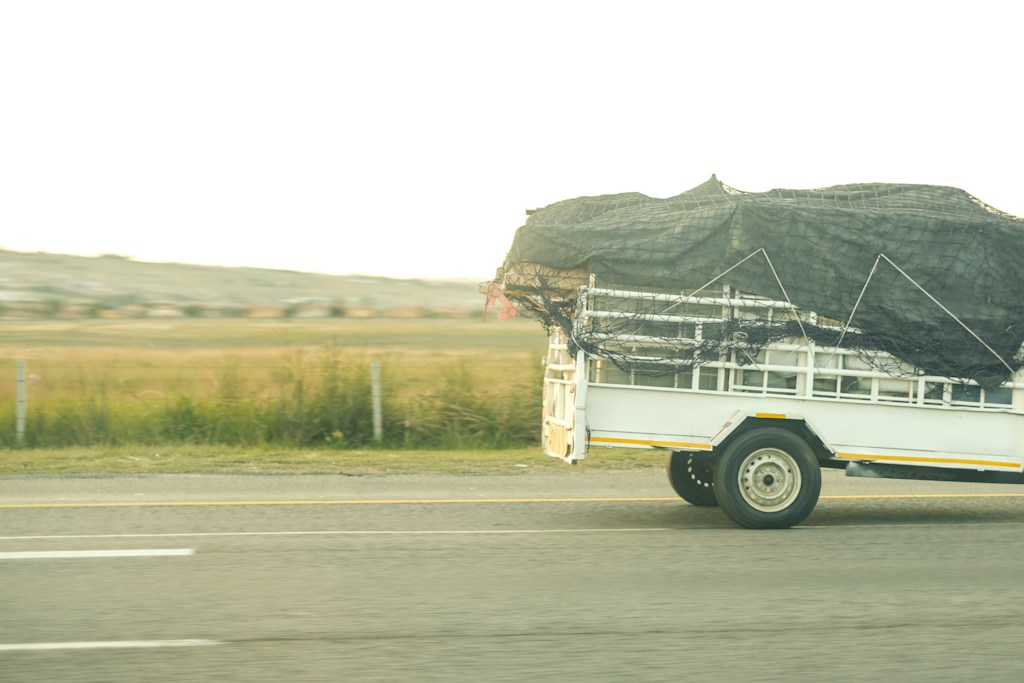
Trailer towing tips before you set off
1. Match the hitch to the trailer
The ball size must match the coupler exactly. A 2 in ball in a 2 5/16 in coupler can pop off over a bump. Check the ratings stamped on the ball, drawbar and receiver, and go by the lowest. The page on the tow hitch explains the different kinds if you’re setting up a vehicle for the first time.
2. Get the ride height right
When hitched, the trailer should sit level or slightly nose down. If it tips back, swap to a drop or rise drawbar. A nose-high trailer sways more and wears tyres unevenly. This is one of the trailer towing tips people skip, and it makes a real difference.
3. Latch, pin, chain, plug
Close the coupler latch and fit the safety pin. Cross the safety chains under the tongue so they’d catch it if it dropped. Plug in the lights and connect the breakaway cable if fitted. Then lift the jack all the way up. Say each step out loud if it helps; plenty of experienced towers still do.
4. Check tyres and lights
Set tyre pressures to the figure on the trailer tyre, not the one on your vehicle door. Look at the sidewalls for cracks. With a helper, test brake lights, indicators and tail lights. Thirty seconds, every time.
Loading for a stable tow
5. Put the weight forward
Of all our trailer towing tips, this matters most. Place the heaviest part of the load slightly ahead of the trailer axle, so about 10 to 15 percent of the total weight presses down on the hitch. Too little and the trailer sways; too much and the front of your vehicle goes light. A tail-heavy load is behind most sway incidents.
6. Strap everything down
Loose loads shift on the first roundabout. Use ratchet straps for light cargo and rated chains with binders for machines. Each corner of a machine should go to its own anchor point, angled outward. Check the straps after the first few miles, because loads settle.
7. Stay under the limits
Know the trailer’s GVWR and your vehicle’s towing limit and payload, and stay comfortably under all of them. If you’re close, use a public weighbridge once and you’ll know for good. The page on gross vehicle weight rating explains the numbers.
Trailer towing tips on the road
8. Slow down and leave space
Drive a little slower than usual and leave at least double your normal following distance. Stopping takes longer with a trailer, especially downhill or in the wet. Many places also set lower speed limits for vehicles towing, so check yours.
9. Take corners wide
The trailer wheels cut inside the path of your vehicle on every turn. Drive a little further into the junction before turning, and watch the inside mirror. Long trailers need even more room.
10. Brake early and smoothly
Set your brake controller so the trailer brakes slightly before the vehicle, without locking the wheels. Brake early and gently, and change down a gear on long descents rather than riding the brakes. Smooth inputs are one of the simplest trailer towing tips, and they matter even more with horses on board.
11. Handle sway calmly
If the trailer starts to sway, ease off the accelerator and hold the steering straight. Don’t brake hard or steer sharply. If you have an electric brake controller, a gentle press of the manual trailer brake lever helps pull the trailer straight. Once things settle, stop somewhere safe and check the load.
12. Watch the wind
Tall enclosed trailers and horse trailers catch crosswinds on open roads and bridges. Slow down and give yourself room. When lorries pass, expect a push and a pull.
Trailer towing tips for reversing and parking
13. Hands at the bottom of the wheel
Hold the steering wheel at the bottom. Move your hand left and the back of the trailer goes left. It sorts out most of the confusion. Go slowly, make small corrections, and get out and look whenever you’re unsure. Practise in an empty car park with a couple of cones before you need to do it for real.
14. Park on firm, level ground
Chock a wheel on both sides if there’s any slope. Put a board under the jack foot on soft ground. Fit a coupler lock if you’re leaving the trailer anywhere public.
After the trip
15. A quick look over
Feel the wheel hubs with the back of your hand at stops; warm is normal, too hot to touch is not. After the first 50 miles (80 km) on a new trailer, re-check the wheel nuts. At home, rinse off salt and mud and note anything that needs attention before next time.
Setting up your vehicle
Before any of these trailer towing tips help, the vehicle needs the right kit. That means a tow bar or receiver rated above the trailer’s loaded weight, working trailer wiring, and for heavier trailers a brake controller fitted inside the cab. If the trailer is wider than your vehicle, extended towing mirrors let you see down both sides. A weight distribution hitch with sway control is worth considering for long bumper pull trailers. Get these fitted by someone who does it regularly, and ask them to show you how everything works.
Trailer towing tips for your first trip
Your first tow shouldn’t be the big job. Hitch up the empty trailer and drive a short loop on quiet roads. Notice how much wider you need to take corners, how the brakes feel and how the trailer follows over bumps. Then add a light load and do it again. Only then go for the full load. Choose a route without tight turns or busy junctions for the first few trips, and give yourself extra time so you’re never rushing. The best trailer towing tips are useless if you’re stressed and late.
Trailer towing tips for winter
Cold weather changes things. Stopping distances grow on wet, icy or slushy roads, so slow down even more and leave a bigger gap. Clear snow and ice off the trailer roof before you leave, because a sheet sliding off at speed can hit the vehicle behind. Check lights often, since road grime covers them quickly. Rinse salt off the trailer after each trip, especially the axles, springs and brakes. And if conditions are really bad, the most useful of all trailer towing tips is simply to wait.
Trailer towing tips for specific loads
Machines: chain, don’t strap, and lower buckets to the deck. A tilt deck like the 7×20 tilt trailer takes the risk out of ramps.
Enclosed trailers: keep heavy items low and over the axles, and remember the height at fuel stations. The 7×16 enclosed trailer is a common size.
Horses: drive as if there’s a full glass of water on the dashboard. Stop every three or four hours on long trips. See our horse trailers.
Bulk material: load by weight, not by eye. Gravel and wet soil hit the limit long before the box is full. Our dump trailers list their ratings clearly.

Trailer towing tips checklist
- Ball matches coupler; ratings checked.
- Trailer level or slightly nose down.
- Latch pinned, chains crossed, lights plugged in, jack up.
- Tyres at pressure; lights tested.
- Heavy load forward of the axle; everything strapped.
- Under the GVWR and the vehicle’s limits.
- Slower speed, double the gap, wide turns, early braking.
Common questions
What is the most important of these trailer towing tips?
Load the weight forward of the axle. It prevents most sway problems.
How fast can I tow a trailer?
Follow the towing speed limits where you live, and drive slower in wind, rain or on unfamiliar roads.
Do I need towing mirrors?
If the trailer is wider than your vehicle, usually yes, and in many places it’s the law.
Should I practise before towing for real?
Yes. Half an hour in an empty car park with a couple of cones teaches more than any article. Practise turning, stopping and reversing with the empty trailer, then try the same with a light load. It makes all of these trailer towing tips feel natural much sooner.
Choosing the right trailer helps too
Many towing headaches start with the wrong trailer for the job. If you’re still deciding, read our guides on how to choose a trailer and the main types of trailers. When you’re ready, browse the shop or contact us with any questions. We’re happy to share more trailer towing tips for your particular load.