

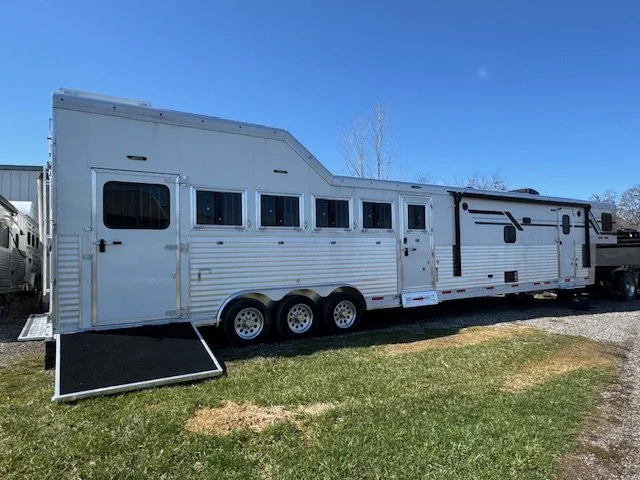
The gooseneck vs bumper pull decision is really a question of how much weight you need to tow and what you tow with. A bumper pull trailer hitches to a ball on the back of your vehicle, works with almost any suitable pickup or SUV, and costs less. A gooseneck trailer hitches to a ball in the bed of a pickup, right over the rear axle, which lets it carry far more weight, tow more steadily and turn more tightly, but it needs a pickup set up for it. For light to medium trailers, bumper pull is usually the sensible choice. For big horse trailers, living quarters rigs and heavy equipment, gooseneck usually wins.
That’s the short answer. This guide explains the gooseneck vs bumper pull choice properly, with figures from a truck maker’s official towing guide, the trailers in our own range, and plain advice on which one suits your work. We sell both styles. Where a fact comes from a published source we link to it, and where something is our opinion we say so.
Gooseneck vs bumper pull: the quick comparison
| Bumper pull | Gooseneck | |
|---|---|---|
| Where it hitches | Ball on a receiver at the back of the vehicle | Ball in the pickup bed, over or just ahead of the rear axle |
| Tow vehicles | Pickups, SUVs, vans with a suitable hitch | Pickups with a gooseneck hitch only |
| Typical weight range | Light to medium | Medium to very heavy |
| Stability | Good when loaded and hitched correctly | Steadier, less prone to sway |
| Turning | Wider turns for the same length | Tighter turns |
| Truck bed | Free to use | Partly taken by the hitch and trailer nose |
| Extra space | Small tack room or none | Gooseneck nose for a dressing room, storage or living area |
| Price | Lower | Higher (trailer plus bed hitch) |
The table sums up general towing knowledge and our experience. Each row is explained below.
What is a bumper pull trailer?
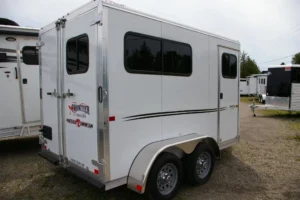
A bumper pull trailer, sometimes called a tag-along or ball-hitch trailer, connects to a ball mounted on a receiver hitch at the back of the tow vehicle. Despite the name, it almost never hitches to the actual bumper these days. Nearly all small and medium trailers are bumper pull: utility trailers, most enclosed cargo trailers, most equipment and tilt trailers, car haulers and many horse trailers.
In our range, the 5×10 utility trailer, 7×14 enclosed trailer, 7×20 equipment trailer and the 3 horse trailer are all bumper pulls. See our bumper pull horse trailers.
What is a gooseneck trailer?
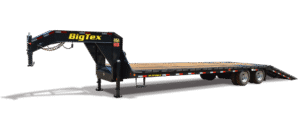
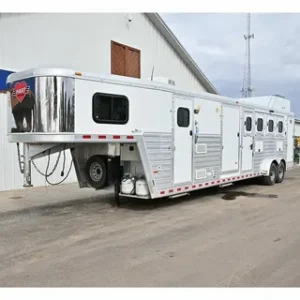
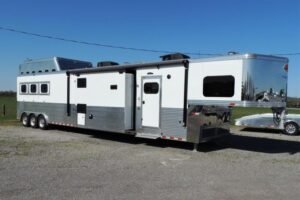
A gooseneck trailer has a long neck at the front that reaches over the tailgate and couples to a ball in the bed of a pickup. Because the hitch sits over the truck’s rear axle rather than behind it, more of the trailer’s weight goes onto the truck in a way the truck handles well. Goosenecks are common on large horse trailers, living quarters trailers, livestock trailers and heavy equipment trailers. The space inside the neck is often used for a dressing room, tack storage or a bedroom.
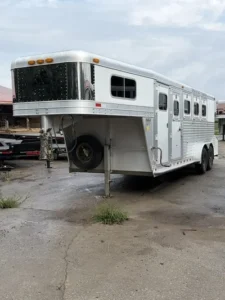
In our range, the 6 horse trailer with living quarters, the used gooseneck horse trailer, the used 4 horse trailer and the used gooseneck tilt trailer are goosenecks. See all gooseneck horse trailers.
Gooseneck vs fifth wheel
People often mix these up. Both hitch in the truck bed. A gooseneck uses a ball, usually a 2 5/16 in ball, and a coupler on the trailer neck. A fifth wheel uses a large flat hitch plate in the bed and a kingpin on the trailer, like a semi-truck. Fifth wheels are most common on big caravans and RVs; goosenecks are more common on horse, livestock and equipment trailers. Many hitch systems can be converted between the two. When people search “gooseneck vs bumper pull”, the comparison they usually mean is a bed-mounted ball hitch against a rear ball hitch.
Gooseneck vs bumper pull towing capacity
This is the biggest difference in the gooseneck vs bumper pull debate, and a truck maker’s own figures show it clearly. Ford’s official 2026 Super Duty pickup towing guide lists the F-450 at up to 30,000 lb for conventional (ball-hitch) towing, and up to 40,000 lb for gooseneck towing when the truck is fitted with Ford’s 40K Gooseneck Tow Package. That’s a third more capacity from the same truck just by changing where the trailer connects.
Those figures are for one model in its best configuration. Ratings change with engine, axle ratio, cab, wheelbase and tyres, so always check the exact figure for your own truck in its owner’s manual or the maker’s towing guide. The principle is the same across brands, though: putting the hitch over the rear axle lets a truck tow considerably more.
How much weight goes on the hitch
The share of the trailer’s weight that presses down on the hitch is different too:
- For conventional towing, Ford’s guide says tongue load should be 10% of the total loaded trailer weight, and 15% for fifth-wheel and gooseneck towing.
- The Manitoba Public Insurance trailer safety guide gives 10 to 15 percent for ordinary hitches and allows up to 25 percent for fifth-wheel hitches.
A higher share sitting over the rear axle is part of why goosenecks feel so planted. It also means the truck’s payload matters more than people expect, because a big share of a heavy gooseneck’s weight sits in the bed.
Gooseneck vs bumper pull stability and sway
Ask anyone who has towed both and they’ll usually say a gooseneck feels calmer. With the pivot point over the truck’s rear axle, the trailer and truck behave more like one long vehicle. Gusts, passing lorries and uneven roads push the trailer around less, and sway is much less common. That’s our experience and the general view among people who tow heavy trailers, not a measured study.
A bumper pull hitches behind the rear axle, so the trailer has more leverage over the back of the truck. Loaded and hitched correctly, with the right tongue weight and, on bigger trailers, a weight-distributing hitch with sway control, a bumper pull tows safely and comfortably. Loaded tail-heavy, it sways. In the gooseneck vs bumper pull comparison, the gooseneck is simply more forgiving.
Wind
Tall horse trailers and big enclosed boxes catch side winds either way. The UK Highway Code, in rule 232, says high-sided vehicles are the most affected by windy weather and warns that strong gusts can push vehicles off course, especially on exposed roads, bridges and gaps in hedges. A gooseneck handles this better than a bumper pull of the same size, but both need slower speeds when it’s blowing.
Gooseneck vs bumper pull turning and manoeuvring
Because the hitch point is further forward, a gooseneck trailer can turn tighter than a bumper pull of the same length, and it’s often easier to place precisely when backing into a show ground, a barn or a job site. The catch is clearance: on a very sharp turn the trailer’s nose swings close to the truck cab. Short-bed pickups often need a sliding hitch or careful turning, and you need to remember the nose is there.
Bumper pulls need wider turns, but you can see and judge them more easily, and there’s no cab clearance to think about. For tight yards and frequent reversing, many owners find a gooseneck easier once they’re used to it. That’s one of the less obvious gooseneck vs bumper pull differences.
What your truck needs for a gooseneck vs bumper pull
For a bumper pull
- A receiver hitch rated above the loaded trailer weight.
- A drawbar and ball of the right size and rating. Use the lowest rating in the chain.
- A towing limit and payload that cover the trailer and its tongue weight.
- On heavier trailers, a brake controller and the right wiring, and often a weight-distributing hitch.
Almost any capable pickup, SUV or van can be set up for a bumper pull.
For a gooseneck
- A pickup truck. Goosenecks can’t be towed by SUVs, vans or cars.
- A gooseneck hitch installed in the bed and bolted to the truck frame, usually by a professional installer.
- A towing rating for gooseneck towing that covers the loaded trailer. Some trucks need a factory package to reach their top rating, as Ford’s guide shows for the F-450.
- Enough payload for the higher hitch weight.
- Enough bed length or a sliding hitch to keep the trailer nose clear of the cab on turns.
- A brake controller, wiring and safety chains suited to the hitch.
So the gooseneck vs bumper pull choice is partly a truck choice. If you don’t have a pickup, or don’t want to give up part of the bed, the decision is made for you.
Gooseneck vs bumper pull: using the truck bed
Bed space is a practical gooseneck vs bumper pull difference. A bumper pull leaves the whole bed free for hay, tools, fuel cans or a tonneau cover. A gooseneck needs the middle of the bed for the hitch, and while the ball can often fold or flip down when you’re not towing, you can’t easily fill the bed while hitched. If you rely on your bed for carrying gear alongside the trailer, that’s a real point in favour of bumper pull.
Gooseneck vs bumper pull brakes, mirrors and the law
Both styles follow the same rules where you live, which vary. As examples, GOV.UK says a trailer must have working brakes if it weighs over 750 kg loaded (GOV.UK: trailer and towing equipment), and South Australia requires brakes above 750 kg and a breakaway system above 2 tonnes (SA Government towing regulations). Most goosenecks are heavy enough that brakes are standard. GOV.UK also advises towing mirrors when the trailer is wider than the car, which applies to most large horse and equipment trailers of either style.
Licence rules for heavy combinations also vary a lot between countries and regions. A big gooseneck combination can push you into a different licence class, so check before you buy.
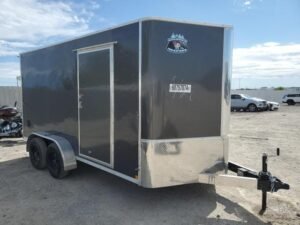
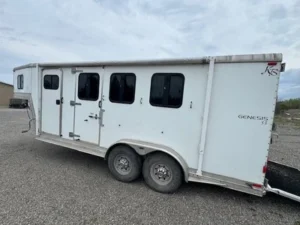
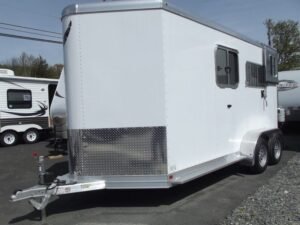
Gooseneck vs bumper pull for horse trailers
Horse owners face the gooseneck vs bumper pull question more than anyone, so it’s worth looking at closely.
When a bumper pull horse trailer makes sense
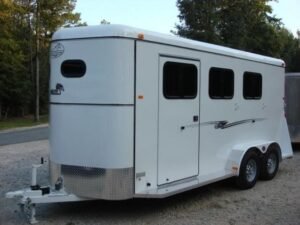
For one to three horses with little or no living space, a bumper pull is usually the practical choice. It can be towed by a wider range of vehicles, costs less, and is easier to store. Our bumper pull horse trailers are rated at 7,000 lb GVWR in our current listings: the 2 horse trailer, the 3 horse trailer, the taller 3 horse slant load trailer and the straight load horse trailer. Several are aluminum, which keeps their weight down.
When a gooseneck horse trailer makes sense
Once you carry four or more horses, want a dressing room, or want living quarters, the weight climbs fast and a gooseneck becomes the sensible choice. The difference in our own range is striking: the 6 horse trailer, a gooseneck with 16 ft of living quarters and a 9 ft slide-out, is rated at 24,000 lb GVWR, more than three times the 7,000 lb of our bumper pull horse trailers. A load like that needs the stability and capacity a gooseneck brings.
Living quarters trailers are almost always goosenecks because the bedroom sits in the gooseneck nose above the truck bed. That’s space a bumper pull simply doesn’t have. See our living quarters horse trailers, including the 4 horse living quarters trailer and aluminum living quarters trailer; ask us to confirm the hitch type on any model.
How horses travel
Many owners feel horses travel more calmly in a gooseneck because the ride is steadier and there’s less sway. That’s a widely held view among horse people rather than something we can point to a study for. What matters most for your horse, whatever the hitch, is smooth driving, good ventilation, enough height and a sound floor.
Gooseneck vs bumper pull for equipment and flatbed trailers
In the gooseneck vs bumper pull choice for equipment, weight decides. For most equipment trailers up to about 15,000 lb, bumper pull is standard and works well behind a heavy-duty pickup. Our 7×20 equipment trailer, heavy duty equipment trailer and tilt decks like the 7×20 tilt trailer are typical bumper pulls.
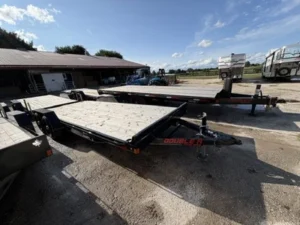
For long, heavy decks carrying mid-size machines, goosenecks take over. They let a pickup tow loads that would be unstable or over the limit on a ball hitch. In our range, the used gooseneck tilt trailer is an 8.5×25 gooseneck tilt deck, and our heaviest deckovers, the 102 inch deckover trailer (33,000 lb) and 30 ft deckover trailer (35,250 lb), are rated well beyond what a ball hitch normally handles; ask us to confirm the hitch type on those. See all equipment trailers.
Gooseneck vs bumper pull for cargo, car and utility trailers
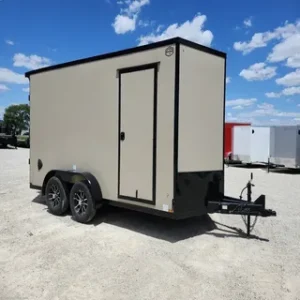
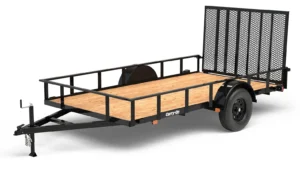
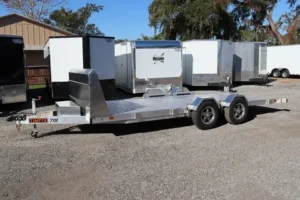
For utility trailers, enclosed cargo trailers and car haulers, bumper pull is the norm, and for good reason: the weights are moderate, the trailers are easy to hitch, and almost any suitable vehicle can tow them. Our utility trailers, enclosed trailers and car haulers like the car hauler trailer are bumper pulls. Very large enclosed race trailers are sometimes built as goosenecks, but that’s a niche.
Gooseneck vs bumper pull price and cost of ownership
On price, the gooseneck vs bumper pull comparison favours bumper pull. Goosenecks cost more in two ways. The trailer itself is usually bigger and heavier-built, and you need a gooseneck hitch professionally installed in your truck if it doesn’t have one. Prices for both vary widely by country and installer, so get a quote for your truck. Bumper pull trailers use a standard receiver that many vehicles already have.
Over the years, running costs depend more on size than on hitch style: more axles, tyres and brakes cost more to maintain. Our trailer maintenance checklist covers both. In the gooseneck vs bumper pull comparison, the hitch adds an upfront cost; the size of trailer drives the long-term cost.
Gooseneck vs bumper pull resale value
On resale, the gooseneck vs bumper pull picture is mixed. In our experience, both sell well when looked after. Bumper pulls have a bigger pool of buyers because more people can tow them. Goosenecks, especially horse and living quarters trailers, sell to a smaller but committed market that values the capacity and space. A gooseneck hitch in a truck can also help the truck’s resale with buyers who tow.
Gooseneck vs bumper pull: hitching up day to day
Hitching a bumper pull is familiar to most drivers: reverse to the coupler, lower it onto the ball, latch and pin it, cross the chains, plug in the lights, connect the breakaway cable and raise the jack. A reversing camera or a helper makes lining up easy.
Hitching a gooseneck is different but not harder once you’ve done it a few times. You reverse with the ball in the bed lining up under the coupler, which you can’t see directly from the driver’s seat, so a bed camera or a helper is a big help. Then you lower the coupler onto the ball, latch it, attach the chains to the bed points, plug in and connect the breakaway. Many owners say they find gooseneck hitching quicker after a little practice because there’s less fiddling with jacks and drawbars. That’s a common opinion rather than a rule.
Either way, the pre-trip walkaround is the same. Our trailer towing tips cover the checks, and our guide to securing a load covers what goes on the trailer.
Gooseneck vs bumper pull on the road: what it feels like
With a bumper pull, you feel the trailer more: braking pushes, bumps tug, and wind moves it about. Done well, it’s comfortable; done carelessly, it’s tiring. With a gooseneck, the trailer feels more like part of the truck. On long trips, many drivers find that alone tips the gooseneck vs bumper pull decision. On short local trips with a light trailer, the difference matters much less.
Three typical buyers
These are made-up examples to show how the gooseneck vs bumper pull choice usually goes.
A rider with two horses and an SUV
Loads: two horses, tack, hay. Tow vehicle: a large SUV rated for 7,700 lb. A gooseneck isn’t possible without a pickup, and a 7,000 lb-rated bumper pull like the 2 horse trailer fits the job, provided the loaded weight stays within the SUV’s limits. Bumper pull, easily.
A family showing four horses most weekends
Loads: four horses, tack, water and gear for two-day shows. Tow vehicle: a heavy-duty pickup. A four-horse trailer with a dressing room or living area quickly passes what feels comfortable on a ball hitch. A gooseneck such as the 4 horse living quarters trailer or the used 4 horse trailer gives them the capacity, stability and space they need.
A contractor moving a mid-size excavator
Loads: an excavator well over 15,000 lb plus buckets. Tow vehicle: a 1-ton dually pickup. A long, heavy deck on a gooseneck is the safer way to do it, and the truck’s gooseneck rating is higher than its conventional one. For lighter skid steers and mini diggers, a bumper pull like the heavy duty equipment trailer is enough.
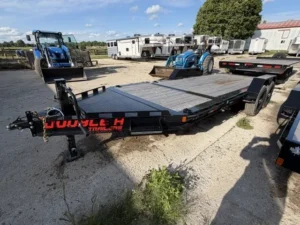
Real gooseneck vs bumper pull examples from our range
Here’s how the two styles line up in our current listings. GVWR figures come from each product’s specs; where we haven’t confirmed the hitch type on a listing, we say so.
| Trailer | Hitch | GVWR |
|---|---|---|
| 2 horse trailer | Bumper pull | 7,000 lb |
| 3 horse trailer | Bumper pull | 7,000 lb |
| 3 horse slant load trailer | Bumper pull | 7,000 lb |
| Straight load horse trailer | Bumper pull | 7,000 lb |
| 6 horse trailer with living quarters | Gooseneck | 24,000 lb |
| Used gooseneck horse trailer | Gooseneck | Ask us |
| Used 4 horse trailer | Gooseneck | Ask us |
| Used gooseneck tilt trailer | Gooseneck | Ask us |
| Heavy duty equipment trailer | Bumper pull | 15,400 lb |
The pattern matches what you’d expect from the gooseneck vs bumper pull comparison: bumper pulls cover the everyday range, and goosenecks take over where the weight and the living space grow.
Gooseneck vs bumper pull for first-time towers
If you’ve never towed before, start with what you can manage. A bumper pull is the familiar choice: driving schools, hire companies and most first trailers use one, and the skills transfer to almost any trailer later. A gooseneck isn’t harder to drive, and many people find it easier on the road, but hitching takes practice, the nose clearance needs remembering, and you need the right truck before you start. If you’re new to towing and your loads are moderate, our honest advice in the gooseneck vs bumper pull choice is to start with a bumper pull and move up when your loads demand it. Practise in an empty car park either way.
Gooseneck vs bumper pull for long-distance travel
For long trips to shows, events or job sites, the gooseneck’s steadier ride really shows. Less sway and less correcting at the wheel mean a less tiring day, and the gooseneck nose gives you storage or living space for the journey. A well-set-up bumper pull with a weight-distributing hitch and sway control can also be comfortable over long distances, especially at moderate weights. If most of your towing is long-haul with heavy loads, the gooseneck vs bumper pull balance tips clearly towards gooseneck.
Gooseneck vs bumper pull: what to budget for
When comparing costs, add up more than the trailer price:
- Bumper pull: receiver hitch if your vehicle lacks one, drawbar and ball, wiring, brake controller for braked trailers, and possibly a weight-distributing hitch.
- Gooseneck: professionally installed bed hitch, safety chain points, wiring to the bed, brake controller, and possibly a bed camera and a sliding hitch for short-bed trucks.
- Both: towing mirrors for wide trailers, a spare wheel, a coupler lock, and registration where it applies.
Prices vary too much between countries to give useful numbers, so get local quotes. The total often matters more in the gooseneck vs bumper pull decision than the trailer price alone.
Space at home
Goosenecks are often longer overall because of the neck, and taller at the front. Measure your driveway or yard before you buy. A bumper pull of the same box size is usually shorter overall and easier to tuck away. If storage space is tight, that can settle the gooseneck vs bumper pull question before anything else does.
Common mistakes
- Buying a gooseneck without checking the truck. The truck needs a gooseneck rating, enough payload and a proper bed hitch.
- Overloading a bumper pull. If you’re near the limit on a ball hitch, a gooseneck or a lighter trailer is the safer answer.
- Ignoring cab clearance. A gooseneck nose can hit a short-bed cab on sharp turns.
- Forgetting payload. A heavy gooseneck puts a lot of weight in the bed.
- Choosing on habit. Look at your actual loads and truck, not what you’ve always towed.
A gooseneck vs bumper pull scorecard
Tick each statement that’s true for you:
- My loaded trailer will weigh more than about 10,000 lb (4,500 kg).
- I’ll carry four or more horses, or want living quarters or a dressing room.
- I tow long distances regularly.
- I already have, or plan to buy, a heavy-duty pickup.
- I don’t need the truck bed free while towing.
- I often reverse into tight spaces.
Four or more ticks: a gooseneck is probably right for you. Two or three: look closely at your truck’s ratings for both styles. Zero or one: a bumper pull will likely serve you well and cost less. This is our rule of thumb, including the 10,000 lb figure, not an official threshold.
Gooseneck vs bumper pull myths
“Goosenecks are only for professionals”
Plenty of horse owners, farmers and hobbyists tow goosenecks. With a properly installed hitch and a little practice, they’re very manageable.
“Bumper pulls are unsafe for heavy loads”
Within the truck’s and trailer’s ratings, with correct tongue weight and the right hitch, bumper pulls tow heavy loads safely every day. The trouble starts when people push past the limits or load tail-heavy.
“A gooseneck ruins the truck bed”
Most modern gooseneck hitches leave only a small plate or a folding ball in the bed when not in use. You lose some bed use while towing, not permanently.
“Any pickup can tow any gooseneck”
No. The truck needs a gooseneck rating that covers the loaded trailer, enough payload for the hitch weight, and a properly installed hitch.
Buying a used gooseneck or bumper pull
Check the usual things on either: frame, floor, tyres, bearings, brakes and lights. On a used gooseneck, also look closely at the neck where it joins the main frame, the coupler and its latch, and the safety chain attachment points, because those carry high loads. On a used bumper pull, check the tongue, coupler and jack. Our current used stock includes the used gooseneck horse trailer, used 4 horse trailer and used gooseneck tilt trailer. See all used trailers.
Questions to ask before you buy
- What’s the trailer’s GVWR and empty weight?
- Is it gooseneck or bumper pull, and what coupler size does it take?
- What’s my truck’s rating for that hitch style, and what’s its payload?
- Does my truck have room for the trailer nose to clear the cab on turns?
- What brakes does the trailer have, and is there a breakaway system?
- Do I need a different licence for the combined weight where I live?
We’ll answer the trailer questions for anything we sell. The truck questions are worth checking in your owner’s manual or with your dealer. Between them, they settle the gooseneck vs bumper pull question for your situation.
Weight-distributing hitches: making a bumper pull tow better
If you choose a bumper pull for a larger trailer, a weight-distributing hitch is worth considering. It uses spring bars to spread some of the tongue weight forward to the tow vehicle’s front axle and back to the trailer, which levels the rig, restores steering feel and reduces sway. Many come with built-in sway control. It’s one of the main ways bumper pull owners close the stability gap in the gooseneck vs bumper pull comparison. Check your vehicle’s towing guide, because some vehicles require one above a certain trailer weight.
Safety chains, breakaway and hitch checks
Whichever hitch you choose, the safety basics are the same: the coupler fully latched and pinned, safety chains attached with enough slack to turn, the breakaway cable connected to the vehicle, and the lights tested. The Manitoba Public Insurance guide notes that trailer brakes should have a breakaway device to stop the trailer if it separates from the hitch, and South Australia requires a breakaway system on trailers over 2 tonnes (SA Government).
On a gooseneck, check the bed hitch’s mounting bolts and ball for wear every season, and keep the coupler latch clean and greased. On a bumper pull, check the receiver, pin, drawbar and ball. Tyres matter on both: NHTSA tire guidance recommends checking pressures at least monthly when cold and warns that tyre aging can’t be judged by looking.
Gooseneck vs bumper pull for farms and livestock
Farms often run both. A bumper pull utility or dump trailer handles fencing materials, feed and small loads behind any farm pickup; the galvanized dump trailer and 7×18 utility trailer are typical. For moving livestock or several horses, or heavy machinery between fields, goosenecks are common because they carry more weight more steadily. If you’re buying for a farm, the gooseneck vs bumper pull decision often comes down to having one of each.
Gooseneck vs bumper pull delivery worldwide
We deliver both gooseneck and bumper pull trailers to customers in many countries. Large goosenecks may need special transport because of their length and height, so ask for a delivery quote on the exact model. If you’re buying from abroad, also check that your truck’s hitch type is easy to get fitted locally before you commit to a gooseneck.
Our honest recommendation
Choose a bumper pull if your loaded trailer stays light to medium, you tow with an SUV or a pickup you also need the bed of, or you want the lowest cost and the widest choice of tow vehicles. Choose a gooseneck if you tow heavy horse trailers, living quarters rigs or big equipment decks, you tow long distances, and you have or plan to buy a heavy-duty pickup. That’s our view of the gooseneck vs bumper pull choice from selling both; your truck’s ratings and your loads should make the final decision.
Gooseneck vs bumper pull: questions people ask
What is the main difference in gooseneck vs bumper pull trailers?
Where they hitch. A bumper pull hitches to a ball behind the vehicle; a gooseneck hitches to a ball in the pickup bed over the rear axle. That changes capacity, stability and which vehicles can tow them.
Can a gooseneck tow more than a bumper pull?
Usually, yes. Ford’s 2026 towing guide lists the F-450 at up to 30,000 lb conventional and up to 40,000 lb gooseneck with its 40K Gooseneck Tow Package. Ratings vary by truck and configuration.
Is a gooseneck safer than a bumper pull?
Both are safe within their ratings. A gooseneck is generally steadier and less prone to sway, which gives more margin with heavy or tall trailers.
How much weight goes on a gooseneck hitch?
Ford’s guide gives 15% for gooseneck and fifth-wheel towing, compared with 10% for conventional. The Manitoba guide allows up to 25% for fifth-wheel hitches.
Can I tow a gooseneck with an SUV?
No. Goosenecks need a pickup with a hitch installed in the bed.
Are gooseneck horse trailers better for horses?
Many owners feel horses travel more calmly in a gooseneck because the ride is steadier. Smooth driving, good ventilation and enough headroom matter most whatever the hitch.
Which is easier to reverse?
Many drivers find a gooseneck easier to place precisely once they’re used to it, because it turns tighter. A bumper pull is more familiar to most people at first.
Do gooseneck trailers cost more?
Generally yes, because they’re usually bigger and you may need a bed hitch installed. Bumper pulls use a standard receiver.
Which is better for a two-horse trailer, gooseneck vs bumper pull?
For most two-horse trailers without living quarters, a bumper pull is the practical choice: lighter, cheaper and towable by more vehicles. A gooseneck two-horse makes sense mainly if you want a dressing room or extra storage in the nose and already have a suitable pickup.
Can I switch between gooseneck and fifth wheel?
Many bed hitch systems can be converted, and adapters exist, but follow the trailer and hitch makers’ instructions and ratings. Ask the installer what your setup supports.
Does a gooseneck vs bumper pull affect fuel use?
Fuel use depends mainly on the trailer’s weight, size and shape and how fast you drive, not the hitch style itself. A bigger gooseneck trailer will use more fuel simply because it’s bigger and heavier.
Shop gooseneck and bumper pull trailers
We sell both and deliver worldwide. For lighter towing, browse our bumper pull horse trailers, utility trailers, enclosed trailers and tilt and load trailers. For heavy towing, see our gooseneck horse trailers, living quarters horse trailers and equipment trailers, or everything in the shop. Not sure which style suits your truck? Contact us with your truck model and what you’ll carry, and we’ll help you decide. You may also like our tandem axle trailer guide and enclosed vs open trailer comparison.
Sources and References
- Ford: 2026 Super Duty Pickup Towing Guide (conventional vs gooseneck ratings, hitch weight percentages)
- Manitoba Public Insurance: Trailer Safety guide (tongue weight, fifth-wheel hitch weight, breakaway)
- GOV.UK: Towing with a car, trailer and towing equipment (brakes over 750 kg, towing mirrors)
- Government of South Australia: Light vehicle towing and trailer regulations (brakes, breakaway systems)
- GOV.UK: The Highway Code, rule 232 (windy weather)
- NHTSA: Tires (pressure checks and tire aging)