
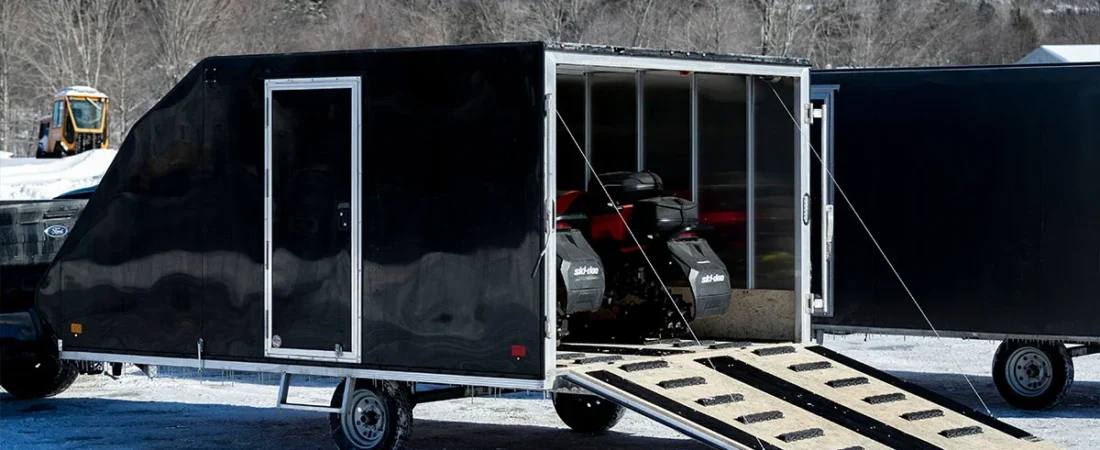
The right snowmobile trailer depends on how many sleds you haul and how much you care about keeping them out of the salt. For one or two trail sleds, a 7 ft wide inline enclosed trailer around 19 to 21 ft long is the most popular choice. The sleds load nose to tail up a rear ramp, stay dry, and arrive ready to ride. For two longer mountain sleds plus gear, look at 24 to 25 ft. For two sleds side by side, you need an 8.5 ft wide trailer with enough interior width for both machines.
An aluminum frame and skin handles road salt far better than painted steel. Open trailers are cheaper, but your sleds ride exposed to slush and salt spray all winter.
That’s the short answer. Below we go through sled dimensions, inline versus side-by-side layouts, open versus enclosed, the features that matter on a snowmobile trailer, salt and corrosion, towing in winter, and which trailers from our stock fit which riders. We sell everything mentioned here and deliver worldwide. Specs and prices come from our own listings, outside facts are linked to their sources, and where something is our opinion, we say so.
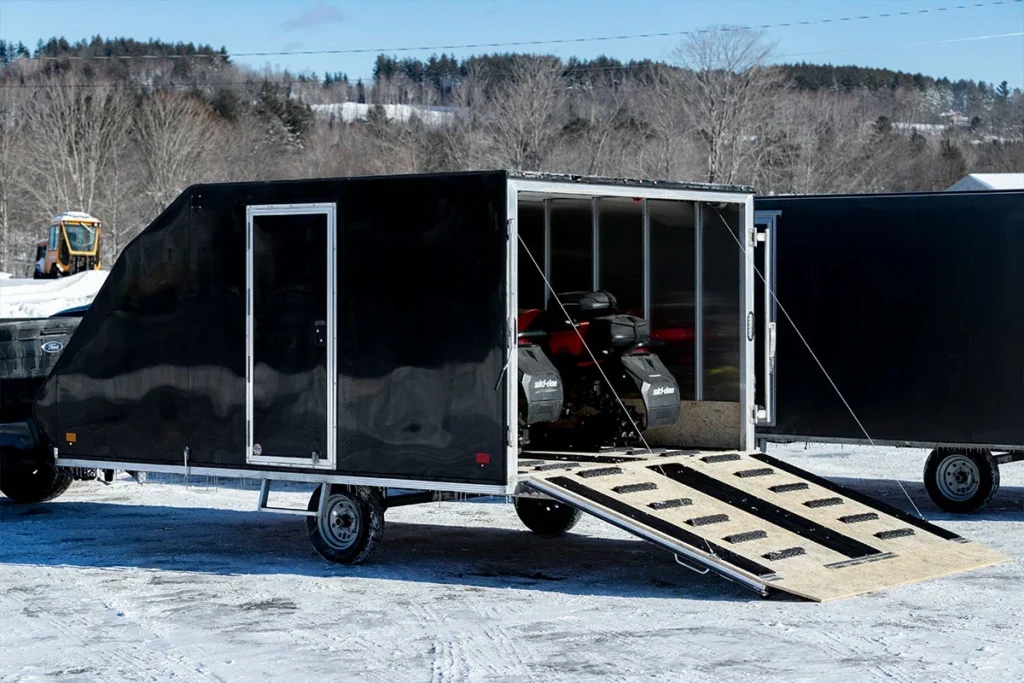
Snowmobile trailer sizes at a glance
Use this table as a starting point. The sections below explain how to check it against your own sleds.
| What you haul | Layout | Snowmobile trailer to look at | From our stock |
|---|---|---|---|
| One trail sled plus gear | Inline, enclosed | 6×12 to 7×14 enclosed with ramp | 7×14 ramp door cargo trailer |
| Two trail or crossover sleds | Inline, nose to tail | 7×19 to 7×21 enclosed | 7×21 aluminum snowmobile trailer, used 7×19 |
| Two mountain sleds plus a lot of gear | Inline, long | 7×24 to 7×25 enclosed | 7×25 snowmobile trailer |
| Two sleds side by side, or sleds plus a UTV in summer | Wide enclosed | 8.5×16 to 8.5×24 with ramp | 8.5×20 cargo trailer, 8.5×24 cargo trailer |
| One sled, lowest price | Open | Open utility or aluminum deck trailer | 7×16 aluminum utility trailer |
The pairings are our recommendation, based on published sled sizes and the way our customers use their trailers.
Start with your sled’s real dimensions
Sizing a snowmobile trailer means knowing three numbers for each sled: overall length, overall width and weight. They vary more than many riders expect, especially between trail sleds and mountain sleds.
Some current manufacturer figures:
- Polaris lists the 2027 850 INDY XC 137 trail sled at 120 in long, 47 in wide and 46 in high, with an estimated dry weight of 499 lb.
- Ski-Doo’s 2025 MXZ range is listed at 115.2 to 119.6 in long and 47.8 in wide, with dry weights from 438 to 522 lb depending on engine and track.
- Polaris lists the 2026 Patriot 9R RMK Khaos 155 mountain sled at 126.7 in long, 43.4 in wide and 53 in high, at 419 lb dry.
So a typical trail sled needs about 10 ft of floor and nearly 4 ft of width. A mountain sled is narrower but longer and taller. These are dry weights, which means no fuel or oil. Add a full tank, oil, a tunnel bag, spare belt and any accessories, and plan on noticeably more than the brochure figure for each sled.
Why width matters more than you think
Two trail sleds at around 47 to 48 in wide each need roughly 95 to 96 in of floor to sit exactly side by side, before you leave any room to walk between them. That’s why a standard 7 ft wide snowmobile trailer is built for sleds in line, one behind the other, and why side-by-side hauling needs an 8.5 ft wide trailer. Even then, check the real interior width. Many owners stagger the sleds, one slightly forward of the other, so the skis don’t line up and the fit is less tight.
Inline or side by side?
This is the first real decision when choosing a snowmobile trailer.
| Inline (7 ft wide) | Side by side (8.5 ft wide) | |
|---|---|---|
| How sleds sit | Nose to tail, one behind the other | Next to each other, often staggered |
| Towing | Narrower, easier in mirrors and on tight roads | Wider, more wind area |
| Loading | Back sled must come off before the front sled | Each sled loads independently |
| Weight distribution | Front sled over or ahead of the axles | Both sleds can sit in the ideal spot |
| Other uses | Bikes, ATVs, general cargo | UTVs, cars, bigger cargo |
For most two-sled households, inline is the practical choice. It tows like a normal cargo trailer and fits more driveways. Side by side makes sense for groups who unload one sled while the other stays put, or for owners who want the trailer to carry a side-by-side UTV in summer. Our types of trailers guide covers how these layouts fit with other trailer styles.
Enclosed or open snowmobile trailer?
Open sled decks are cheap and light, and you can see the machines in your mirrors. The catch is what happens on the highway in winter. Every mile of wet road throws salt slush onto the sleds, the engine bay, the shocks and the electrical connectors. After a long drive, the sled can arrive iced over and needing a clean before you ride. An enclosed snowmobile trailer keeps the sleds dry and clean, lets you leave gear packed, doubles as a warm-up and changing room at the trailhead, and locks.
The salt issue isn’t small. AAA estimated that road salt and de-icer rust damage costs US drivers more than $3 billion a year, and recommends washing vehicles often, including the undercarriage. A sled that rides in the open sees exactly the same spray as a car’s underside, without the protective coatings.
Our view: if you trailer more than a few times a season on salted roads, enclosed is worth the extra money. If you only drive a few miles to a local trail on quiet roads, an open trailer will do. Our enclosed vs open trailer guide goes through the general trade-offs in more depth.
Aluminum or steel?
For a snowmobile trailer, this choice matters more than for almost any other trailer, because it lives in salt for months. Painted steel frames rust wherever the paint is chipped, and steel trailers often show rust first around the tongue, the axle hangers and the floor crossmembers. Aluminum doesn’t rust like steel, weighs less, and leaves more payload. All three of our dedicated snowmobile trailers have aluminum construction for that reason.
Steel enclosed trailers, such as our 7×14 enclosed trailer and 7×14 cargo trailer, are cheaper and work well for owners who wash them after salty trips and store them under cover. Our aluminum vs steel trailer article covers weight, cost and repair in detail.
Features that matter on a snowmobile trailer
Most enclosed trailers can carry a sled. A trailer built as a snowmobile trailer usually adds a few things that make winter use much easier.
Ramp door and ramp angle
A rear ramp door lets you ride the sled straight in. A lower ramp angle matters because sleds have little ground clearance at the front and the skis can dig into a steep ramp. A ramp flap, sometimes called a beavertail, smooths the transition at the bottom. Some trailers have a front ramp too, so you drive in the back and out the front.
Floor that copes with studs and carbides
Studded tracks and ski carbides chew up plain plywood. Look for a floor covered with rubber coin mat, aluminum or a durable composite, and ski guides or skid strips so the carbides run in a channel. Clean, dry floors also stop sleds sliding when you’re unloading.
Tie-down points
D-rings or E-track at the front and back of each sled position. You’ll tie down the skis or front bumper and the rear grab handle or bumper.
Interior height
Trail sleds are around 46 to 50 in tall and mountain sleds around 53 in, so a 78 in interior is plenty for the machines. A taller interior, like 84 in, mostly helps you, letting you stand up to change and move around with boots on.
Lights, vents and drainage
Interior lights help at dark trailheads. Roof vents let snow and moisture dry out between trips. A floor that lets meltwater drain, or at least a ramp you can sweep, keeps ice from building up.
Side door
A side entry door means you can grab gear without dropping the ramp in a snowbank.
How long should your snowmobile trailer be?
Using the published lengths above, here’s how we do the sum:
- One trail sled: about 120 in, so a 12 ft floor like our 6×12 enclosed cargo trailer can work if it has a ramp or you add one, and 14 ft leaves room for gear.
- Two trail sleds inline: two sleds at about 115 to 120 in make 230 to 240 in, or 19 to 20 ft, before you add any gap. A 7×19 is the minimum. A 7×21 gives a little breathing room and space for gas cans and bags.
- Two mountain sleds inline: two at 126.7 in make about 253 in, or 21 ft. A 7×24 or 7×25 snowmobile trailer leaves room for gear and lets you position the front sled correctly.
- Three sleds: you’re into long inline trailers or wide side-by-side layouts. Talk to us with your sled models.
One more thing to check: some advertised trailer lengths include a V-nose and some don’t, and the ramp may take a few inches at the back. Ask for the usable floor length on any snowmobile trailer you’re comparing, ours included.
Ramp angle: a quick way to compare trailers
Sleds don’t like steep ramps. The front bumper and the ski tips can catch at the top or bottom, and on ice a steep ramp is harder to drive up with control. You can compare snowmobile trailers yourself with two measurements: the height of the trailer floor at the back, and the length of the ramp.
Here’s an example with made-up but realistic numbers, not the spec of any particular model. A floor 15 in off the ground with a 72 in ramp gives a slope of 15 divided by 72, about 0.21, which works out to an angle of roughly 12 degrees. Cut the floor height to 12 in with the same ramp and the angle drops to under 10 degrees. Lengthen the ramp to 84 in at 15 in height and it’s about 10 degrees too.
So a lower floor, a longer ramp, or a ramp flap at the bottom all make loading easier. When you compare any snowmobile trailer, ask for floor height and ramp length, and do the same quick sum. We’ll give you both figures for any trailer we sell.
Brakes and breakaway systems
Most tandem axle snowmobile trailers come with electric brakes, controlled by a brake controller in the tow vehicle. Ask whether both axles are braked or only one. On a loaded two-sled trailer, brakes on both axles give noticeably better stopping, especially on packed snow. A breakaway kit applies the trailer brakes if the trailer ever comes off the hitch, and the breakaway battery needs charging and testing before the season. Rules on when trailer brakes are required differ between countries and states, so check the rule where you’ll tow.
Weight, payload and your tow vehicle
Two sleds with fuel and gear will usually come in somewhere around 1,100 to 1,400 lb, depending on models and how much you carry. That’s our estimate from the dry weights above plus a reasonable allowance for fuel and kit. Add the trailer itself, and a loaded aluminum two-sled snowmobile trailer often ends up in the 3,000 to 4,500 lb range. A steel trailer of the same size weighs more.
Check three things:
- The trailer’s payload: GVWR minus empty weight. Our listings show GVWR. Ask us for empty weight.
- Your tow vehicle’s towing capacity and maximum tongue weight, from its owner’s manual.
- Tongue weight on the hitch. GMC’s towing guide says a conventional trailer should carry roughly 10 to 15 percent of its loaded weight on the tongue, with about 60 percent of the load over the front half. On an inline snowmobile trailer, that usually means the front sled sits fully forward and the rear sled sits ahead of or just over the axles, not out on the ramp.
Enclosed trailers also catch wind. Leave extra following distance, slow down in crosswinds, and don’t be surprised if fuel use goes up compared to towing an open deck. That’s normal for a tall box.
Towing a snowmobile trailer in winter
Winter towing is the harder version of normal towing. Some points we’d stress:
- Brakes. Most tandem enclosed trailers have electric brakes. Set the brake controller gain for slippery roads, so the trailer doesn’t lock up before the truck does.
- Tires. Check trailer tire pressures when cold. Pressure drops as the temperature drops.
- Lights and wiring. Salt corrodes plug pins. A smear of dielectric grease on the connector and a check before every trip saves a lot of roadside fiddling.
- Snow on the roof. Clear it before you drive. Sheets of snow and ice sliding off a trailer roof are a hazard to drivers behind you.
- Parking. Use wheel chocks, especially on icy trailhead lots. Leave the trailer level if you can, so the ramp door seals and closes properly.
Our trailer towing tips cover braking, reversing and sway in more detail, and if you also haul machinery in summer, see our skid steer trailer guide.
Strapping sleds down properly
A sled that shifts in a trailer can dent walls, crack a hood, or push against the ramp door in a hard stop. US federal cargo rules for commercial vehicles give a useful benchmark: under 49 CFR 393.110, an article longer than 5 ft and up to 10 ft needs at least two tiedowns if it isn’t blocked against moving forward, and more as length increases. A 10 ft sled is right at that line.
In practice we’d use at least two straps per sled, one at the front pulling forward from the skis or bumper, one at the back from the rear bumper, and add ski chocks or a front stop. Our guide to securing a load on a trailer goes through strap types and working load limits.
Loading and unloading at the trailhead
Trailheads are often icy, sloped and crowded, so a steady routine helps. This is the order we’d suggest for an inline enclosed snowmobile trailer:
- Park as level as you can. A trailer on a slope makes the ramp steeper on one side and the sleds harder to control.
- Chock the trailer wheels and set the truck’s parking brake before you drop the ramp.
- Clear snow and ice off the ramp. A quick sweep or a bit of traction grit makes a big difference.
- Unstrap the rear sled first and back it out slowly, with someone watching the skis at the ramp transition.
- Then the front sled. On trailers with a front ramp, drive it straight out the front instead.
- Close the ramp door if you’re leaving the trailer, and lock it. Your gear is still inside.
Loading at the end of the day is the reverse: front sled first, all the way forward, then the rear sled, then straps. Knock the snow off the sleds before they go in, or it melts on the floor on the drive home.
Accessories worth adding
A snowmobile trailer can be improved a lot with a few add-ons. These are the ones riders most often ask us about:
- Ski guides or skid strips if the floor doesn’t already have them, so carbides run in a channel and don’t gouge the floor.
- Ski chocks or a front stop to stop sleds creeping forward under braking.
- E-track along the walls for flexible tie-down points and gear hooks.
- Helmet and boot racks. Gear dries better hung up than piled on the floor.
- A fuel can holder mounted low and secure, away from any heater.
- Extra LED lighting, inside and over the ramp, for dark trailhead mornings.
- A coupler lock and wheel lock if the trailer sits at a trailhead or in a storage yard.
- A spare tire and mount. A flat on a cold, remote road is no fun without one.
Plan where everything goes before drilling holes, and keep the floor clear where the sleds sit so loading stays simple.
If you choose an open snowmobile trailer
An open snowmobile trailer is a perfectly good choice for short trips and tight budgets. A few habits make it work better:
- Use a fitted travel cover on each sled. A cover rated for highway speeds keeps much of the slush and salt off. A loose or cheap cover can flap itself to pieces at speed.
- Rinse the sleds after salty drives, especially the suspension, engine bay and connectors. AAA’s advice on washing cars often in salt season applies just as much to a sled that’s been sprayed for an hour.
- Strap more firmly. There are no walls to stop a sled that slides sideways.
- Choose aluminum where possible. The trailer itself is out in the salt too.
Using a cargo trailer as a snowmobile trailer
Plenty of riders use a regular enclosed cargo trailer with a ramp door for their sleds. It works, and the trailer earns its keep all year moving furniture, bikes or tools. The differences from a dedicated snowmobile trailer are usually the floor (plain plywood rather than coin mat or aluminum), the ramp angle (often steeper), the frame material (often steel), and the lack of ski guides. You can add a floor mat, ski guides and extra D-rings to most cargo trailers afterwards.
If you go this route, pick a ramp door rather than barn doors, check the interior width against your sled, and treat the steel frame to regular washing in winter. Our 7×14 ramp door cargo trailer and 7×16 enclosed trailer are popular for this.

A snowmobile trailer that works in summer
A snowmobile trailer spends half the year parked unless you plan for summer use. Aluminum inline trailers are popular for motorbikes, dirt bikes, ATVs, camping gear and moving house. A wide 8.5 ft trailer, like our 8.5×20 enclosed car trailer, can carry a UTV, a small car or a lot of cargo. If summer use matters, think about interior height, tie-down layout, whether the ramp is rated for a heavier machine, and whether the floor suits wheels as well as skis. Look at the trailer’s GVWR too: a 9,800 lb rated trailer gives you more summer options than a 7,000 lb one.
Snowmobile trailers we sell
Prices are in US dollars and correct when this was written. Click through for current prices, photos and full specs.
Dedicated snowmobile trailers
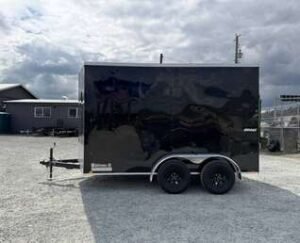
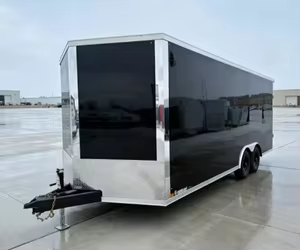
- 2026 7×21 aluminum snowmobile trailer: tandem axle, rear ramp, 84 in interior height, aluminum construction, black and charcoal, 6,990 lb GVWR, $9,900. Our pick for two trail sleds inline with room to stand up inside.
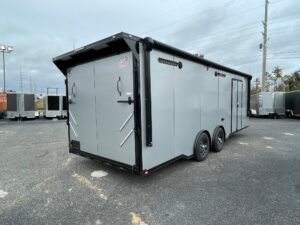
- 2026 7×25 snowmobile trailer: tandem axle, aluminum frame, rear ramp, 78 in interior height, charcoal and black, 9,800 lb GVWR, $7,900. Long enough for two mountain sleds plus gear, and the highest rating in our snowmobile range.
- 2022 used 7×19 snowmobile trailer: tandem axle, aluminum, ramp door, black and charcoal, 7,000 lb GVWR, $7,200. A good entry point for two shorter trail sleds.

Enclosed cargo trailers that suit sleds
- 6×10 aluminum cargo trailer: rear ramp, 78 in interior, 2,990 lb GVWR, $3,500. One short trail sled and gear.
- 7×14 ramp door cargo trailer: tandem, steel, 84 in interior, 10,141 lb GVWR, $6,500. One sled plus a lot of gear, or summer cargo.
- 7×16 enclosed trailer: tandem, steel, rear ramp, 84 in interior, 10,141 lb GVWR, $7,500.
- 8.5×20 cargo trailer: tandem, rear ramp, 90 in interior, 10,141 lb GVWR, $6,500. Room for two sleds side by side if the interior width suits your machines.
- 8.5×20 enclosed car trailer: tandem, rear ramp, 84 in interior, 10,141 lb GVWR, $8,100.
- 8.5×24 cargo trailer: tandem, rear ramp, 84 in interior, 7,000 lb GVWR, $8,900. Wide and long for groups.
- 2023 used 8.5×16 cargo trailer: tandem, charcoal, $5,100. A budget wide option. Ask us about its door type and interior width.
Open trailers for one sled
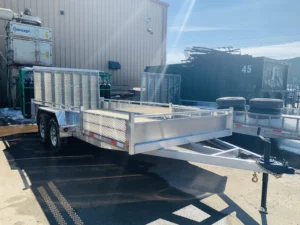
- 7×16 aluminum utility trailer: tandem, 7,010 lb GVWR, $3,200. Aluminum resists salt, and the deck takes one sled plus gear.
- 7×20 aluminum utility trailer: tandem, 7,010 lb GVWR, $4,900. Long enough for two shorter trail sleds nose to tail if the measurements work, with the sleds exposed.
- 7×14 aluminum utility trailer: tandem, 7,010 lb GVWR, $4,100.
Our open trailers have side rails and gates rather than the drive-on, drive-off decks some dedicated open sled trailers use, so plan on loading over the rear gate.
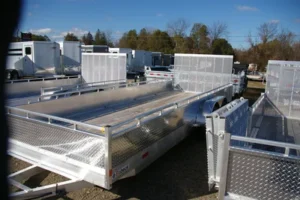
Three riders and the snowmobile trailer we’d match to each
These are typical situations buyers describe to us, with our suggestion for each. Run your own sled measurements before deciding.
The weekend trail rider with two sleds
Two trail sleds around 120 in long, a half-ton pickup, trips of a couple of hours on salted highways most weekends. We’d point this rider to our 7×21 aluminum inline snowmobile trailer. It keeps the sleds clean, tows easily, and the 84 in interior means you can change inside on a cold morning.
The mountain rider
Two long-track mountain sleds, plenty of gear, long drives to the hills and steep, snowy access roads. Our 7×25 snowmobile trailer handles the extra length and leaves room for packs, shovels and spare parts. Its 9,800 lb rating gives headroom if you add a third smaller machine or haul something heavier in summer.
The family or group with mixed machines
Two sleds now, maybe a UTV or ATVs in summer, sometimes a friend’s sled too. An 8.5×20 or 8.5×24 ramp door cargo trailer gives width for side-by-side loading and year-round use. Check interior width against your sleds and your summer machine before you choose.
New or used snowmobile trailer: what to inspect
About two-thirds of snowmobilers buy their first sled used, according to a BC Snowmobile Federation summary of the International Snowmobile Manufacturers Association’s 2024 report, which also says about half of snowmobilers trailer their machines to riding areas. Used snowmobile trailers are just as common, and we have a used 7×19 snowmobile trailer in stock now. Before buying one, ours or anyone else’s, check:
- Frame and crossmembers. Look underneath for corrosion, especially on steel. On aluminum, look for cracked welds.
- Floor. Soft or delaminated spots, worn ski guides, torn mat.
- Ramp door. Hinges, springs or lift assist, seals and the ramp flap.
- Roof and seams. Water stains inside mean leaks. Snow load and ice can stress roof bows.
- Axles, tires, brakes and bearings. Spin each wheel, look for uneven tire wear, test the brakes.
- Wiring and lights. Salt is hard on connectors. Test everything.
Our trailer maintenance checklist covers what to keep on top of after you buy.
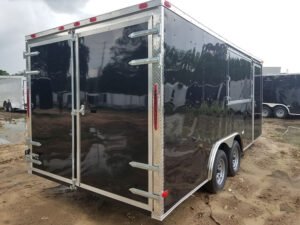
Looking after a snowmobile trailer
A few habits make a big difference to how long a snowmobile trailer lasts:
- Wash it in winter. AAA recommends washing vehicles often in salt season, including the undercarriage, and cleaning the underside again in spring. The same applies to the trailer frame, axles and wheels.
- Dry the inside. Leave vents open and sweep out snow after each trip so the floor isn’t sitting in meltwater.
- Grease the bearings before the season and check them after long trips.
- Protect connectors with dielectric grease.
- Check the ramp door hinges and seals once a season.
- Store it level and, if possible, off the ground on blocks over summer to take weight off the tires.
What a snowmobile trailer costs beyond the price tag
The sticker price is the biggest cost, but not the only one. We can’t give exact figures because they vary so much by country and region, but plan for:
- Registration, plates and inspection, where local rules require them.
- Insurance for the trailer and, separately, for what’s inside it.
- Tires. A tandem snowmobile trailer has four, and they age even if mileage is low.
- Bearings and brakes, which need regular servicing, especially after salt exposure.
- Storage over summer if you can’t keep it at home.
- Accessories such as ski guides, racks and locks.
An aluminum snowmobile trailer usually costs more to buy but less to keep corrosion-free. A steel one costs less up front and more effort to look after in salt country. That balance is our opinion from what we see in trailers coming back to us, not a measured figure.
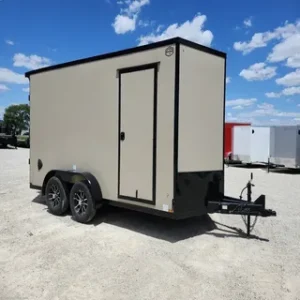
Packing gear in a snowmobile trailer
A well-organised snowmobile trailer saves time at both ends of the day. A layout that works for many riders:
- Heavy items low and forward: spare fuel, tools and spare parts go near the front, low down, so they help tongue weight rather than hurt it.
- Riding gear near the side door: helmets, boots and jackets on racks where you can reach them without moving a sled.
- Safety kit by the door: avalanche gear for mountain riders, first aid kit, tow strap and shovel.
- Nothing loose on the floor where a sled will drive over it.
Everything inside should be strapped or stowed. A bag that slides into a sled’s windshield under braking can crack it.
Snowmobile trailer buying checklist
- How many sleds, and what are their overall lengths and widths?
- Inline or side by side?
- Usable floor length and interior width?
- GVWR and empty weight (so you know the payload)?
- Aluminum or steel frame and skin?
- Ramp door angle, ramp flap, front ramp?
- Floor covering, ski guides, tie-down points?
- Interior height, side door, lights, vents?
- Brakes on both axles?
- Summer uses you’ll want it for?
We’ll answer every question on this list for any snowmobile trailer we sell. For general advice on picking any trailer, see our guide on how to choose a trailer.
Mistakes we see people make
These come from our own conversations with buyers, so treat them as experience rather than statistics.
- Measuring the trailer, not the sleds. Two 120 in sleds need about 20 ft of usable floor, not 20 ft of advertised length.
- Assuming two sleds fit side by side in an 8.5 ft trailer. They often do, but only with the right interior width or a staggered layout.
- Buying steel and never washing it. Salt finds every chip in the paint.
- Parking the back sled on the ramp. It takes weight off the hitch and can cause sway.
- Only using one strap per sled. The sled can still slide sideways or bounce.
Why demand for snowmobile trailers holds up
Snowmobiling is a big hobby. The International Snowmobile Manufacturers Association says there are about 1.3 million registered snowmobiles in the US and over 559,300 in Canada, and that 92,387 new snowmobiles were sold worldwide in 2025. Every one of those sleds needs to get to the snow somehow, and for many riders that means a trailer. Good used snowmobile trailers tend to sell fast before the season starts, so shopping early usually gives you more choice. That last point is our experience as a seller, not a published figure.
Delivery worldwide
We deliver snowmobile trailers to customers in many countries. Enclosed trailers take up space in transport, so ask for a delivered quote on each model you’re considering. Tell us where you’ll tow and we’ll flag any width, braking or lighting points that matter where you live.
Snowmobile trailer FAQs
What size snowmobile trailer do I need for two sleds?
For two trail sleds inline, a 7×19 at minimum and a 7×21 for comfort. For two mountain sleds, 7×24 to 7×25. For side by side, an 8.5 ft wide trailer with enough interior width.
Is an enclosed snowmobile trailer worth it?
If you tow on salted roads, usually yes. Your sleds stay clean and dry, you can store gear in the trailer, and it doubles as a changing room.
Aluminum or steel snowmobile trailer?
Aluminum resists salt corrosion and weighs less. Steel costs less and is easy to repair but needs regular washing in winter.
Can a regular cargo trailer be used as a snowmobile trailer?
Yes, if it has a ramp door and enough interior width. Add a floor mat, ski guides and extra tie-downs.
How much does a loaded snowmobile trailer weigh?
Two sleds with fuel and gear usually come to roughly 1,100 to 1,400 lb by our estimate, plus the trailer. Ask us for the empty weight of any model.
How do I tie down a snowmobile in a trailer?
At least two straps per sled, front and back, plus ski chocks or a front stop.
What interior height does a snowmobile trailer need?
The sleds themselves fit in 78 in. Taller interiors like 84 in are more comfortable for people standing inside.
Can I fit three snowmobiles in one trailer?
Yes, in a long inline snowmobile trailer or a wide side-by-side one, but it depends on your sled lengths and widths. Send us the models and we’ll check the fit.
Should I buy a new or used snowmobile trailer?
Both make sense. A used one saves money if the frame, floor and ramp are sound. A new one gives you a clean history and the full working life.
Do you ship snowmobile trailers outside North America?
Yes, we deliver worldwide. Ask for a delivered quote.
Find your snowmobile trailer
Tell us your sled models, how many you haul and what you tow with, and we’ll recommend a snowmobile trailer that fits. Browse our snowmobile trailers, enclosed cargo trailers, utility trailers and used trailers, or see everything in the shop. Questions? Contact us. You might also like our guides on the tandem axle trailer question and our landscape trailer guide for year-round hauling ideas.
Sources and References
- Polaris: 850 INDY XC 137 specifications
- Ski-Doo: 2025 MXZ specifications
- Polaris: Patriot 9R RMK Khaos 155 specifications
- AAA: Road de-icers and rust damage fact sheet
- GMC: Tongue weight and why it’s key to safe towing
- 49 CFR 393.110: Minimum number of tiedowns (Cornell LII)
- BC Snowmobile Federation: 2024 snowmobile industry statistics from ISMA
- International Snowmobile Manufacturers Association (ISMA)