
Description
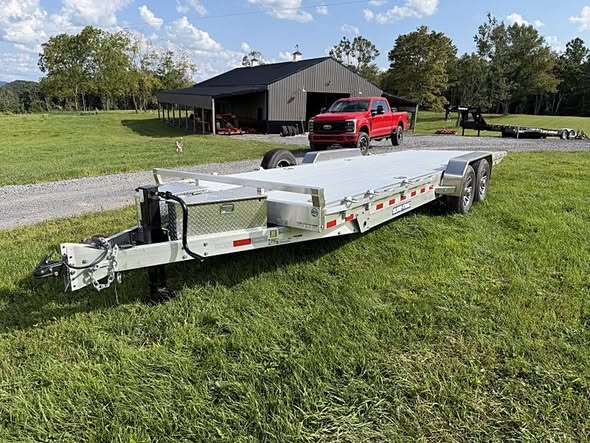
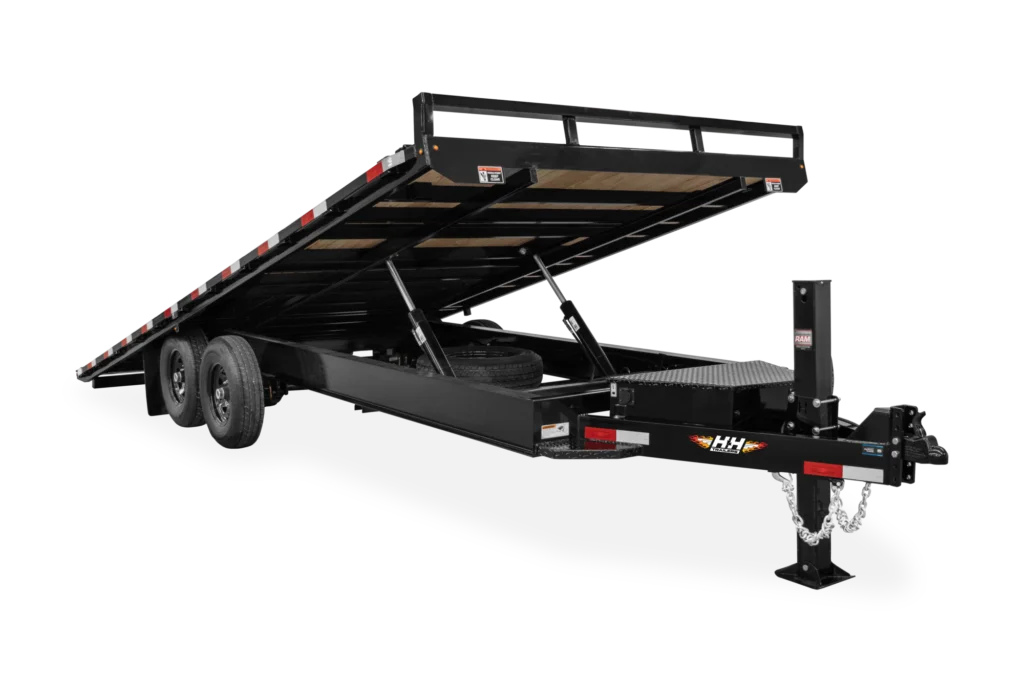
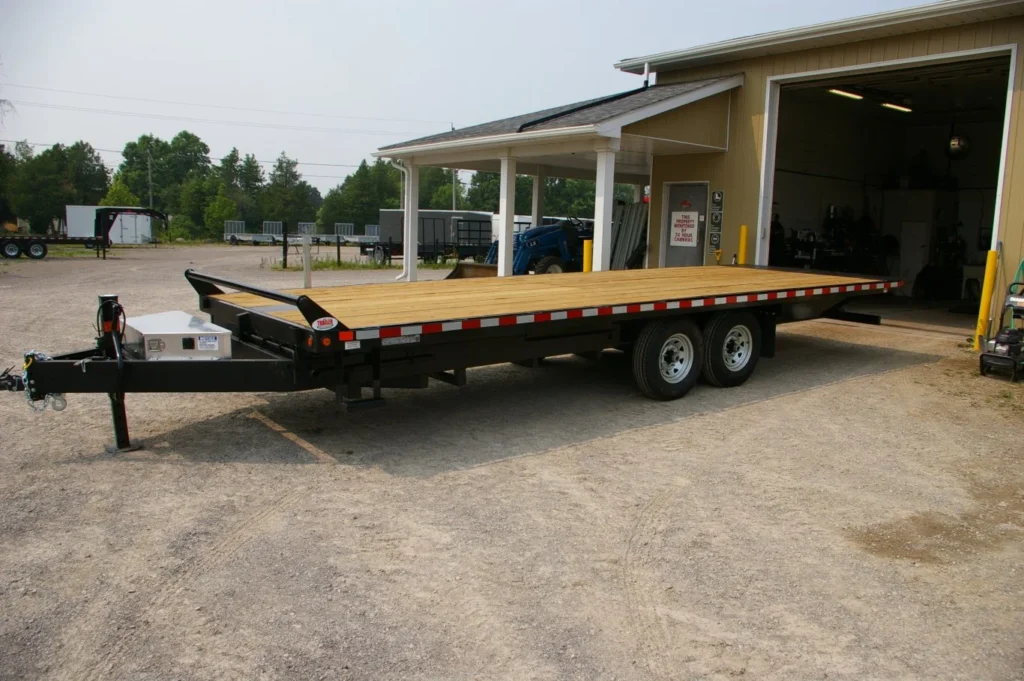
This power tilt trailer is a hydraulic tilt and load model, ETL718-14K, with a 7×18 deck on tandem axles and a 14,000 lb GVWR. Push a button and the deck tilts down; push again and it comes back level. No waiting for the load’s weight to do the work, and full control over every move. It is for sale now.
What you get with this power tilt trailer
The model code gives you the key facts: a 7 by 18 ft deck, about 2.1 x 5.5 m, rated at 14,000 lb (6,350 kg). A hydraulic pump, usually powered by an onboard battery, drives a cylinder that raises and lowers the deck. That means you can tilt it empty to winch a dead machine on, or hold the deck at any angle while you line things up.
Who it suits
- Recovery services moving non-running machines
- Contractors who load several times a day
- Car dealers with low vehicles
- Rental yards wanting easy loading for customers
Power tilt trailer specifications
| Model | ETL718-14K |
|---|---|
| Deck size | 7 ft x 18 ft (2.1 x 5.5 m) |
| Type | Hydraulic power tilt |
| Axle | Tandem |
| GVWR | 14,000 lb (6,350 kg) |
Ask us for year, finish, pump and battery type, deck material and empty weight.
Power tilt versus gravity tilt
A gravity tilt only moves when the load crosses the pivot. A power tilt uses a hydraulic cylinder so you choose when it moves. That’s a real advantage with machines that won’t start, cars with low noses, and anything you need to winch. The extra parts mean a battery to keep charged and hoses to check.
Towing a power tilt trailer
Loaded, plan on a 3/4-ton or 1-ton pickup with a brake controller. The gross vehicle weight rating includes the trailer. Ask us whether the pump battery charges from your tow vehicle’s plug.
Loading
Tilt the deck down with the control, drive or winch the load on, then raise the deck and lock it. Chain at four corners.
Mistakes to avoid
Letting the pump battery go flat over winter. Keep it on a trickle charger.
Pre-trip checklist
- Coupler latched and pinned, safety chains crossed and hooked
- Breakaway cable clipped to the vehicle, not to the chains
- Trailer brakes tested at walking speed
- All lights and indicators working
- Tire pressures and wheel nuts checked
- Load chained or strapped, weight just ahead of the axles
- Jack raised and ramps or doors secured
Run through this every time you hook up your power tilt trailer. Then check the load again after the first few kilometres, because things settle.
Trailer terms explained
Words you will see when you compare any power tilt trailer:
- GVWR: the most the trailer and its load can weigh together.
- Payload: the GVWR minus the empty weight of the trailer.
- Gravity tilt: a deck that tips by itself once the load passes the balance point.
- Power tilt: a deck raised and lowered by a hydraulic pump.
- Pivot point: where the deck tilts, usually near the axles.
- Deck lock: holds the deck level for travel. Always check it before driving.
How owners use a power tilt trailer
Recovery firms load broken machines. Dealers move cars. Contractors carry skid steers. A power tilt trailer makes every load calmer and safer.
Storing it
Park on firm, level ground with the jack on a block so it does not sink. Touch up chips before winter so rust does not get started. If the trailer sits for weeks, move it now and then so the tires do not flat-spot, and check pressures before the next trip. A coupler lock or wheel clamp is cheap insurance when your power tilt trailer is parked where people can see it.
Compare other tilt trailers
The 22 ft power tilt trailer is the longer version. The hydraulic tilt trailer is another option. For full width, see the deckover tilt trailer.
 22 ft power tilt trailer
 Hydraulic tilt trailer
 Deckover tilt trailer
Our practical guide to choosing a trailer may help.
Accessories worth adding
Chains and binders or heavy ratchet straps suited to your machines are the basics. Wheel chocks, a spare tire and a coupler lock come next. Many owners add a front winch for machines and cars that do not run, a tongue box for straps and gloves, and LED lights on the deck for loading in the dark. These extras make a power tilt trailer quicker and safer to use.
Before you buy
Measure your machines, check their weights with attachments and compare them with the deck size and GVWR. Confirm your truck can tow the loaded trailer and that your hitch matches the coupler. Think about how often you load. Gravity tilts suit occasional use, while power tilts make sense for daily loading or low and heavy machines. If those answers point here, this power tilt trailer will suit you. If not, ask us and we will help you choose.
Driving with a tilt trailer
Always check that the deck is locked level before you drive. A loaded tilt deck with a tall machine raises the centre of gravity, so corner gently and brake early. Re-check chains after the first few kilometres. When you arrive, unload on level ground and keep everyone clear of the deck while it moves. Treat your power tilt trailer like any heavy trailer and it will give you years of easy loading.
Common questions
How is this power tilt trailer powered?
Usually by an onboard battery and pump. Ask us to confirm.
Can I tilt it empty?
Yes, that’s one of the main benefits.
What if the battery dies?
Ask us about the manual backup on this unit.
Is a tilt deck safe for low cars?
Yes. The low loading angle is one of the main reasons car owners choose a tilt deck.
Can I load from the side?
With the deck level, pallets can often be loaded from the side with a forklift.
Do you offer delivery?
Ask us about delivery to your area when you order your power tilt trailer.
What to check when it arrives
Run the tilt up and down, check hoses, battery, lock, deck, lights, brakes and tyres.
Using a winch
A winch is handy for machines that won’t run, cars with low clearance and anything you’d rather not drive up a deck. Mount it to a proper winch plate, never to a crossmember that wasn’t built for it. Pick a winch rated at about one and a half times the weight you’ll pull.
Stand to the side of the cable, not behind it, and keep people clear while it’s under load. When the load is in place, chain it down; the winch cable is not a tie-down. Ask us what winch mounts suit this power tilt trailer.
Your first few tows
Take the empty trailer for a short drive on quiet roads before your first real job. Get used to how it follows, how much wider you need to take corners, and how the brakes feel. Then try a light load, and only after that a full one.
Set the brake controller so the trailer brakes slightly before the truck, without locking the wheels. Leave twice your normal following distance. After about 50 miles (80 km), stop and re-torque the wheel nuts on your power tilt trailer, since new wheels can settle.
Wiring and lights
Most electrical trouble on a trailer comes down to a bad ground. If a light flickers or the indicators blink at a strange speed, clean the ground point on the frame and the plug pins before buying new bulbs. A little dielectric grease on the plug keeps water out.
LED lights draw less power and last longer, but they still need a clean connection. Test everything on your power tilt trailer with a helper before each trip. It takes thirty seconds and saves a roadside stop.
Chains, binders and straps
For machines with steel tracks or a lot of weight, use grade 70 chain and proper binders, not ratchet straps. Straps are fine for light cargo, but they stretch, fray on sharp edges and lose tension in the rain. Chain each corner of the machine to its own anchor point, angled outward, so it can’t move forward, back or sideways.
Check the tension after the first few miles. Loads settle and chains slacken a little. Keeping a spare binder and a length of chain in the toolbox of your power tilt trailer saves a lot of trouble when one goes missing.
Tires and wheel bearings
Trailer tires age faster than they wear. A set can look fine on tread and still be cracked in the sidewalls after five or six years, especially if the trailer sits outside in the sun. Check the date code on the sidewall when you buy spares, and keep them at the pressure printed on the tire, not the one on your tow vehicle door.
Bearings want fresh grease about once a year or every 12,000 miles (20,000 km), whichever comes first. Feel the hubs with the back of your hand at a fuel stop. Warm is normal. Too hot to touch means stop and look before going further. A spare wheel that fits your power tilt trailer is cheap insurance, so carry one.
Talk to us before you order
Every buyer tows something different and carries something different. If you want to double-check that this power tilt trailer suits your vehicle, your hitch or the load you have in mind, send us a message with the details. We will give you a plain answer, tell you what we know about this exact unit and point you to another model if it fits your needs better. No pressure, just straight advice.
Buy this power tilt trailer
This power tilt trailer is for sale now. Add it to your cart or contact us. See all tilt and load trailers or the shop.
Reviews
There are no reviews yet.