
Description
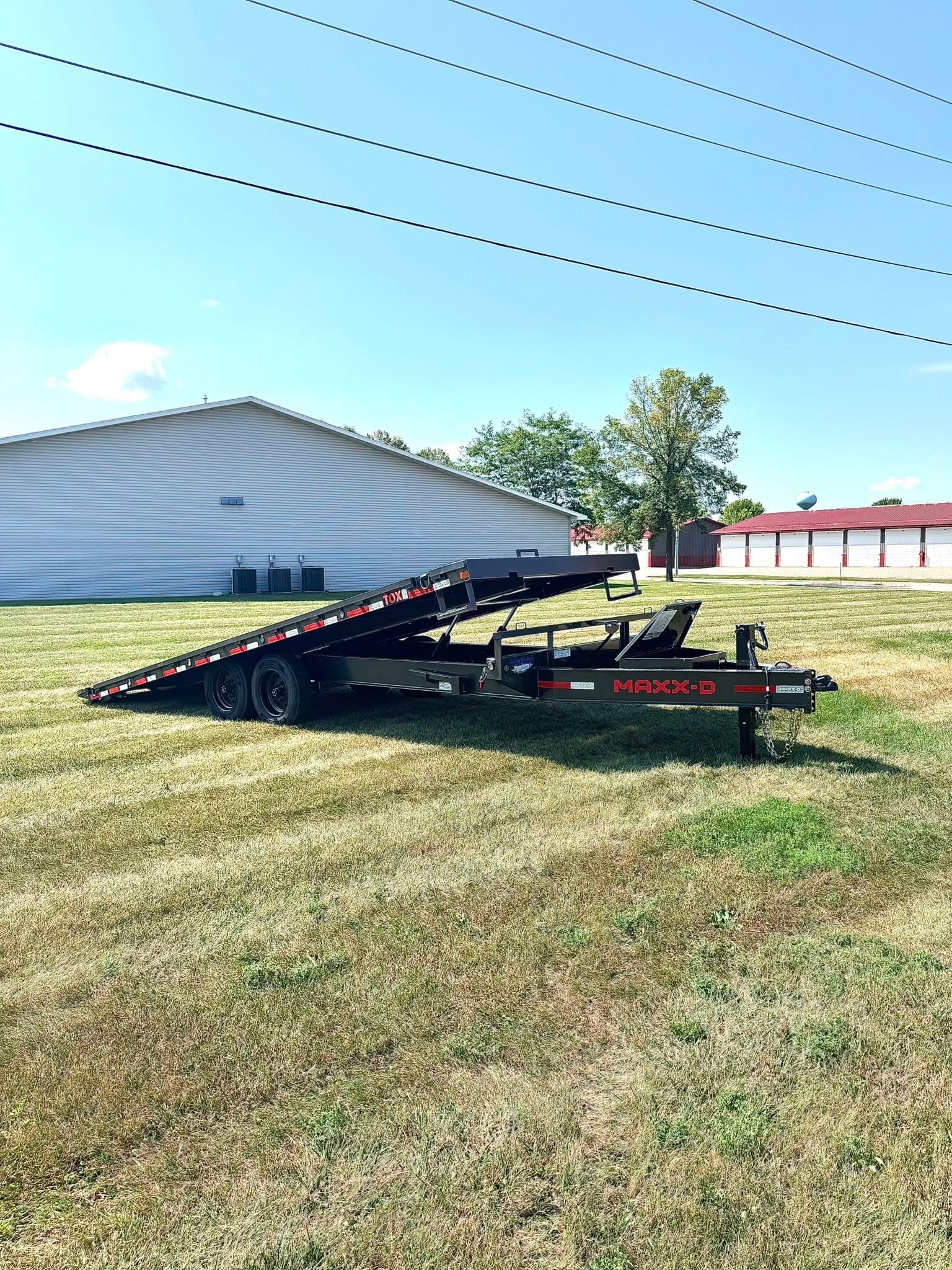
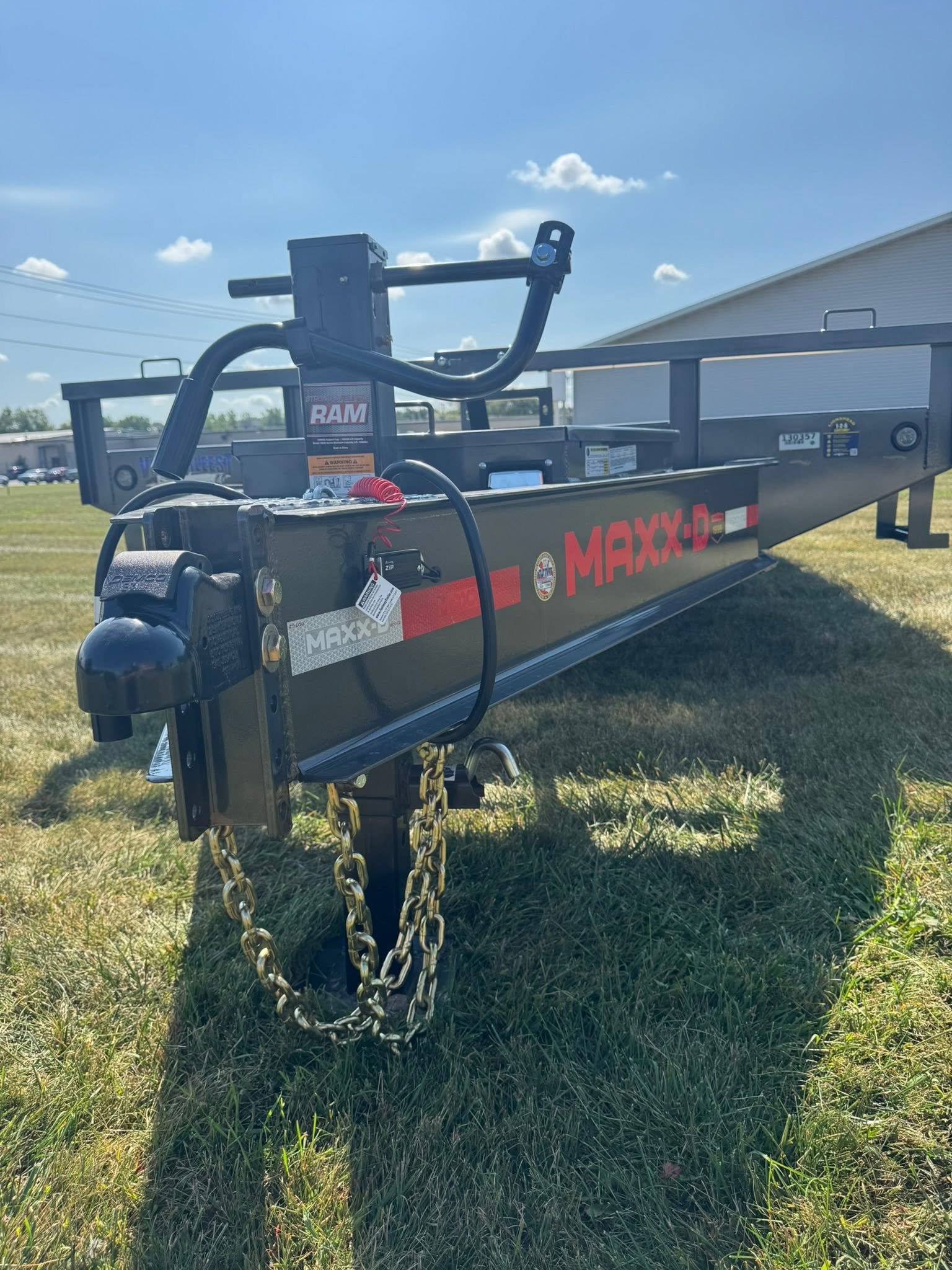
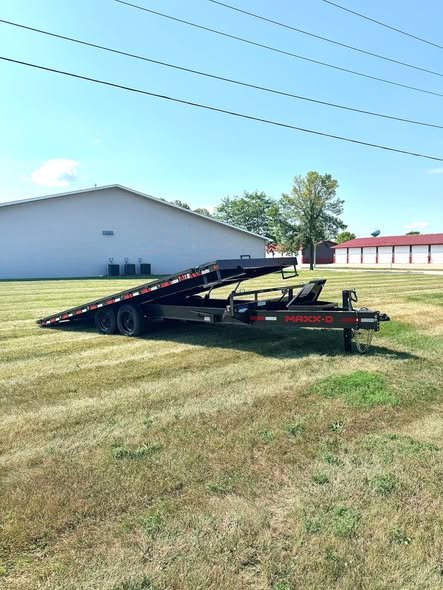
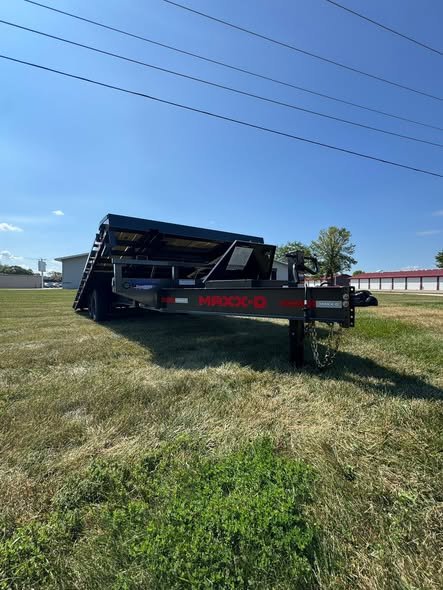
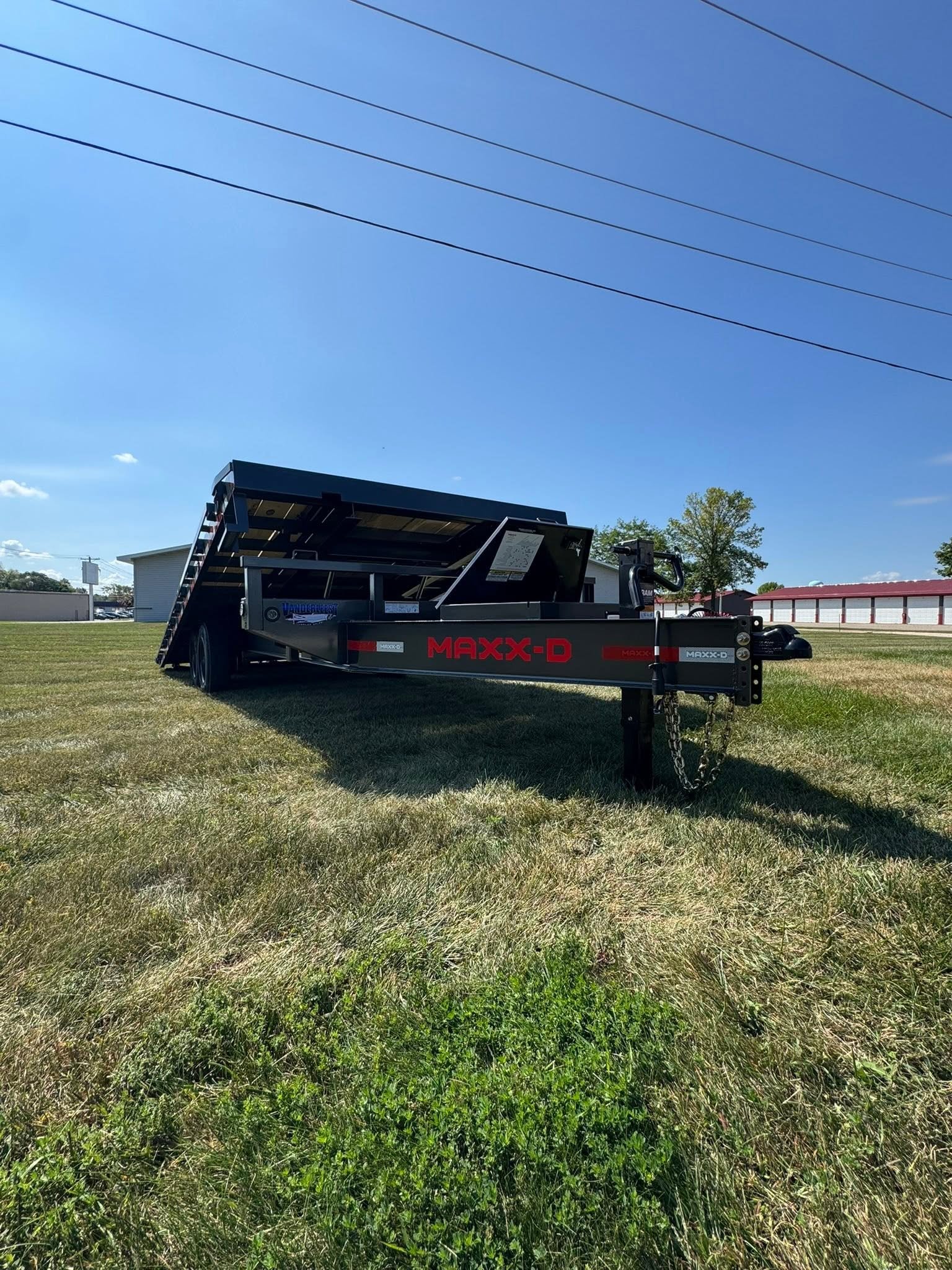
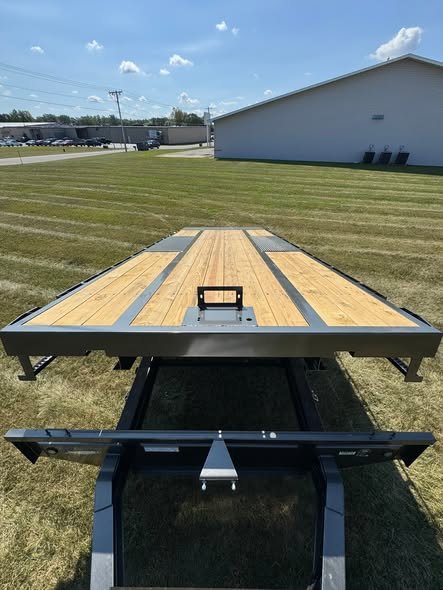
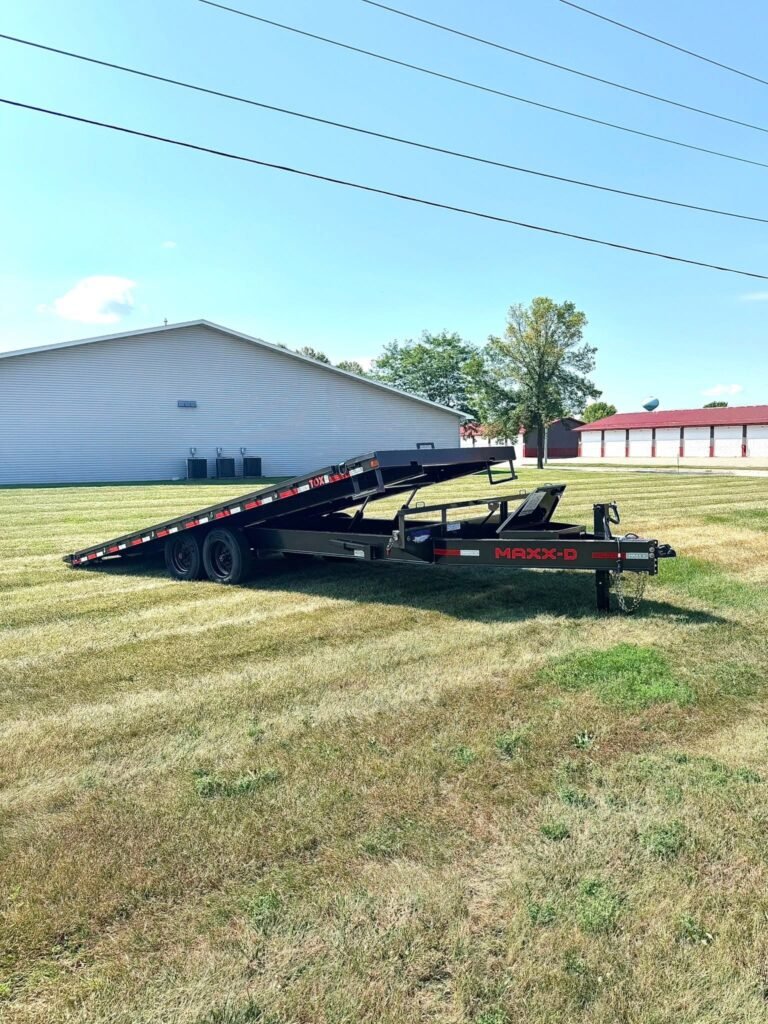
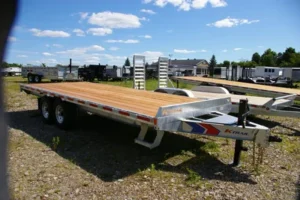
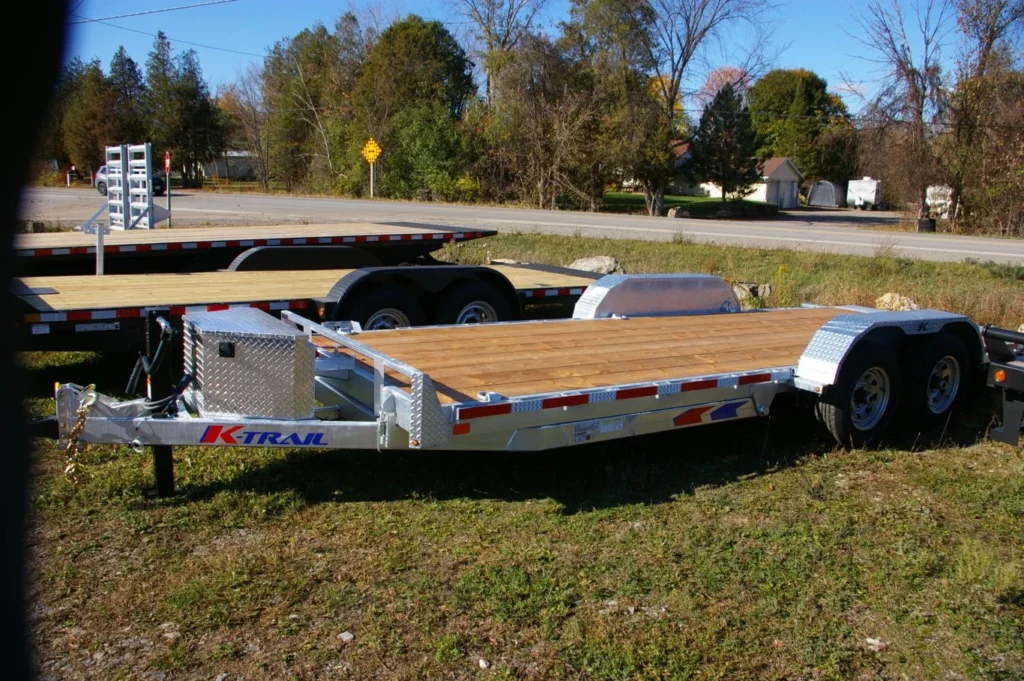
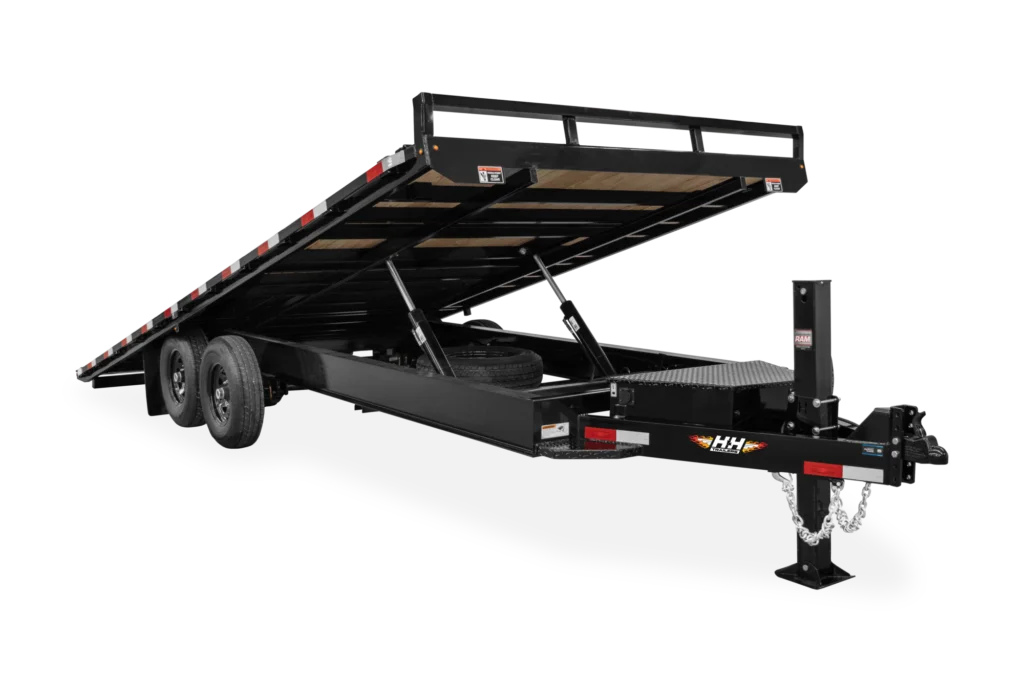
This deckover tilt trailer is a hydraulic power-tilt model, ETL822-14K, with an 8×22 deck built over the wheels, tandem axles and a 14,000 lb GVWR. You get the full width of a deckover and push-button tilting in one trailer. It is for sale now.
What you get with this deckover tilt trailer
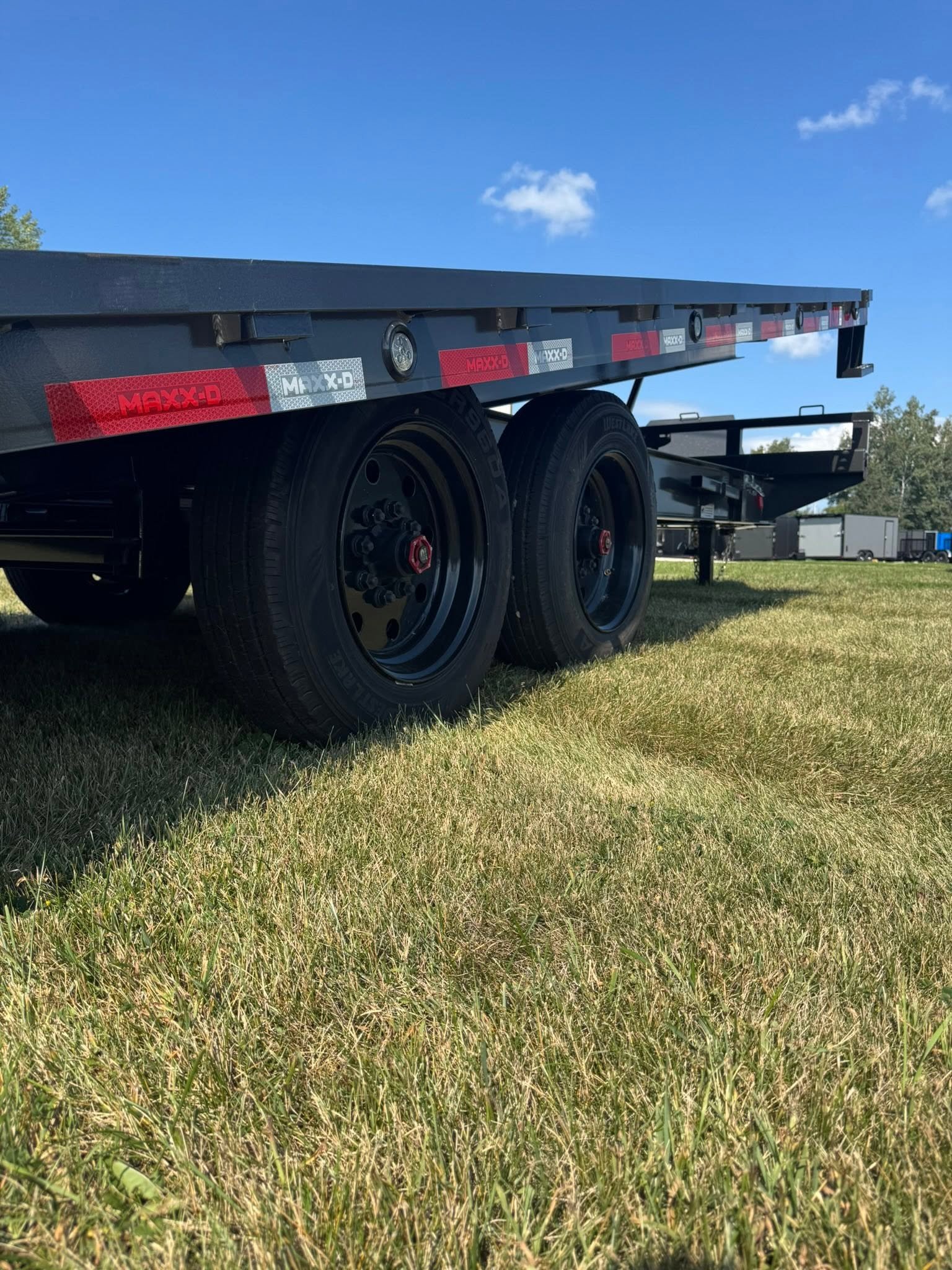
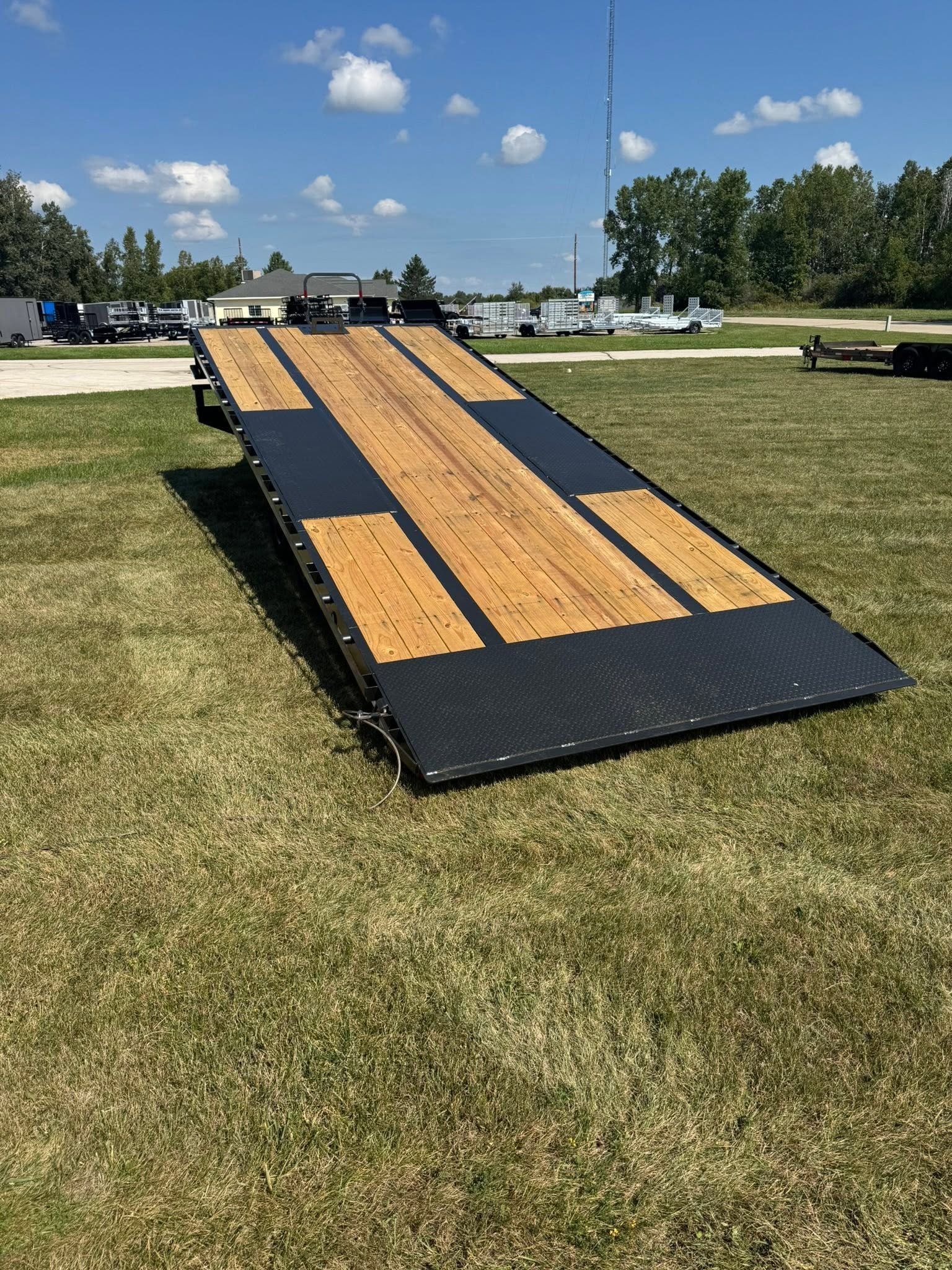
The deck is 8 by 22 ft, about 2.4 x 6.7 m. Because it sits above the tyres, there are no fenders in the way, so wide machines, pallets and tracked equipment use the full deck. The hydraulic tilt lowers the whole deck on command, giving you a long, even loading angle without ramps. The 14,000 lb (6,350 kg) rating covers most compact and many mid-size machines.
Who it suits
- Contractors with wide skid steers or track loaders
- Hire companies with mixed fleets
- Farmers moving wide implements
- Anyone who wants deckover width without ramps
Deckover tilt trailer specifications
| Model | ETL822-14K |
|---|---|
| Deck size | 8 ft x 22 ft (2.4 x 6.7 m) |
| Style | Deckover, hydraulic power tilt |
| Axle | Tandem |
| GVWR | 14,000 lb (6,350 kg) |
Ask us for year, finish, pump and battery, deck material and empty weight.
Deckover plus tilt
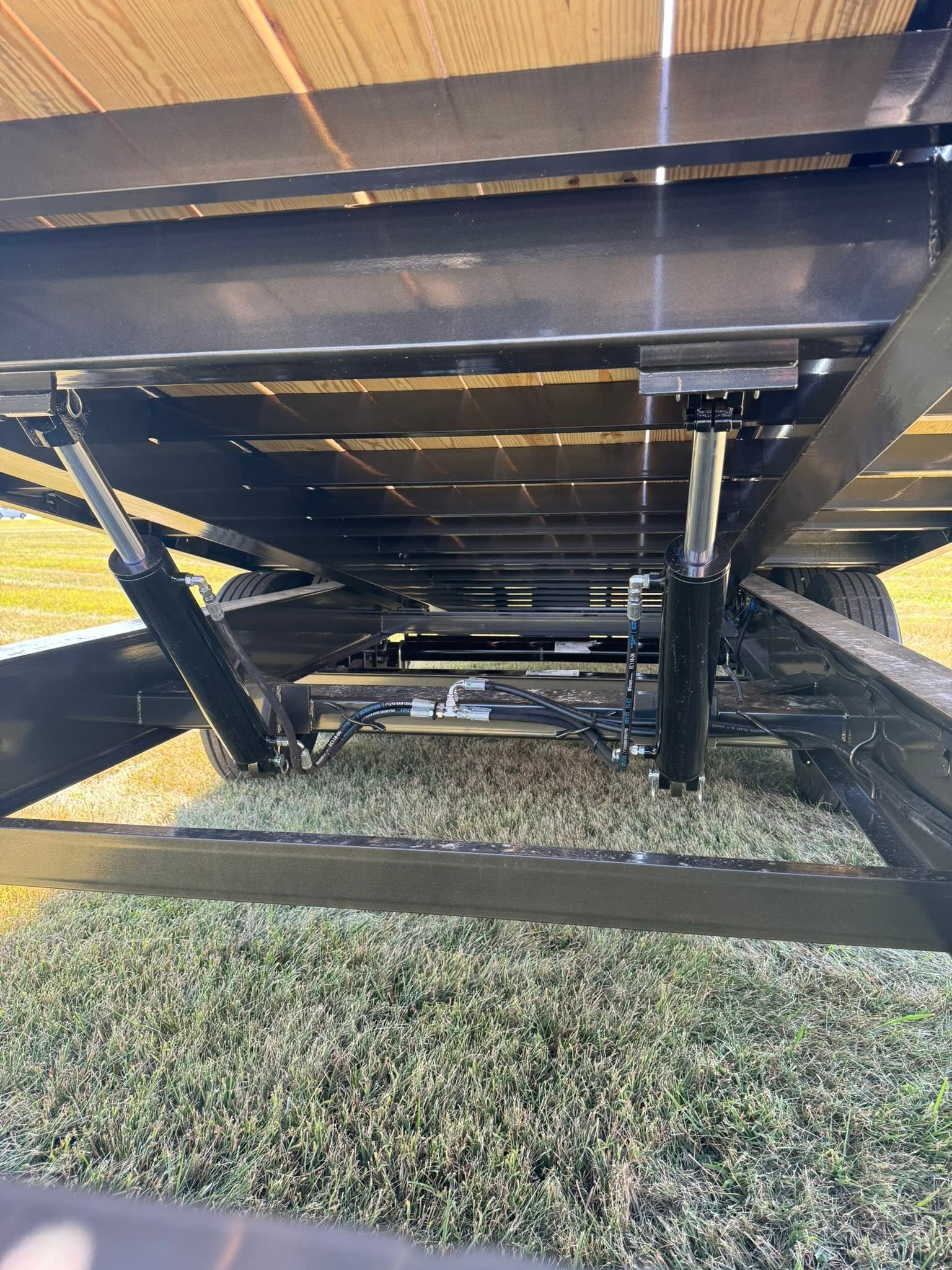
A standard deckover has a high deck and needs long ramps. Adding a power tilt solves that: the deck lowers to the ground and you drive straight on. A hydraulic cylinder does the lifting. You lose a little height compared with a low-pro trailer, so check tall loads against bridge clearances.
Towing a deckover tilt trailer
Loaded, plan for a 1-ton pickup and a brake controller. The gross vehicle weight rating includes the trailer. The higher deck raises the centre of gravity, so corner steadily.
Loading
Lower the deck, drive or winch on, raise and lock. Chain at four corners.
Mistakes to avoid
Forgetting overall height with a tall machine on a deckover. Measure once and note it.
Pre-trip checklist
- Coupler latched and pinned, safety chains crossed and hooked
- Breakaway cable clipped to the vehicle, not to the chains
- Trailer brakes tested at walking speed
- All lights and indicators working
- Tire pressures and wheel nuts checked
- Load chained or strapped, weight just ahead of the axles
- Jack raised and ramps or doors secured
Run through this every time you hook up your deckover tilt trailer. Then check the load again after the first few kilometres, because things settle.
Trailer terms explained
Words you will see when you compare any deckover tilt trailer:
- GVWR: the most the trailer and its load can weigh together.
- Payload: the GVWR minus the empty weight of the trailer.
- Gravity tilt: a deck that tips by itself once the load passes the balance point.
- Power tilt: a deck raised and lowered by a hydraulic pump.
- Pivot point: where the deck tilts, usually near the axles.
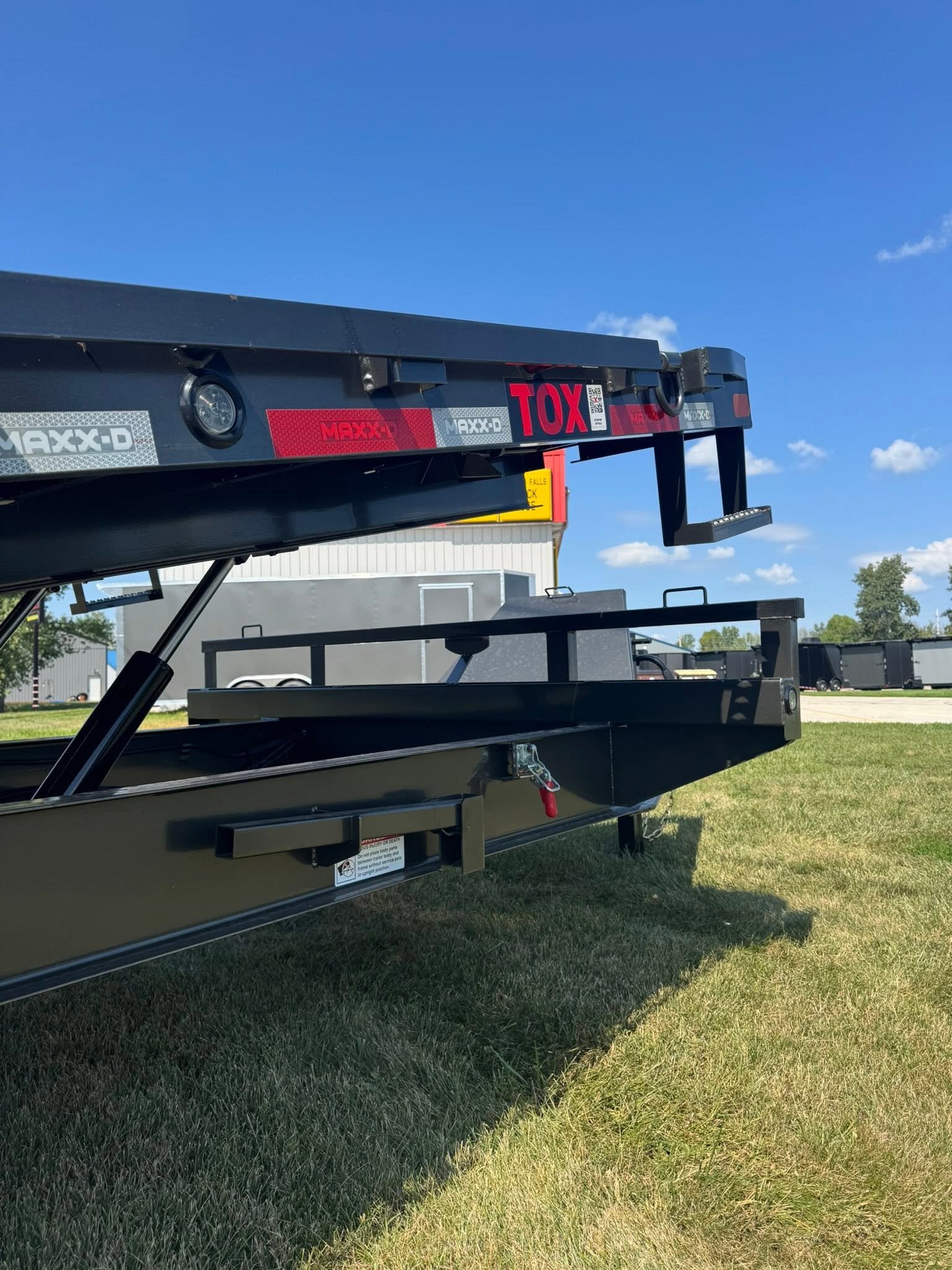
- Deck lock: holds the deck level for travel. Always check it before driving.
How owners use a deckover tilt trailer
Contractors move wide track loaders. Farmers carry implements that overhang a normal trailer. A deckover tilt trailer handles awkward, wide loads safely.
Storing it
Park on firm, level ground with the jack on a block so it does not sink. Touch up chips before winter so rust does not get started. If the trailer sits for weeks, move it now and then so the tires do not flat-spot, and check pressures before the next trip. A coupler lock or wheel clamp is cheap insurance when your deckover tilt trailer is parked where people can see it.
Compare other tilt and deckover trailers
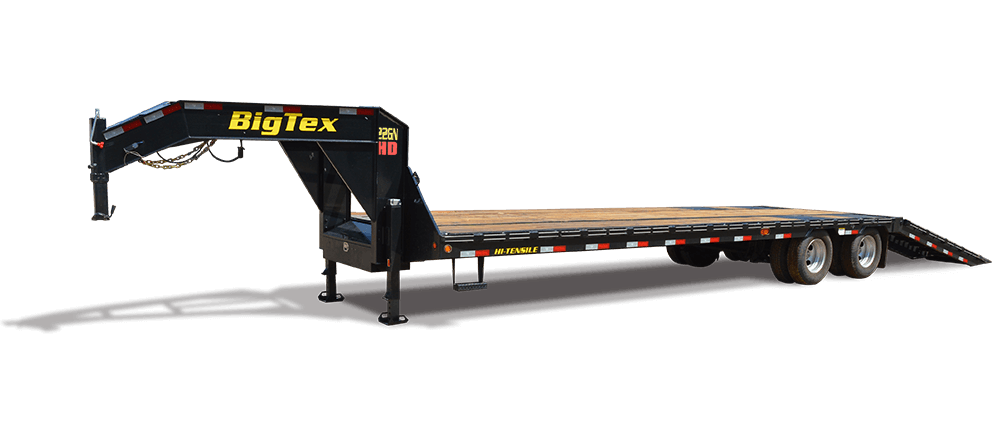
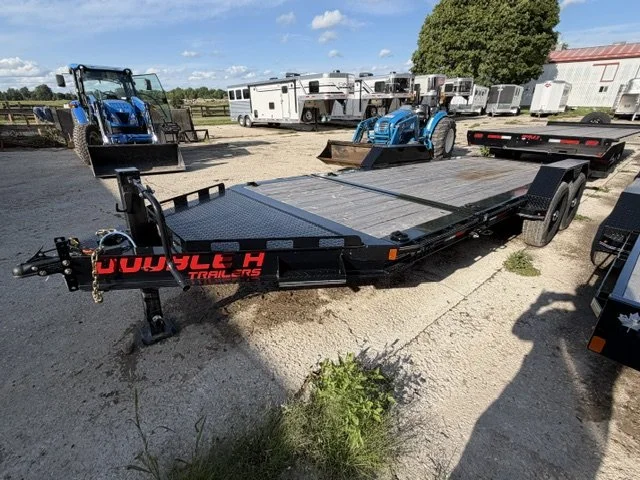
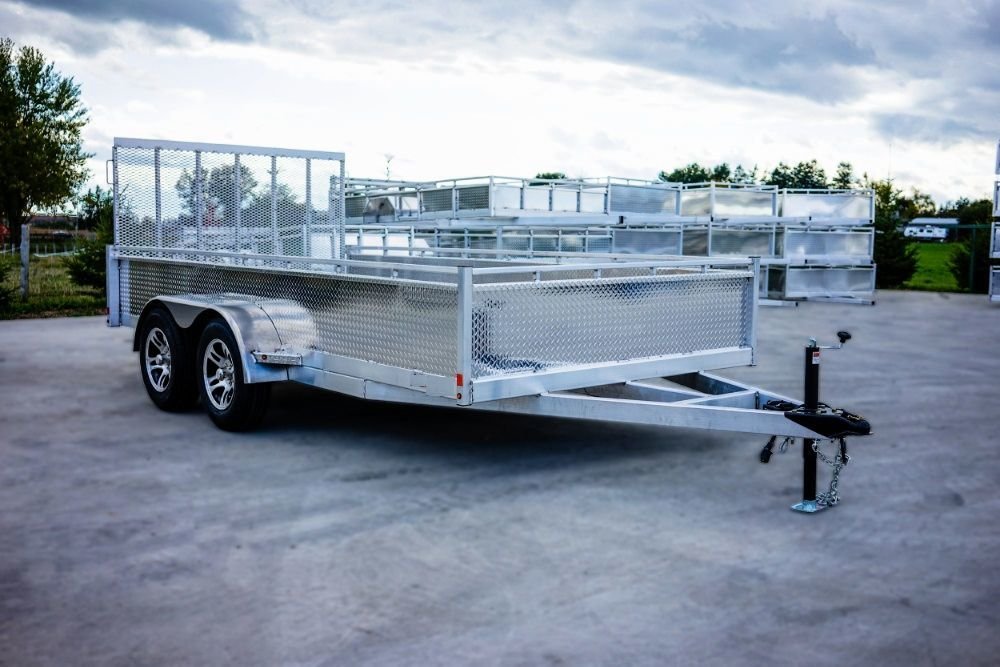
The 22 ft power tilt trailer is 7 ft wide between the fenders. The tri axle tilt trailer carries more. For a fixed deck, see the 20 ft deckover trailer.
See a practical guide to choosing the right trailer.
Accessories worth adding
Chains and binders or heavy ratchet straps suited to your machines are the basics. Wheel chocks, a spare tire and a coupler lock come next. Many owners add a front winch for machines and cars that do not run, a tongue box for straps and gloves, and LED lights on the deck for loading in the dark. These extras make a deckover tilt trailer quicker and safer to use.
Before you buy
Measure your machines, check their weights with attachments and compare them with the deck size and GVWR. Confirm your truck can tow the loaded trailer and that your hitch matches the coupler. Think about how often you load. Gravity tilts suit occasional use, while power tilts make sense for daily loading or low and heavy machines. If those answers point here, this deckover tilt trailer will suit you. If not, ask us and we will help you choose.
Driving with a tilt trailer
Always check that the deck is locked level before you drive. A loaded tilt deck with a tall machine raises the centre of gravity, so corner gently and brake early. Re-check chains after the first few kilometres. When you arrive, unload on level ground and keep everyone clear of the deck while it moves. Treat your deckover tilt trailer like any heavy trailer and it will give you years of easy loading.
Common questions
How wide is this deckover tilt trailer?
The deck is 8 ft. Ask us for the overall width.
How is the tilt powered?
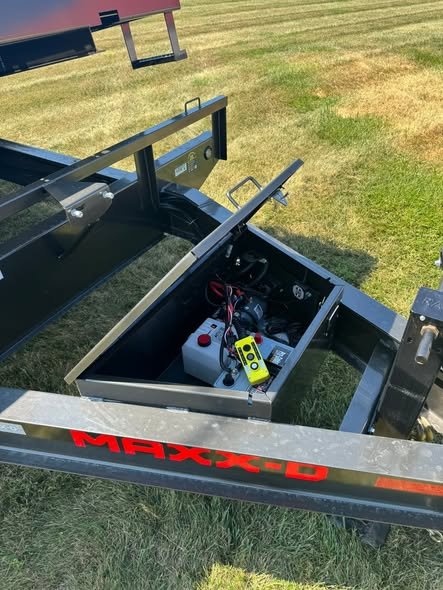
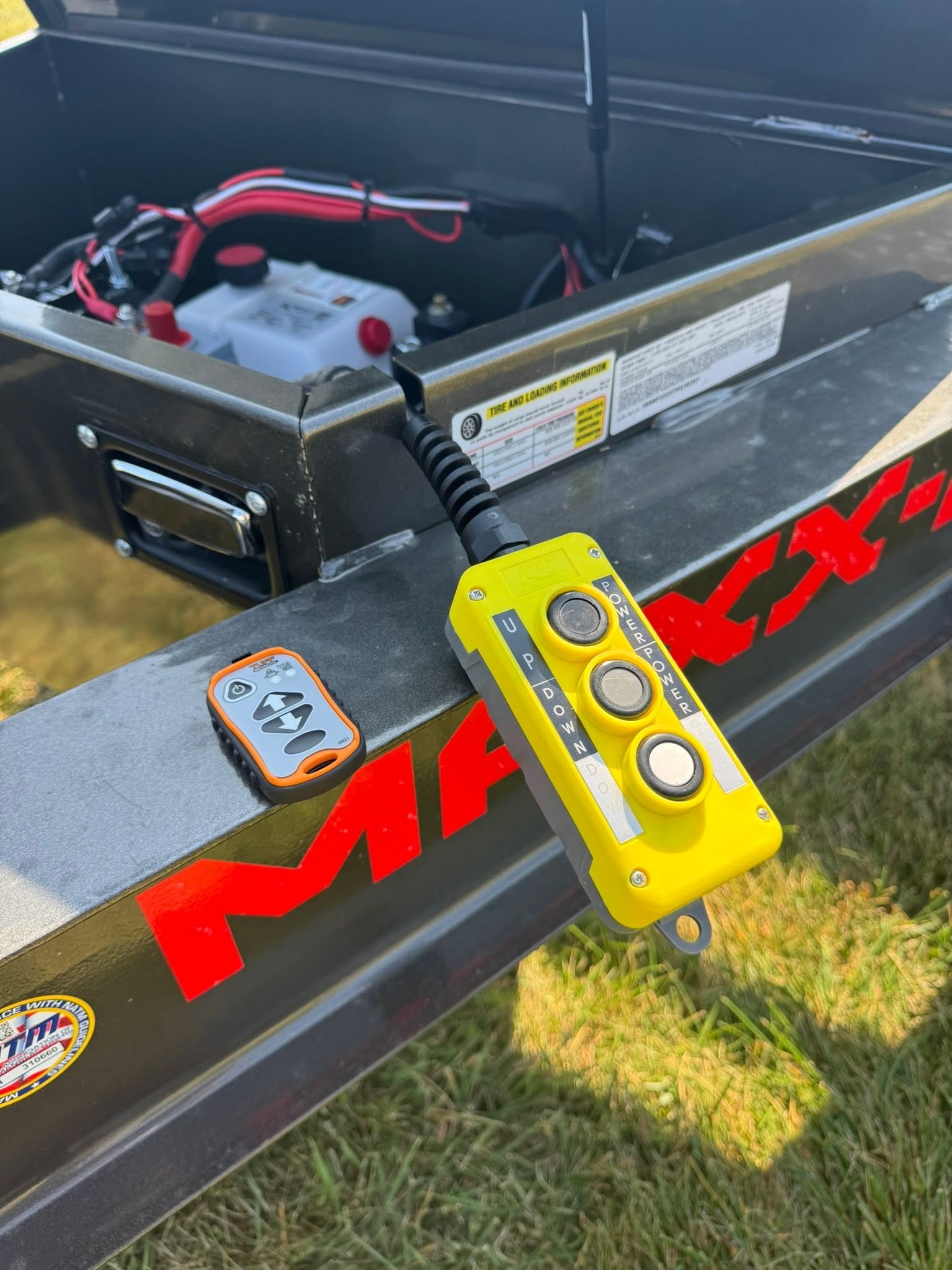
Usually an onboard battery and pump. Ask us to confirm.
Can I load from the side?
Yes, with a forklift, since there are no fenders.
Is a tilt deck safe for low cars?
Yes. The low loading angle is one of the main reasons car owners choose a tilt deck.
Can I load from the side?
With the deck level, pallets can often be loaded from the side with a forklift.
Do you offer delivery?
Ask us about delivery to your area when you order your deckover tilt trailer.
What to check when it arrives
Run the tilt, check hoses, battery, lock, deck, lights, brakes and tyres.
Using a winch
A winch is handy for machines that won’t run, cars with low clearance and anything you’d rather not drive up a deck. Mount it to a proper winch plate, never to a crossmember that wasn’t built for it. Pick a winch rated at about one and a half times the weight you’ll pull.
Stand to the side of the cable, not behind it, and keep people clear while it’s under load. When the load is in place, chain it down; the winch cable is not a tie-down. Ask us what winch mounts suit this deckover tilt trailer.
Chains, binders and straps
For machines with steel tracks or a lot of weight, use grade 70 chain and proper binders, not ratchet straps. Straps are fine for light cargo, but they stretch, fray on sharp edges and lose tension in the rain. Chain each corner of the machine to its own anchor point, angled outward, so it can’t move forward, back or sideways.
Check the tension after the first few miles. Loads settle and chains slacken a little. Keeping a spare binder and a length of chain in the toolbox of your deckover tilt trailer saves a lot of trouble when one goes missing.
Matching the hitch
Ball size has to match the coupler exactly. A 2 in ball in a 2 5/16 in coupler can pop off over a bump. Check the rating stamped on the ball, the drawbar and the receiver, and go by the lowest of the three.
Ride height matters too. Your deckover tilt trailer should sit level or a fraction nose down when hitched. If it tips back, get a drop or rise drawbar to fix it rather than living with it, because a nose-high trailer sways more and wears its tires unevenly.
Tires and wheel bearings
Trailer tires age faster than they wear. A set can look fine on tread and still be cracked in the sidewalls after five or six years, especially if the trailer sits outside in the sun. Check the date code on the sidewall when you buy spares, and keep them at the pressure printed on the tire, not the one on your tow vehicle door.
Bearings want fresh grease about once a year or every 12,000 miles (20,000 km), whichever comes first. Feel the hubs with the back of your hand at a fuel stop. Warm is normal. Too hot to touch means stop and look before going further. A spare wheel that fits your deckover tilt trailer is cheap insurance, so carry one.
Looking after the deck
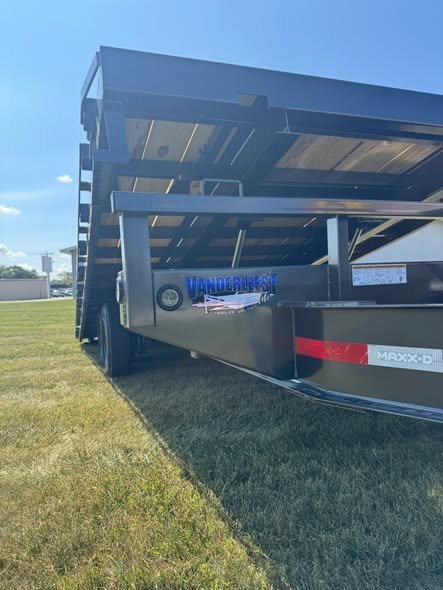
Wood decks are kind to tyres and tracks and easy to replace board by board. Keep them clean so water doesn’t sit under mud and rot the wood. If a board cracks or goes soft, swap it before a machine finds it. Steel decks last longer but get slippery when wet or icy, so take extra care loading in bad weather.
Every few months, check the deck bolts or screws on your deckover tilt trailer and tighten any that have worked loose. Ten minutes with a socket set keeps the deck quiet and solid on the road.
Talk to us before you order
Every buyer tows something different and carries something different. If you want to double-check that this deckover tilt trailer suits your vehicle, your hitch or the load you have in mind, send us a message with the details. We will give you a plain answer, tell you what we know about this exact unit and point you to another model if it fits your needs better. No pressure, just straight advice.
Buy this deckover tilt trailer
This deckover tilt trailer is for sale now. Add it to your cart or contact us. See all tilt and load trailers or the shop.
Reviews
There are no reviews yet.